What makes Pakistan’s economy grow — and what holds it back? Beyond the headline 3.7% growth rate lies a contest between powerful drivers (remittances, a rebounding industry, digital services) and deep structural drags (weak exports, low investment, climate shocks). This guide maps both sides.
Quick answer: Pakistan’s economic growth is driven by remittances ($41.6bn), a manufacturing rebound (LSM +6.11%), services and ICT. It is held back by weak exports, investment of only 14.4% of GDP, a narrow tax base and climate vulnerability. Sustained 6–7% growth needs structural reform.
Growth Drivers
- Overseas Pakistanis: $41.6 billion in remittances — the economy’s financial backbone
- Manufacturing rebound: autos +61.66%, LSM +6.11% in FY2026
- Services dynamism: trade, finance and a 7.52% ICT surge on 5G
- Agriculture recovery: livestock +3.75%, strong wheat and sugarcane
- Macro stability: IMF programme, contained inflation, stable rupee
Structural Drags
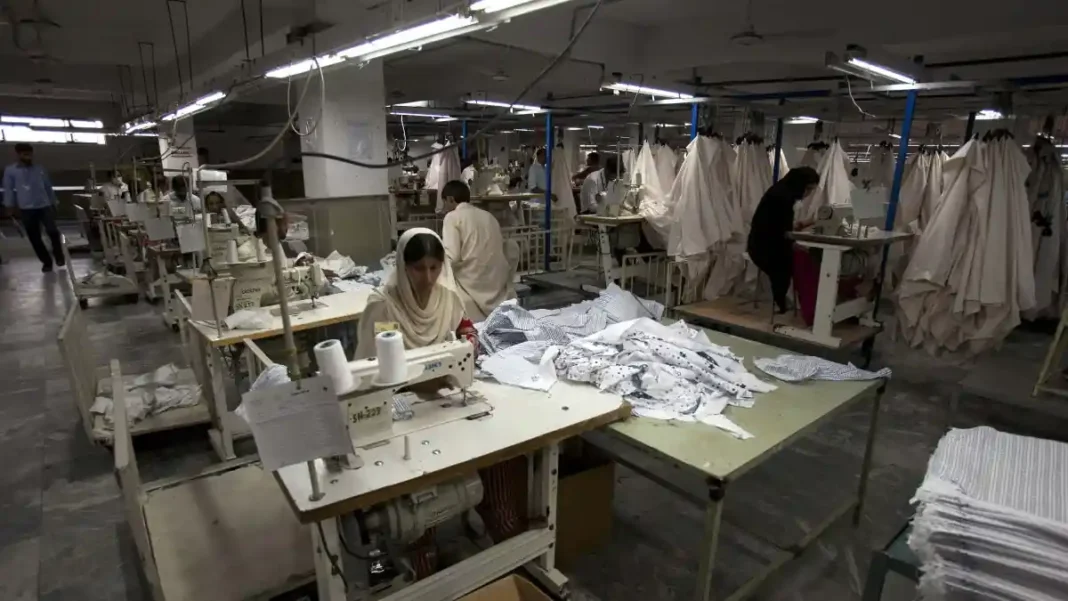
- Export weakness: ~$32–36 billion vs the $60 billion target; textiles still dominate
- Low investment: 14.38% of GDP — fast-growing economies invest 25–30%
- Narrow taxes: tax-to-GDP near 11%, starving public investment
- Energy costs: expensive power hurts manufacturing competitiveness
- Climate shocks: floods and heatwaves strike agriculture and infrastructure
The IMF’s Role
The Extended Fund Facility — third review completed May 2026 — enforces the discipline behind stabilisation: fiscal consolidation, market-determined exchange rate, energy pricing reform. The IMF projects 3.6% growth for FY2026 and continued consolidation, but its own forecasts flag slower export growth and financing needs of ~Rs 28 trillion through 2030.
What Faster Growth Needs
Economists converge on the prescription: export diversification beyond textiles, higher investment (public and private), broadening the tax base toward 15% of GDP, cheaper energy, and climate-resilient agriculture. None is quick — which is why Pakistan’s trend growth has settled at 3–4% rather than the 6–7% its demographics demand. Track the story in our economy news hub and GDP pillar guide.
Can Pakistan reach 6% growth again?
It has before (FY2021–22) — but unsustainably, on borrowed demand. Durable 6% growth needs the structural reforms above, not stimulus.
Do remittances count in GDP?
They count in GNI (gross national income) rather than GDP, but they finance the consumption and imports that GDP measures — their $41.6 billion is the economy’s lifeline.