


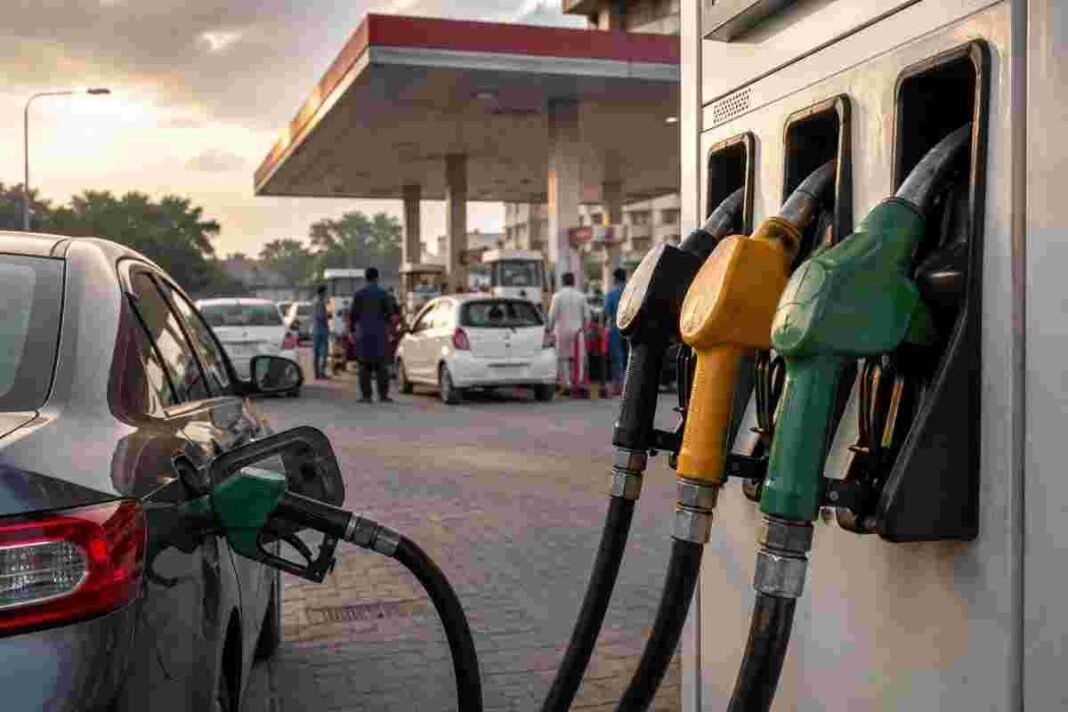
The government has increased fuel prices once again, adding further pressure on consumers across Pakistan. The latest revision came despite a countrywide strike called by Jamaat-e-Islami against the petroleum levy and rising fuel costs.
The decision has raised fresh concerns among citizens already facing rising expenses. Meanwhile, the latest change in Petroleum Product Prices is likely to affect transportation and other daily costs.
According to the notification issued by the Oil and Gas Regulatory Authority (OGRA), petrol has become Rs2.84 more expensive per liter. As a result, the new petrol price has reached Rs349 per liter.
The increase comes at a time when businesses and commercial activities faced disruption due to the nationwide strike. However, the government moved ahead with the revised Petroleum Product Prices despite public concerns.
Similarly, diesel prices also increased under the latest revision. The government raised the diesel rate by Rs2.28 per liter, taking its new price to Rs374.31 per liter.
Fuel prices play a major role in Pakistan’s overall economy because transport costs depend heavily on petrol and diesel rates. Therefore, any increase in Petroleum Product Prices can directly influence the cost of goods and services.
The latest price hike has also drawn attention because fuel prices had already increased a day earlier. Consumers had already started dealing with the financial impact of the previous revision.
Under the earlier adjustment, petrol prices increased by Rs2.29 per liter. Consequently, the petrol rate had reached Rs346.16 per liter before the latest increase.
Diesel also rose in the previous price revision. Its price went up by Rs1.11 per liter, bringing the rate to Rs372.03 per liter before the new announcement.
The back-to-back increases have heightened concerns among motorists, transporters, and business owners. Moreover, higher Petroleum Product Prices could increase operational costs for industries that depend on road transportation.
Transporters often pass additional fuel expenses on to passengers and businesses. As a result, commuters may face higher fares, while companies could see higher delivery costs.
The impact can also reach ordinary households through rising prices of essential goods. When transportation costs rise, businesses often adjust product prices to cover additional expenses.
Jamaat-e-Islami had launched a nationwide strike to protest against the petroleum levy and the growing burden on consumers. The strike led to suspensions or disruptions of business activities in several areas.
However, the fuel price revision added another dimension to the public debate surrounding taxation and energy costs. Many consumers continue to question how repeated increases in Petroleum Product Prices will affect their monthly budgets.
The government and relevant authorities regularly revise fuel prices after considering various economic factors. These factors can include international oil prices, exchange rate movements, taxes, and the petroleum levy.
Pakistan relies significantly on imported petroleum products to meet its energy requirements. As a result, changes in global markets and currency values can quickly affect local fuel rates.
The latest increase means motorists will now pay Rs349 per liter of petrol. At the same time, diesel consumers will pay Rs374.31 per liter under the newly announced rates.
The consecutive price revisions have intensified concerns about inflation and the rising cost of living. Consequently, consumers and businesses will closely watch future changes in Petroleum Product Prices.
Higher fuel costs can challenge families already managing tight household budgets. Meanwhile, businesses may also need to adjust expenses to cover higher transportation costs.
The latest development highlights the continuing pressure on Pakistan’s energy market and consumers. As the debate over fuel taxation continues, the impact of Petroleum Product Prices will remain an important issue for the country’s economy and the general public.