Problems of Pakistan: The Complete Overview
Pakistan’s problems don’t come singly — they come as a system. The economy strains education; population strains water; climate strains everything. This overview maps the whole system: the problems, how they connect, and the practical solutions experts propose.
Quick answer: Pakistan’s core problems: economic fragility, mass educational exclusion, water and energy stress, rapid population growth, weak governance, security threats and climate vulnerability. They reinforce each other — which is why solutions must be systemic, not piecemeal.
In this guide
How the problems connect
| Problem | Feeds into | Example | |
|---|---|---|---|
| Weak economy | Education & health cuts | Fiscal crises slash development budgets first | |
| Population growth | Water & jobs stress | More people, same aquifers and job market | |
| Poor education | Low productivity | Unskilled workforce can’t power industry | |
| Climate shocks | Poverty & migration | 2022 floods pushed millions below the line | |
| Weak governance | All of the above | Reforms reversed with each government |
The solutions consensus
Pakistani economists and development experts broadly agree on the prescription — the disagreement is about political will, not diagnosis:
- Tax fairly and widely: Pakistan’s tax-to-GDP ratio is among the world’s lowest; retailers, landlords and agriculture must enter the net.
- Fix energy distribution: generation exists; theft, losses and circular debt are the disease.
- Educate — especially girls: the highest-return investment in the country’s history.
- Store water: dam storage per capita is dangerously low.
- Devolve power: empowered local governments deliver what distant capitals can’t.
Rural vs urban: the same problems, different faces
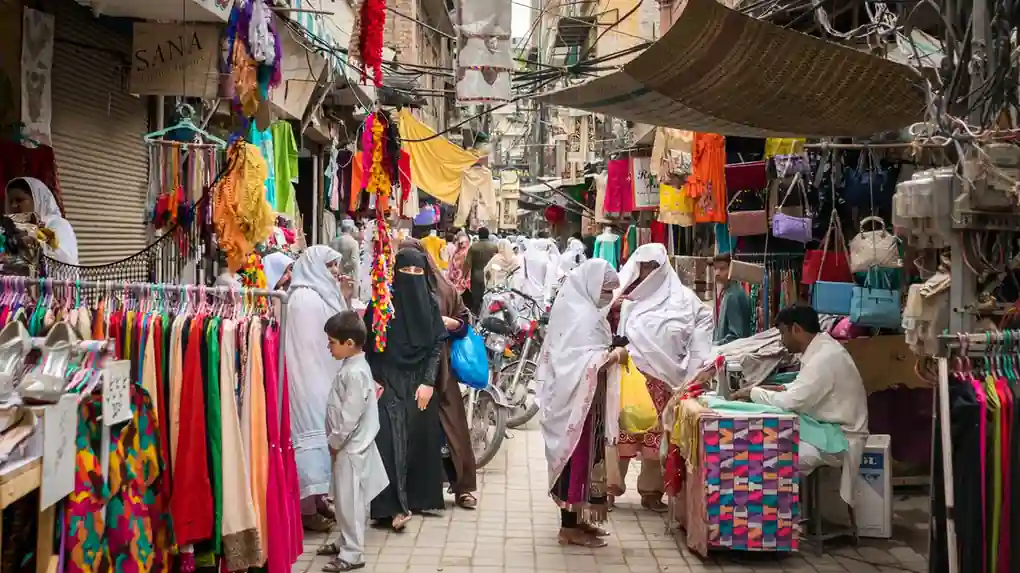
Pakistan’s problems wear different masks in village and city. Rural Pakistan faces them as absence — no doctor, no secondary school, no clean water, no jobs beyond the harvest. Urban Pakistan faces them as overload — the hospital exists but the queue is endless, the school exists but the classroom holds sixty, the job exists but a thousand apply.
Policy often treats these as one problem; they aren’t. Rural problems need building (facilities, staff, roads); urban problems need managing (planning, capacity, governance). The solutions consensus in our hub guide applies to both — but the sequencing differs.
The optimism file: what’s actually working
A problems guide should note the counter-evidence. What’s working in Pakistan right now:
- Remittances: a record ~$38.3bn in FY2024–25 — the diaspora’s vote of confidence, in cash.
- IT exports: billions and growing, with world-class freelancers.
- Inflation tamed: from ~38% to single digits — stabilisation is real.
- Polio near-eradication: decades of vaccinator courage paying off.
- Youth energy: the world’s attention — startups, creators, athletes — keeps finding Pakistani talent.
None of this erases the problems. But “everything is broken” is as lazy as “everything is fine” — the truth is a country fixing its plane mid-flight.
Frequently asked questions
What are the main problems of Pakistan?
Economic fragility, educational exclusion, water and energy stress, population pressure, governance weaknesses, security threats and climate vulnerability — deeply interconnected.
What is the solution to Pakistan’s problems?
The expert consensus: broaden the tax base, fix energy distribution, invest in (girls’) education, build water storage, empower local government, and sustain reforms across governments.
Are Pakistan’s problems worse in villages or cities?
Different, not worse: rural areas lack services entirely; cities have services overwhelmed by numbers. Rural health and education gaps are starker; urban unemployment and pollution bite harder.
What gives hope for Pakistan’s future?
The diaspora’s record remittances, the IT sector’s growth, tamed inflation, and a young population that keeps building despite the odds — problems are real, but so is the resilience.