The Radcliffe Line: How Five Weeks in 1947 Drew the Pakistan–India Border
The Radcliffe Line is the most consequential boundary ever drawn in a hurry: 3,323 km of frontier decided in five weeks by a man who had never seen India. This is the full story — the commission, the award, the anomalies and the aftermath.
Quick answer: The Radcliffe Line — drawn by British lawyer Sir Cyril Radcliffe in five weeks and announced 17 August 1947 — divided Punjab and Bengal between India and Pakistan. It forms the settled International Border segment (~2,240 km) of the 3,323 km frontier and triggered history’s largest migration: 10–15 million displaced.
The Boundary Commission
In July 1947, with independence weeks away, Britain appointed Sir Cyril Radcliffe — a London barrister with no Indian experience and no prior knowledge of the subcontinent’s complexities — to chair two Boundary Commissions (Punjab and Bengal). The logic was neutrality through ignorance; the result was a line drawn from census tables and maps in a Delhi bungalow. He had five weeks. The commissions included two Congress and two Muslim League nominees each — who agreed on almost nothing, leaving Radcliffe to decide alone.
The award & its anomalies
The award was ready by 12 August but announced on 17 August 1947 — two days after independence, allegedly to avoid marring the celebrations. Its anomalies shaped the next 79 years:
- Gurdaspur: the Muslim-majority district awarded to India, giving it the only road access to Kashmir — the single most disputed decision.
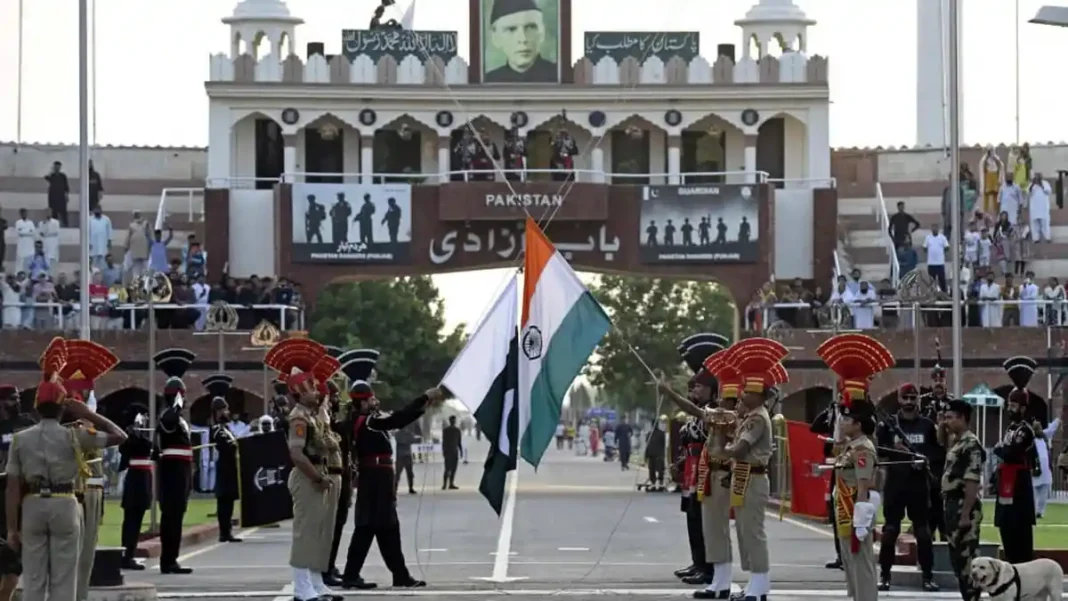
- Lahore & Amritsar: split between the two new nations, 30 miles apart — now joined by the Wagah crossing.
- Ferozepur & Zira: awarded to India despite Muslim majorities, protecting the Sutlej headworks.
- Chittagong Hill Tracts: given to East Pakistan despite a non-Muslim majority.
The aftermath
The line cut through villages, farms, railway lines and irrigation canals — communities woke up in a different country. The migration that followed — 10–15 million people, with an estimated 1–2 million dead — remains one of history’s largest and bloodiest population movements. Punjab, the line’s western half, bore the worst of it.
The legacy today
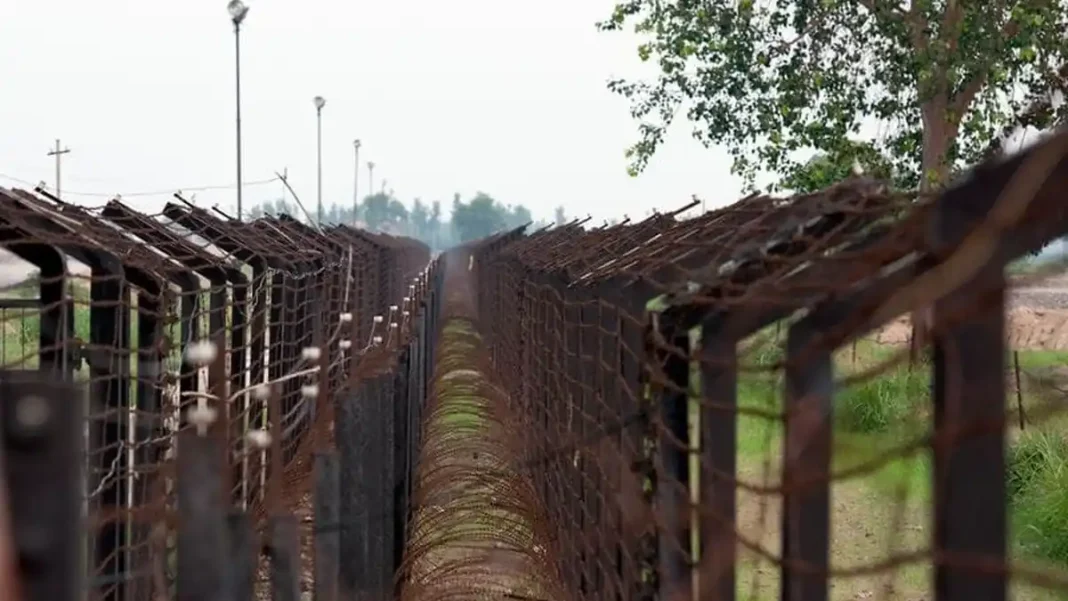
The Radcliffe Line’s Punjab–Gujarat stretch is today’s settled International Border — fenced, floodlit and patrolled (the fencing story). Radcliffe himself reportedly regretted the haste; he refused his fee and never returned to India. The line he drew in weeks has now stood for nearly eight decades. The frontier it created: border length hub.
Radcliffe Line: FAQs
Who drew the Radcliffe Line?
Sir Cyril Radcliffe, a British lawyer who chaired the Punjab and Bengal Boundary Commissions in 1947.
When was the Radcliffe Line announced?
17 August 1947 — two days after independence.
How long did Radcliffe take?
Five weeks — despite never having visited India.
What was the most controversial Radcliffe decision?
Gurdaspur district’s award to India, giving it road access to Kashmir.