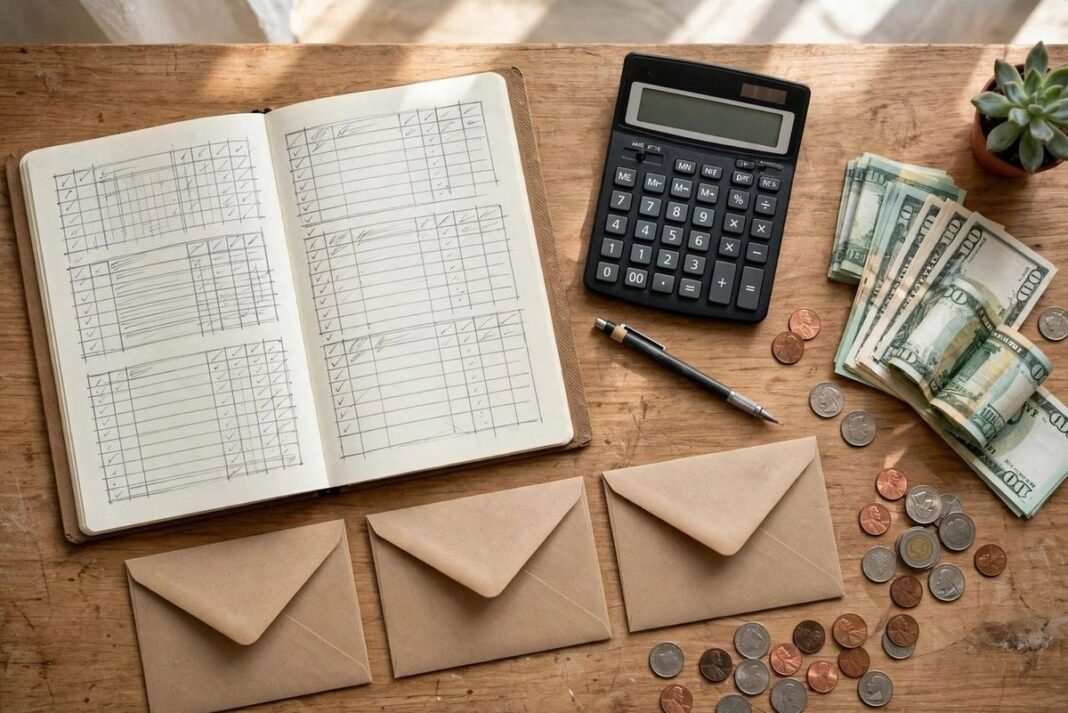
There are hundreds of ways to manage money, but almost every method you will ever see is a version of three classic systems. The 50/30/20 rule splits your income into three buckets. Zero-based budgeting gives every dollar a job. The envelope system caps spending by putting cash aside for each category.
They all work. That is not the question. The question is which one fits your life, your personality, and the amount of time you are willing to spend on money management each month. Pick the wrong method and you will abandon it in three weeks. Pick the right one and budgeting feels almost easy.
This guide compares all three honestly. By the end, you will know exactly which to try first.
How to judge any budgeting method
Before comparing, it helps to know what makes a budgeting method succeed or fail in real life. Four things matter most:
- Effort. How many minutes per week does it demand? A method you will not maintain is worse than no method at all.
- Fit with your income. Some methods assume a steady paycheck. Others handle irregular income well.
- Spending control. Does the method actually stop overspending, or just report it after it happens?
- Flexibility. Can it survive a month where everything goes sideways?
Keep these four tests in mind as we walk through each system.
Method 1: The 50/30/20 rule
What it is
The 50/30/20 rule divides your after-tax income into three categories:
- 50% for needs — rent, utilities, groceries, transport, insurance, minimum debt payments.
- 30% for wants — dining out, hobbies, streaming, shopping, travel.
- 20% for savings and extra debt payments — emergency fund, investments, paying down debt faster.
That is the entire system. There is no line-item tracking and no assigned dollar amounts for every purchase. You just check that your spending roughly lands in those proportions.
Who it fits
This method is best for beginners and for people who hate detail. If you have a stable monthly income and your finances are not in crisis, 50/30/20 gives you guardrails without the homework. It is also a good first budget for couples who argue about money, because the three buckets are easy to agree on.
Where it struggles
The rule is blunt. In a high-cost living situation, “needs” can easily swallow 70% of income, and the rule offers no answer except “spend less,” which is not a plan. It also does nothing to stop impulse spending inside the 30% — you can blow the whole wants budget on day three and the rule will not stop you. Finally, it assumes your savings happen automatically, which only works if you actually move the 20% out of your spending account the moment you are paid.
Effort level: low
Setup takes one afternoon. Maintenance takes about 30 minutes a month: review where the money went, adjust for next month. Set a monthly calendar reminder so “low effort” does not quietly become “no effort.”
Practical tip
Pay yourself first. On payday, move 20% into a separate savings account before you spend anything else. Parking that money in one of the best high-yield savings accounts for 2026 keeps it earning interest and out of reach of impulse spending.
Method 2: Zero-based budgeting
What it is
Zero-based budgeting starts from zero every month. Your income minus every planned expense must equal zero — every dollar is assigned a purpose before the month begins. Rent, groceries, savings, even “fun money” get a number. If $2,800 comes in, you plan exactly $2,800 of outgoing, including $400 to savings and $80 to eating out.
Nothing is left unassigned. That is the point: money without a job tends to disappear.
Who it fits
This is the method for detail-oriented people and for anyone whose money feels like it vanishes. It works especially well for irregular income — freelancers, gig workers, commission earners — because you budget the money you actually have this month rather than assuming an average. It is also the strongest method for getting out of debt, since you can assign every spare dollar to debt payments on purpose.
Where it struggles
It is the most time-consuming of the three. Your first month can take two to three hours to set up, and you will need 20–30 minutes a week to adjust as real life diverges from the plan. Months with surprise expenses require re-budgeting, which frustrates people who want a “set and forget” system.
Effort level: high
Expect one to three hours for the first budget, then weekly check-ins of 20–30 minutes. The payoff is total control and, for most people who stick with it, the fastest path to saving more.
Practical tip
Do not track every cent by hand. Use a budgeting app or a simple spreadsheet that pulls in your transactions, then spend your weekly time reviewing, not data entry. The method works the same either way — best budgeting apps for 2026 can remove most of the manual work so you can focus on decisions instead of typing.
Method 3: The envelope system
What it is
The envelope system is the oldest method here. You divide your spending money into categories — groceries, fuel, entertainment, clothing — and put the budgeted amount for each into a separate envelope (or a separate account or digital “envelope” in an app). When an envelope is empty, spending in that category stops until next month. There is no borrowing from the grocery envelope to cover entertainment.
The rule is physical and final: an empty envelope means no.
Who it fits
This method is built for chronic overspenders. If you regularly blow past limits on food, shopping, or entertainment, the hard stop of an empty envelope is more effective than any spreadsheet. It also works well for cash users and for households where one partner needs a concrete, visible limit rather than an abstract number.
Where it struggles
Cash is inconvenient in a digital world — online shopping, subscriptions, and automatic bills do not fit in paper envelopes. Digital envelope apps solve this but add their own learning curve. The system also handles bills poorly: fixed costs like rent and utilities do not need envelopes, so you end up running two systems at once.
Effort level: medium
Stuffing envelopes (physical or digital) takes about an hour a month. The daily discipline is the real cost: you must check the envelope before every purchase. People who enjoy the ritual stick with it for years; people who find it tedious quit fast.
Practical tip
Keep fixed bills on autopay and use envelopes only for variable spending — groceries, dining, fuel, personal spending. And make savings the first “envelope”: fund your emergency fund guide before the month’s spending envelopes, not from whatever is left over.
Head-to-head comparison
| Criteria | 50/30/20 | Zero-based | Envelope system |
|---|---|---|---|
| Monthly effort | Low (~30 min) | High (~2–3 hrs first month, then weekly) | Medium (~1 hr + daily checks) |
| Best for | Beginners, stable income, low-detail people | Detail lovers, irregular income, debt payoff | Overspenders, cash users, visible limits |
| Spending control | Weak — reports overspending after the fact | Strong — every dollar planned in advance | Very strong — hard stop when envelope is empty |
| Handles irregular income | Poorly | Very well | Okay (envelopes sized to actual cash) |
| Flexibility | High — ratios bend easily | Medium — requires re-budgeting | Low — empty means empty |
| Savings built in | Yes (the 20%) | Yes (you assign it) | No — you must add a savings envelope |
| Difficulty to start | Easy | Hard | Medium |
| Biggest risk | Slowly ignored | Abandoned as too much work | Too rigid for digital spending |
Which method should you choose?
Match the method to your situation, not to what sounds impressive:
- Your finances are stable and you want something simple. Start with 50/30/20. It takes an afternoon and immediately shows whether your spending ratios are healthy.
- Money keeps disappearing and you do not know where. Try zero-based budgeting for three months. The detail is the point — it finds the leaks.
- You overspend in specific categories no matter what. Use the envelope system for those categories only. You do not have to envelope your whole life.
- Your income changes every month. Zero-based is the clear winner. Budget what actually arrived, not what you hope will arrive.
- You are paying off debt aggressively. Zero-based again — assign every spare dollar to the debt. Pair it with a debt snowball calculator to order your payoffs for maximum momentum.
One more honest point: you are allowed to combine methods. Many people run 50/30/20 as the big picture and use envelopes for their two worst spending categories. The “best” method is the one you will still be using in six months.
How to start: a 7-step plan that works with any method
- Find your real monthly income. Average the last three months of take-home pay. If income varies, use the lowest of the three as your planning number.
- List fixed costs first. Rent, utilities, insurance, loan minimums, subscriptions. These are non-negotiable and get funded first in every method.
- Set your savings target. Aim for 20% of income if possible. If that is impossible right now, start with any fixed amount — $50 a month beats $0. Read how to build an emergency fund on a small salary if money is tight.
- Assign the rest. This is where your chosen method takes over: split into 50/30/20 buckets, assign every dollar to zero, or fill your envelopes.
- Automate what you can. Fixed bills on autopay. Savings transferred on payday. Automation removes willpower from the equation.
- Review once a week for the first two months. Ten minutes, same day each week. Compare plan versus reality and adjust. After two months, monthly reviews are enough.
- Forgive the bad months. One blown month is data, not failure. Adjust the plan and continue. People who quit after one bad month never get the compounding benefit of the good ones.
Common mistakes to avoid
- Budgeting money you do not have yet. Budget this month’s actual income, not next month’s expected bonus.
- Forgetting irregular expenses. Car repairs, annual subscriptions, holiday gifts, medical bills. Add a small monthly amount for “irregular” costs or they will ambush you.
- Making the budget too tight. A budget with zero room for fun fails by week two. Every method needs a realistic wants category.
- Tracking without deciding. Reviewing spending without changing anything is just accounting. Each review should end with one decision.
- Switching methods every month. Give any method at least three full months before judging it. The first month is always messy.
Frequently asked questions
Can I combine two budgeting methods?
Yes, and many people do. A common combination is 50/30/20 for the big picture with envelopes for problem spending categories like dining out or shopping. Another is zero-based planning with an envelope-style hard cap on the two categories where you overspend most. The methods are tools, not religions.
Which budgeting method is best for irregular income?
Zero-based budgeting. Because you start from zero each month and assign only the money that actually arrived, it adapts naturally to freelance, gig, or commission income. Build your budget around your lowest typical month, and assign surplus months’ extra income directly to savings or debt.
Is the 50/30/20 rule realistic for everyone?
Not always. If your essential costs take more than 50% of your income, the rule as written does not fit — and that is common in expensive cities or on lower incomes. Treat the ratios as a target to move toward, not a pass/fail test. You can start at 70/20/10 and work toward 50/30/20 over time.
Do I need to use cash for the envelope system?
No. Digital envelope apps and separate bank accounts work the same way — the point is the hard boundary per category, not the paper. That said, physical cash makes the limit feel more real for many people, so if digital envelopes are not stopping your overspending, try cash for one month on your worst category.
How long does it take for a budgeting method to work?
Expect the first month to be messy — you are guessing at your real spending. By month three, most people have realistic numbers and the system runs smoothly. If a method still feels painful after three months, switch rather than quit budgeting entirely.
Should I budget before or after saving?
Save first, budget the rest. Every method on this list works better when savings leave your spending account on payday instead of waiting for month-end leftovers. Move the savings first, then run your chosen method on what remains.