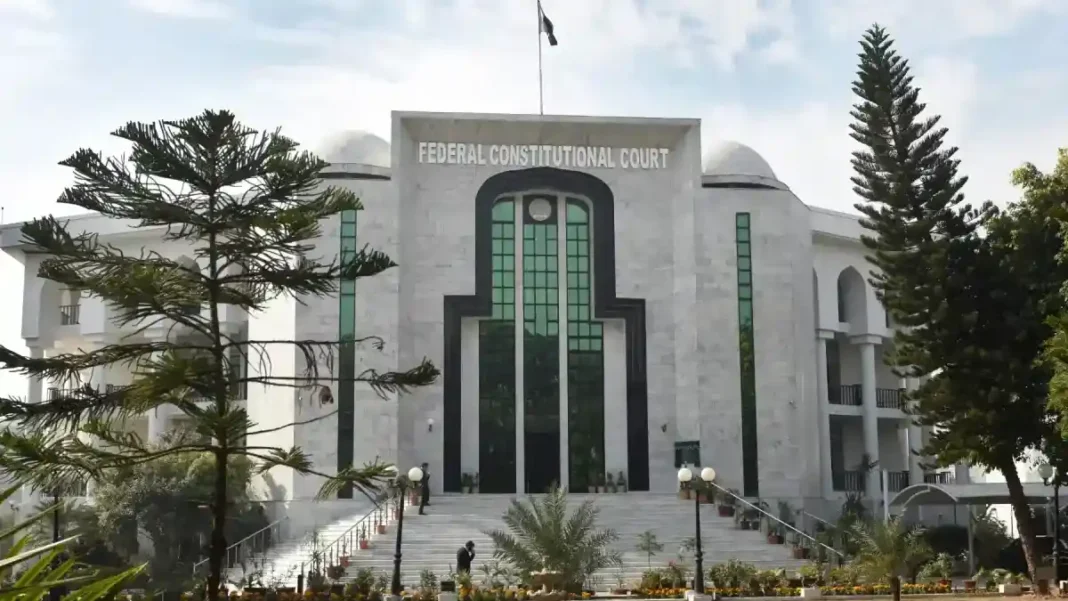
SC Grants Bail in Human Placenta Smuggling Case
The Supreme Court on Monday, November 16, granted post-arrest bail to four suspects arrested in the human placenta smuggling case. A two-member bench headed by Justice Shahzad Ahmad Khan, with Justice Aqeel Ahmed Abbasi, granted bail to three Chinese nationals and a Pakistani citizen arrested by the Federal Investigation Agency’s (FIA) Corporate Crime Circle in Islamabad.
The case was registered under Sections 11 and 12 of the Transplantation of Human Organs and Tissues Act 2010, read with Sections 420, 34 and 109 of the Pakistan Penal Code, on a complaint by Hina Kanwal, a medical officer at the Human Organ Transplant Authority (HOTA) in Islamabad.
Human placenta smuggling case: the raids and the recovery
Deputy Attorney General Raja Shafqat Abbasi told Dawn that a joint team of the FIA’s Corporate Crime Circle and HOTA raided a house in Islamabad’s Sector F-7/1, acting on credible information about the illegal collection, processing, storage and commercial trade of human placentas.
The house had allegedly been turned into an unauthorised facility for collecting, processing, preserving, packaging and storing human placentas for commercial use.
A second raid in Sector E-11, carried out after the suspects identified the location, recovered a large quantity of human placentas from refrigerators. Searches at both places recovered around 400 to 500 kilogrammes of human placentas, in fresh and dried forms, with samples sent to the Pakistan Institute of Medical Sciences (PIMS) for forensic examination.
A 580kg shipment, allegedly misdeclared as sheep placenta and booked for export to Hanoi in Vietnam, was intercepted at the SAPS shed of Islamabad International Airport. It had been booked by Hair Traders, a company owned by a Faisalabad resident.
The total recovery came to 1,241kg, including the airport shipment. The preliminary investigation found the suspects were allegedly acting together to collect, preserve, store, process, package and export human placentas for commercial gain, misdeclared as sheep placenta.
How the placentas were sourced
The investigation found that the placentas were mainly procured through a resident of Dhok Jabbi in Rawalpindi, who worked for Arrar Innovations, a Punjab-based company involved in hospital waste management at Rawalpindi’s Benazir Bhutto Hospital. Further investigation is under way to determine the scale of the alleged illegal network, trace its financial trail and export chain, and establish whether Customs officials or staff from other departments were involved, Abbasi said.
The case has a history. In July, the FIA was reportedly investigating a syndicate suspected of smuggling human placenta from hospitals to produce anti-ageing injections. Later that month, a district and sessions court rejected the post-arrest bail applications of the four suspects arrested in the case.
Placenta is rich in protein, iron and fat. Some people believe it is nutritious even for adults, and it has been made into pills and injections thought to help with tissue regeneration. According to gynaecologist Sadaf Tariq, strict rules govern the disposal of placenta, which is considered highly infectious medical waste.
What the court decided
The deputy attorney general argued that the placenta fell within the definition of a human organ under Section 2(e) of the 2010 Act, and that commercial dealing in human organs is punishable by up to 10 years in prison and a Rs1 million fine under Section 11. He said the foreign accused were a flight risk.
The court, however, observed that the placenta, being waste material, constituted a case of further inquiry. It granted bail to each accused against bail bonds of Rs1 million, each backed by two local sureties.
The order does not end the case. The investigation continues into the financial trail, the export chain and the possible role of officials. The FIA has handled other complex cross-border cases this year, including the booking of Pakistanis deported from Turkiye, as Feature Pakistan reported. Courts have also been examining how evidence is handled in criminal cases, including the PHC’s ruling on video-link evidence and fair trial. The courts have also been weighing detention and bail questions in other high-profile matters, including Bushra Bibi’s plea before the Islamabad High Court and the remand of suspects in the Fatima Asghar case.
Frequently asked questions
Who was granted bail in the human placenta smuggling case?
Four suspects: three Chinese nationals and one Pakistani citizen, arrested by the FIA’s Corporate Crime Circle in Islamabad.
How much human placenta was recovered in the case?
The total recovery was 1,241kg: around 400 to 500kg from houses in F-7/1 and E-11, and a 580kg shipment booked for export to Hanoi intercepted at Islamabad airport.
What law applies to the case?
It was registered under Sections 11 and 12 of the Transplantation of Human Organs and Tissues Act 2010, read with Sections 420, 34 and 109 of the Pakistan Penal Code. Commercial dealing in human organs can carry up to 10 years in prison and a Rs1 million fine.
Why did the court grant bail?
The court observed that the placenta, being waste material, constituted a case of further inquiry, and granted bail to each accused against bonds of Rs1 million, each backed by two local sureties.
What happens next in the placenta case?
The bail does not end the case. The investigation continues into the financial trail, the export chain and the possible role of officials, and the four accused remain on bail bonds of Rs1 million each, each backed by two local sureties.