


What Is Inflation in Pakistan? CPI, Core, SPI & WPI Explained Simply
Inflation dominates Pakistan’s economic conversation — but what do CPI, core inflation, SPI and WPI actually mean? This plain-language guide explains how Pakistan measures rising prices, who publishes the numbers, and how to read them.
Quick answer: Inflation = the rate at which prices rise. Pakistan’s main measure is the CPI (Consumer Price Index, 356 items, 35 cities — currently 10.3%). Core inflation strips food/energy (8.6% urban). SPI tracks 51 essentials weekly (8.4%). WPI tracks wholesale prices (13.3%). Publisher: the PBS.
In this guide
What inflation means
Inflation is the rate of change in prices — not the price level itself. 10.3% inflation means the CPI basket costs 10.3% more than a year ago; it doesn’t mean prices will fall when inflation “eases” to 8% — they just rise slower. (Falling prices = deflation; slowing price rises = disinflation — Pakistan had the latter in 2024.) Moderate inflation (SBP targets 5–7%) is normal; 38% (May 2023) is a crisis.
CPI: the headline number
The Consumer Price Index, published monthly by the Pakistan Bureau of Statistics (PBS), tracks 356 items across 35 cities — food (~35% weight), housing/utilities, transport, clothing, health, education. “10.3% YoY” = the basket costs 10.3% more than September 2025. “1.3% MoM” = 1.3% more than August 2026. The PBS releases it in the first days of each month. Current reading: 10.3% (Sep 2026).
Core inflation
Non-food, non-energy (NFNE) inflation strips the two most volatile groups — currently 8.6% urban / 8.1% rural. The SBP watches core most closely: it shows “sticky” underlying pressure (wages, rents, services) that interest rates can actually influence. When core stays high while headline falls, the job isn’t done.
SPI: the weekly pulse
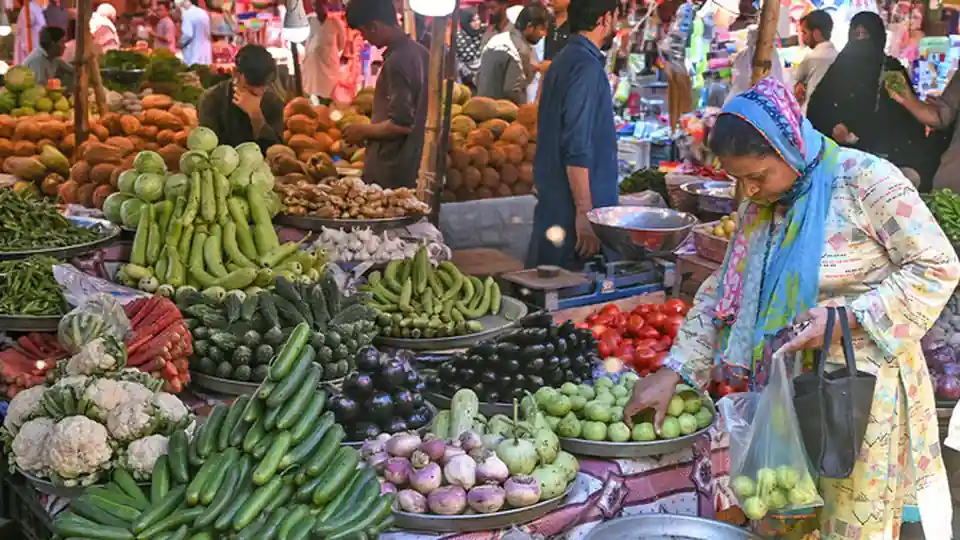
The Sensitive Price Indicator tracks 51 essential items (flour, rice, pulses, milk, eggs, fuel, etc.) weekly across 17 cities — the fastest-moving official gauge. September 2026: 8.4% YoY; early-October weekly readings hit 11.5%. PBS also splits it by income quintile — the poorest face different inflation than the richest.
WPI: the early warning
The Wholesale Price Index tracks prices at the wholesale/mandi level — currently 13.3% YoY and accelerating. Wholesale rises typically reach retail shelves within weeks-to-months, so a high WPI warns that CPI pressure is coming. Economists watch the WPI–CPI gap for what’s next.
Explainer: FAQs
What is CPI inflation?
The year-on-year change in the Consumer Price Index — Pakistan’s headline inflation measure, currently 10.3%.
Who measures inflation in Pakistan?
The Pakistan Bureau of Statistics (PBS), monthly for CPI and weekly for SPI.
What is the difference between CPI and SPI?
CPI covers 356 items monthly (the full economy); SPI covers 51 essentials weekly (the kitchen budget).
What is core inflation?
Inflation excluding food and energy — the “sticky” component, currently 8.6% in urban Pakistan.