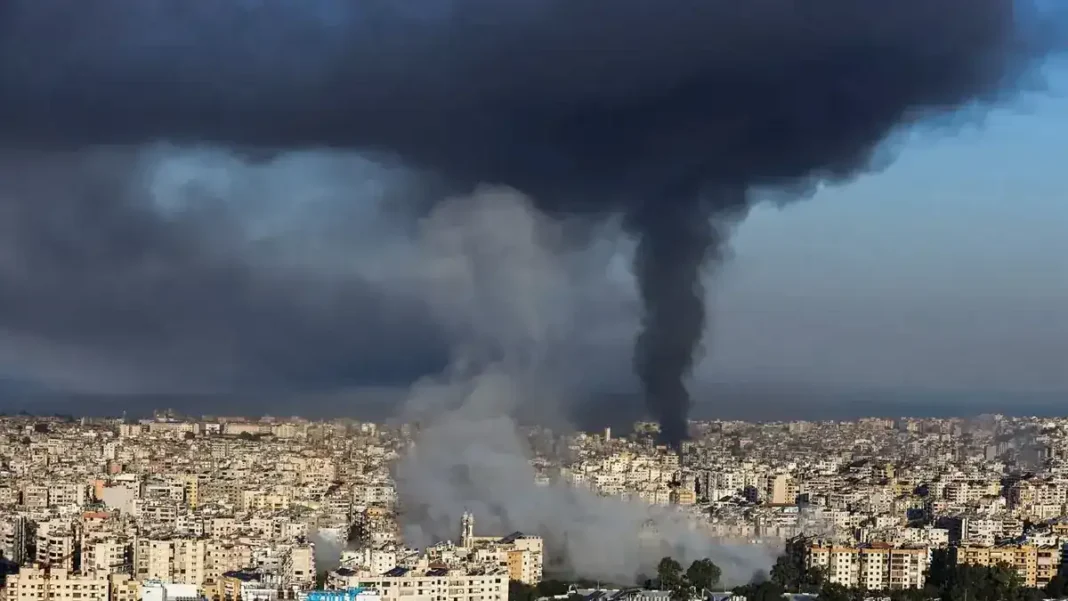
The US-Israel war on Iran could make it harder for Pakistan to refinance its existing debt, the World Bank has warned, as regional tensions threaten to increase the country’s external financing pressures.
In its latest Pakistan Development Update, titled Attaining Escape Velocity, the lender notes that Pakistan relies on foreign loans and rollovers to manage its external debt obligations. The Middle East crisis, the report warns, could create difficulties in securing those rollovers.
Pakistan debt Gulf war World Bank: the financing squeeze
Pakistan requires external financing equivalent to around 15 per cent of its gross domestic product every year, according to the report. That heavy reliance makes the country vulnerable to disruptions in foreign funding and shifts in international financial conditions.
The crisis could also increase Pakistan’s energy import bill by 30 per cent. Higher energy costs would raise demand for foreign exchange at precisely the time the country needs funds to service and refinance its debt.
If regional tensions persist, the combination of costlier imports and tighter financing could make managing Pakistan’s external obligations significantly harder. The World Bank expects the Middle East crisis to improve gradually by 2027, but warns that prolonged disruption would complicate efforts to maintain financial stability.
The wider economic picture
The warning sits inside a report that is otherwise cautiously positive about Pakistan’s direction. Real GDP growth rose to 3.7 per cent in FY26 from 3.2 per cent in FY25, and the primary fiscal surplus hit a record 2.9 per cent of GDP. Strong remittances helped rebuild foreign exchange reserves, and rating upgrades from S&P and Moody’s allowed Pakistan to return to international debt markets with a $3 billion Eurobond.
But the same report flags deep structural weaknesses. The poverty rate has climbed to 29 per cent as job creation lags, and the IMF now expects Pakistan’s economy to contract in 2026 as the Iran war bites. Inflation is projected to rise to 8.2 per cent in FY27, adding to the pressure on households.
For readers tracking the debt story, Pakistan’s recent $3 billion Eurobond issue shows how the country has been tapping global markets while the window is open.
What the Bank wants Pakistan to do next
“With macro stabilisation achieved but fiscal resources and foreign exchange still tightly constrained, structural reform to encourage private investment is the necessary next step towards higher living standards,” said Sebastian Essl, the report’s lead author. He added that private-sector-led growth requires a plan, coordination and committed implementation.
The Bank pointed to reforms already under way, including power-sector tariff adjustments that cut energy subsidies from 1.1 per cent of GDP in FY25 to 0.8 per cent in FY26, continued trade liberalisation under the National Tariff Policy, and the recent privatisation of Pakistan International Airlines. Sustained progress, it said, will depend on improving the business environment, overhauling the tax system, reducing the state’s footprint in the economy and expanding access to finance.
Frequently asked questions
How could the Gulf war affect Pakistan’s debt?
The World Bank says regional tensions could disrupt the foreign loan rollovers Pakistan depends on, while pushing its energy import bill up by 30 per cent.
How much external financing does Pakistan need?
Around 15 per cent of GDP every year, according to the World Bank, leaving it exposed to shifts in global funding conditions.
When does the World Bank expect the crisis to ease?
The report expects the Middle East crisis to improve gradually by 2027.
What is the Pakistan Development Update?
The World Bank’s twice-yearly review of Pakistan’s economy. The latest edition is titled Attaining Escape Velocity.