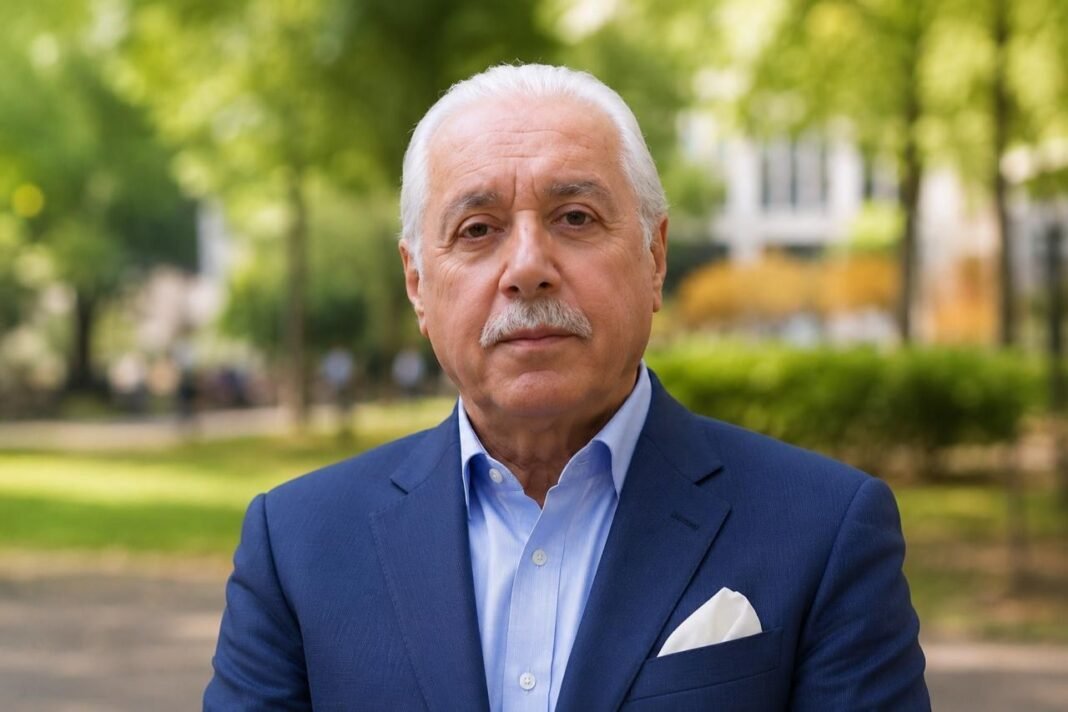
By Dr Alex Ezat Parnia, President and CEO, Florida Coastal University
At 35, going back to university is a very different decision from going at 18.
An 18-year-old may be thinking about subjects, campus life and the career that could follow. A working adult is usually doing a more complicated calculation. Can I study without leaving my job? Can I manage classes around family responsibilities? And will this degree really make a difference? What if I already have ten or fifteen years of work experience — should I really be going back to square one? It is important to remember that in Pakistan we still live in a straight-line world: finish school, get into university, graduate, and only then start to work.
People change professions. Technology makes old skills less useful. A promotion may require knowledge someone never needed earlier in their career. Women come back after breaks for childcare. Businesswomen are realising that, while they have come a long way, they now need more management, finance or tech skills. Others only discover at age 30 or 40 that, at the age of 18, they picked the wrong career.
Higher education has to work for these people too.
A Job Should Not Block Higher Education for Working Adults
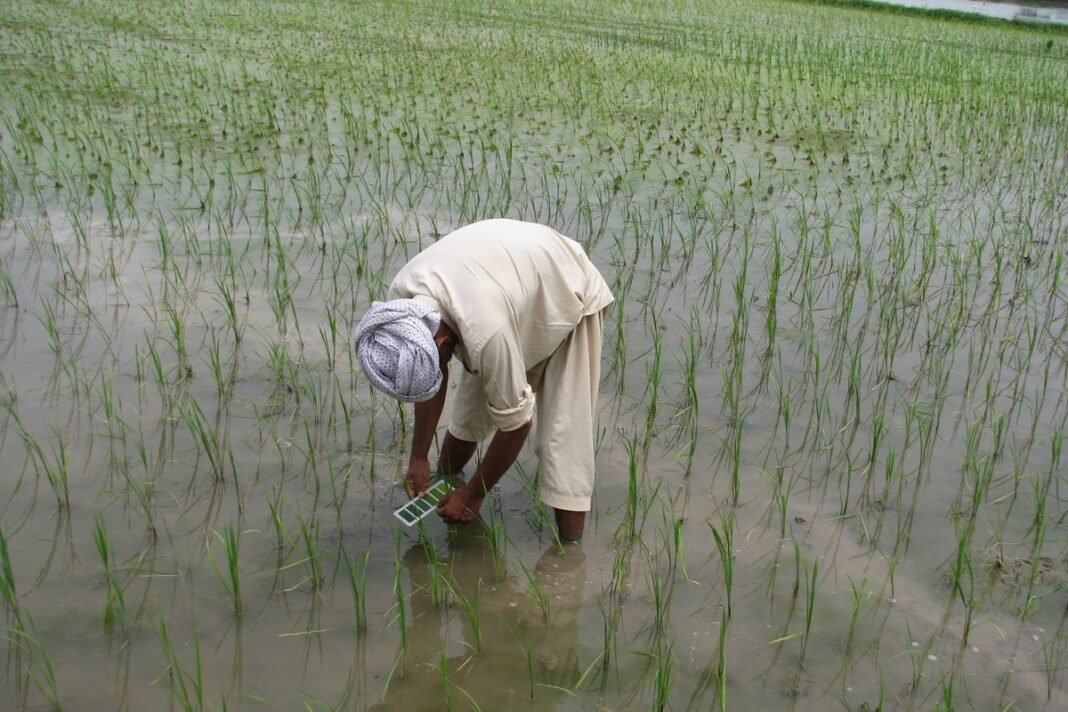
Pakistan already has millions of people balancing employment with family and financial responsibilities. The latest Pakistan Bureau of Statistics Labour Force Survey looks not only at employment and unemployment. It also looks at participation by adults in formal and non-formal education and training. That is an important shift in itself. Learning does not stop when someone enters the workforce.
Yet the structure of higher education can still make returning difficult.
A professional working full time in Karachi cannot necessarily attend classes in the middle of the day. A person working in Faisalabad, who has the responsibility of feeding a family, may find it difficult to spend two years without a salary. Similarly, a parent living in Lahore may want to pursue a higher degree but cannot travel to university every day.
Hence, the problem preventing people from achieving their goals does not seem to be a shortage of motivation. Usually, the only hindrance is unsuitable circumstances.
This is where part-time, blended and online options become more than a convenience. For a working adult, flexibility can determine whether education is possible at all.
Pakistan has begun moving down this path. The Higher Education Commission introduced the Open and Distance Learning Policy 2024, which set up standards for institutions wishing to provide open and distance degrees. HEC and Allama Iqbal Open University also began providing capacity building in 2025, in e-learning, instructional design, technology and quality assurance.
Higher Education for Working Adults Must Value Experience
Adults do not arrive with empty CVs. There is another problem with the traditional model: it often assumes that a student is beginning from zero.
A 38-year-old operations manager is not beginning from zero. Neither is a woman returning to work after several years away. Nor is someone who has spent a decade running a family business. They already have knowledge. The question is what they need next.
A manager may need stronger data and AI skills. An accountant may need updated knowledge of digital systems. Someone moving from sales into leadership may need training in strategy, finance or people management.
In each case, the answer may be further education. But it should be education that builds on what the learner already knows. It should not pretend the previous 15 years never happened.
Pakistan already uses this principle in parts of its skills system. The National Vocational and Technical Training Commission’s Recognition of Prior Learning programme allows skilled workers to have their acquired skills assessed and certified. They do not have to go through the entire formal training course again. The strategy has been cited as a route through which workers in informal sectors may obtain a certificate for skills they already have.
Higher education and vocational education are different systems, of course. But the principle is worth carrying across: experience should count for something.
Not Every Career Change Needs Another Four-Year Degree
Working adults also need more choice in the size of the education they pursue. Sometimes a full degree is appropriate. In other cases, it may be excessive.
For an individual looking for knowledge in fields such as project management, cybersecurity, data analysis or digital marketing, shorter courses will be appropriate. A different student may require a postgraduate degree, because they are moving to a profession that requires specialisation. The starting point should be the career problem, not the course catalogue.
Pakistan is already seeing strong interest in shorter forms of digital learning. HEC’s Digital Learning Skills & Enrichment Initiative reports that over 104,000 students have successfully completed training in its courses. These represent hundreds of thousands of completed trainings overall. The initiative provides courses, including professional certifications and self-paced learning programmes, in areas such as technology and business.
That does not mean short courses should replace degrees. It does show why people increasingly want different ways to learn at different stages of a career. A useful higher-education system should be able to answer both needs.
The Return to Education Has to Make Financial Sense
Working adults also calculate cost differently. Tuition matters, but so does lost income.
Imagine someone earning a monthly salary and considering a full-time programme. If studying requires leaving work, the true cost is not only the fee charged by the university. It also includes the income given up during that period. Then there may be transport, childcare, books, devices and time away from other responsibilities. This is why flexibility can also be a financial issue.
Being able to study while remaining employed can significantly change the economics of returning to education. In addition, it gives students the chance to practise and use their knowledge in their jobs right away, instead of delaying this until they graduate.
The World Bank has previously argued for considering skills development as a lifelong process in Pakistan, instead of something that stops as soon as formal education is finished. Its skills assessment for Pakistan also emphasises the need to make education and training more relevant to the changing needs of the labour market. This becomes especially important as digitalisation and artificial intelligence change current jobs rather than create new ones.
Universities Need to Think Beyond the 18-Year-Old Student
None of this means traditional higher education is outdated. For many students and professions, full-time campus education remains valuable and necessary. Young people entering university for the first time will continue to be a central part of Pakistan’s higher-education system. But they should not be the only learner universities picture when designing programmes.
A 42-year-old returning for a qualification has different needs. So does the mother studying after her children sleep. So does the engineer who, after spending 10 years in technical roles, now needs to learn management. So does the entrepreneur who wants specific knowledge about finance, without physically leaving the business they run to support their family.
Designing for these learners means courses offered during evening hours and on weekends. It also means flexible online learning options, short credentials, clear qualification paths and better recognition of previous work experience. As always, flexibility needs to be balanced with quality. Flexible does not mean easy, and online does not mean unsupported.
Going Back Should Mean Moving Forward
Perhaps the biggest change Pakistan needs is cultural rather than technological. We still tend to speak about university as something people "finish" before beginning adult life.
But careers now last several decades. Industries undergo rapid changes in a matter of years. Skills valuable at 25 may need refreshing at 35. A specialist may find themselves studying completely new fields at 45. Going back to school should not be regarded as proof of former mistakes. Often, it is evidence that a career is moving.
For Pakistan’s working adults, the question should therefore not be whether they can fit themselves back into a university model designed for younger students. Higher education should also be asking a different question:
How can we design learning that fits the lives, experience and ambitions people already have?
If Pakistan wants a workforce capable of adapting throughout longer and less predictable careers, that question will only become more important.
About the author: Dr Alex Ezat Parnia is the President and CEO of Florida Coastal University. He writes on higher education, lifelong learning and the future of work, with a focus on making university education work for adult learners.
Disclaimer: The views and opinions expressed in this article are those of the author and do not necessarily reflect the official policy or position of Feature Pakistan.