PM warns tax officers resistance to FBR reforms will not be tolerated
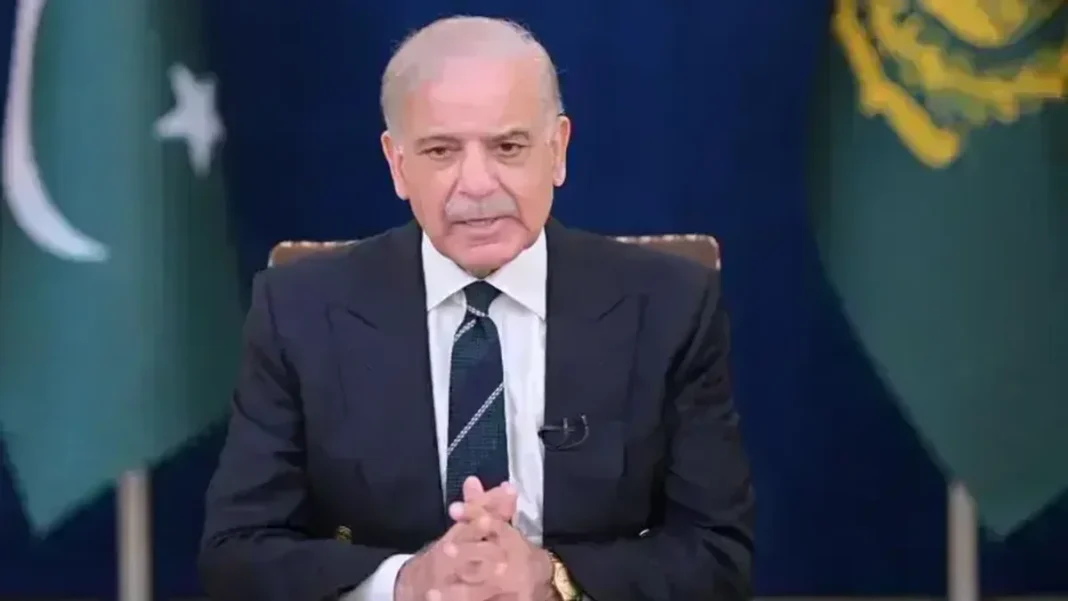
ISLAMABAD: Prime Minister Shehbaz Sharif warned tax officers on Monday that resistance to the ongoing FBR reforms would not be tolerated, directing the authorities to implement proposed measures to minimise the country’s tax gap.
The prime minister’s warning came during a weekly briefing on tax reforms. It followed a call for a pen-down strike by the Inland Revenue Officers Association. The strike call was later withdrawn after intervention by senior FBR officials. FBR Chairman Rashid Mahmood Langrial briefed the prime minister on the pilot project for faceless assessment and audit.
A source present at the meeting said the prime minister expressed displeasure over the strike announcement. “We will not tolerate any resistance against the ongoing reforms in the FBR,” PM Shehbaz was quoted as saying, adding that officers unwilling to work would be asked to leave.
Salaries quadrupled, results demanded
The prime minister reminded tax officers that their salaries had been increased fourfold and that they had been provided with vehicles and accommodation.
“We have extended every facility to these officers,” he said, adding that it was now their responsibility to deliver results and justify the incentives granted to them.
The message was blunt: the government has paid for performance, and it expects performance in return. The FBR sits at the centre of Pakistan’s fiscal plans, and the prime minister has made its overhaul a personal priority.
National Faceless Centre in Islamabad
The FBR has set up the National Faceless Centre (NFC) in Islamabad. Dedicated wings at the centre will handle audits and assessments through a faceless system aimed at reducing official discretion and direct contact between tax officials and taxpayers.
The centre is initially staffed by 27 officers. It has been tasked with auditing and assessing third-party data relating to 300,000 to 400,000 individuals under a pilot project that became effective on October 1. The data will be referred to the NFC in phases after the completion of initial compliance checks.
The faceless model is a sharp break from the old system. In the past, a taxpayer usually knew which officer was handling their case, which created room for pressure and bargaining. Under the faceless system, cases are assigned without revealing the officer’s identity, which is meant to cut corruption and make assessments more uniform.
The FBR has been moving towards technology-led enforcement for some time. It earlier rolled out AI monitoring of tax returns, and taxpayers were reminded of the tax return filing deadline. For individuals still catching up, our guide on how to file taxes explains the basics.
Officers suspended over strike call
Meanwhile, the FBR suspended two Inland Revenue Service officers, one in BS-20 and the other in BS-19. It also repatriated two other BS-20 officers to FBR headquarters for further investigation over an unauthorised press statement and a call to suspend official work.
The action signals that the government will not treat the strike call as a routine protest. By moving against the officers behind it, the FBR leadership has drawn a clear line.
According to an official announcement by the Prime Minister’s Secretariat, PM Shehbaz directed that the pace of FBR reforms be accelerated, noting that the initial results of the ongoing measures were encouraging.
He emphasised that the institution’s capacity must be continuously strengthened to bridge the tax gap. The tax gap, the difference between what should be collected and what is actually collected, remains one of the largest drags on Pakistan’s public finances.
The prime minister directed the FBR chairman to expedite the rollout of the faceless system in tax collection. “These reforms are in the larger interest of the state and will continue under all circumstances,” he said, adding that indiscriminate action should be taken against corrupt officials.
He further directed that officers and staff showing improvements in conduct and performance be given opportunities to reform, while those persisting in corruption and inefficiency would have no place in the organisation.
Why the FBR overhaul matters
Pakistan’s tax-to-GDP ratio is among the lowest in the region. Broadening the tax base has been a long-standing demand of the IMF, with which Pakistan reached a staff-level agreement for a $1.2 billion tranche earlier this month. The government has also extended tax concessions to content creators and influencers, trying to bring new segments of the economy into the net.
The faceless system is the operational core of that effort. If the pilot covering 300,000 to 400,000 individuals works, it will likely be scaled up, changing how millions of Pakistanis interact with the tax machinery.
Key developments
| Development | Detail |
|---|---|
| PM’s warning | No tolerance for resistance to FBR reforms |
| Strike call | By Inland Revenue Officers Association; later withdrawn |
| Faceless centre | National Faceless Centre set up in Islamabad |
| Pilot scope | Third-party data of 300,000 to 400,000 individuals |
| Pilot start | October 1 |
| Officers suspended | Two IRS officers (BS-20, BS-19); two repatriated |
Frequently asked questions
What did the prime minister say about FBR reforms?
PM Shehbaz Sharif said resistance to the ongoing reforms in the FBR would not be tolerated, and that officers unwilling to work would be asked to leave.
What is the faceless assessment system?
It is a system in which audits and assessments are handled without revealing the identity of the tax officer to the taxpayer, reducing discretion and direct contact. The National Faceless Centre in Islamabad now runs it, starting with a pilot covering third-party data of 300,000 to 400,000 individuals.
Why was there a strike call?
The Inland Revenue Officers Association called for a pen-down strike, which was later withdrawn after senior FBR officials intervened. The FBR suspended two officers and repatriated two others over the episode.
What has the FBR done about corrupt officials?
The prime minister directed indiscriminate action against corrupt officials, while officers showing improved conduct and performance will get opportunities to reform.