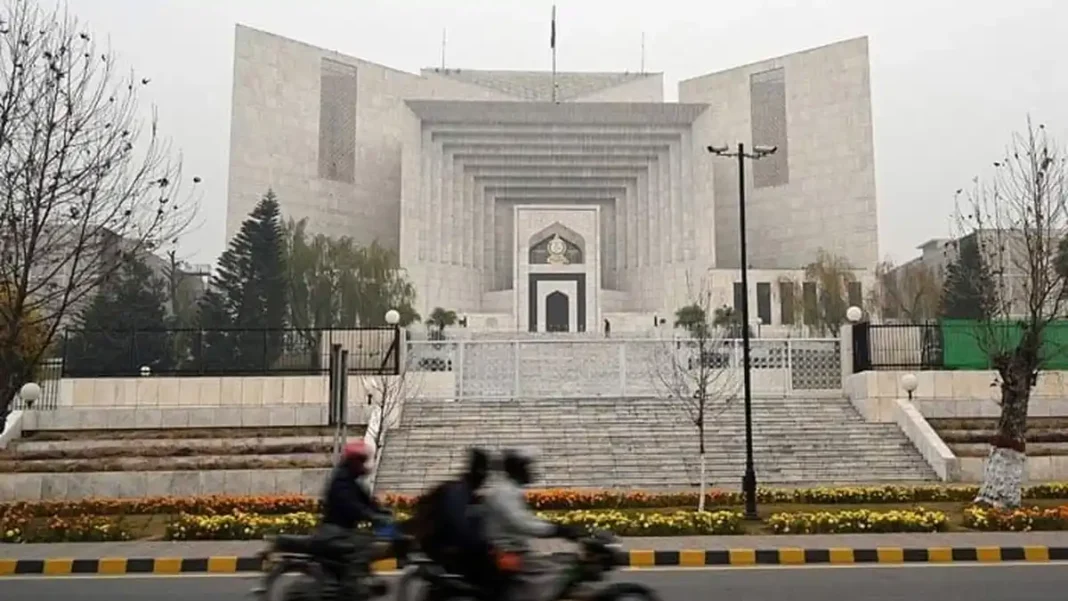
ISLAMABAD: The Supreme Court has set aside a Rs4.79 billion tax demand against the Universal Service Fund, ending the Universal Service Fund tax dispute in the fund’s favour.
A three-member bench headed by Justice Munib Akhtar overturned a March 21, 2025 decision of the Alternate Dispute Resolution Committee and held that Section 153(2)(b) of the Income Tax Ordinance, 2001 did not oblige the fund to make the deductions. The court also ruled that Section 21(c), which can disallow expenses when tax has not been deducted, did not apply to the case.
Universal Service Fund tax: how the dispute unfolded
The case grew out of the fund’s tax return for tax year 2023. Revenue authorities sought to amend the assessment, arguing that the fund had failed to deduct tax under Section 153 on payments to certain telecom licensees.
The fund challenged the amended assessment before the Commissioner of Appeals on February 29, 2024. After changes to the dispute resolution process under 2024 legislation, the matter went to the Alternate Dispute Resolution Committee, which ruled against the fund in March 2025. The Supreme Court has now overturned that decision and set the tax order aside. The decision is final, and it closes a dispute that began with the fund’s tax year 2023 return.
Why the ruling matters for rural broadband
The Universal Service Fund awards contracts to extend telecom services to unserved and underserved areas under Chapter V of the USF Rules, paying licensed operators to build networks where commercial returns alone would not justify the investment. A Rs4.79 billion liability would have cut directly into the money available for those projects.
The fund said it would continue expanding broadband access and telecom infrastructure in remote areas, and thanked the Ministry of Information Technology and Telecommunication and the Pakistan Telecommunication Authority for their support during the proceedings.
The decision also settles a legal question that affects how the fund operates: whether its payments to licensees count as the kind of transactions that trigger withholding obligations. The court answered no.
The ruling comes as the telecom sector faces wider regulatory pressure, from the PTA’s moves on competition rules and mobile package prices to its decision to scrap the one-year limit on telecom reviews. It also lands amid the FBR’s expanding use of AI to monitor tax returns, a sign that tax enforcement is getting sharper even as the courts draw boundaries around what the law requires. The bench’s approach fits the Supreme Court’s recent posture in regulatory disputes, including its rulings on administrative transfers and service cadres.
Frequently Asked Questions
What did the Supreme Court decide?
It set aside a Rs4.79 billion tax demand against the Universal Service Fund, ruling the fund was not required to deduct tax under Section 153(2)(b) of the Income Tax Ordinance, 2001.
What is the Universal Service Fund?
An autonomous body that contracts telecom operators to extend services to unserved and underserved areas of Pakistan.
What happens next?
The fund continues its broadband and infrastructure projects in remote areas, with the tax dispute resolved in its favour.