


ISLAMABAD: Pakistan is considering setting liquefied petroleum gas (LPG) prices daily instead of once a month, as rates surge to Rs750 per kilogram in northern areas and fears grow that a domestic cylinder could soon cost more than Rs10,000.
The shift aims to curb winter price hikes and discourage hoarding, with importers pressing for weekly or daily revisions instead of the current monthly cycle.
No final decision has been announced. If implemented, daily price-setting would fundamentally change how LPG prices are regulated in the country.
Why daily pricing is on the table
The monthly pricing system was designed for stable markets and is struggling to cope with the surge. LPG prices have climbed sharply in recent weeks, with northern areas reporting rates of up to Rs750 per kilogram, far above notified levels.
Importers argue a monthly formula cannot track fast-moving international prices and winter demand spikes, and want weekly or daily revisions so official rates follow market conditions more closely.
The government is examining a daily mechanism to narrow the gap between notified rates and market prices and remove the incentive to stockpile before monthly increases.
LPG is the primary household fuel in areas without piped gas, and a cylinder crossing Rs10,000 would put cooking fuel beyond the reach of many families.
Roti prices already rising
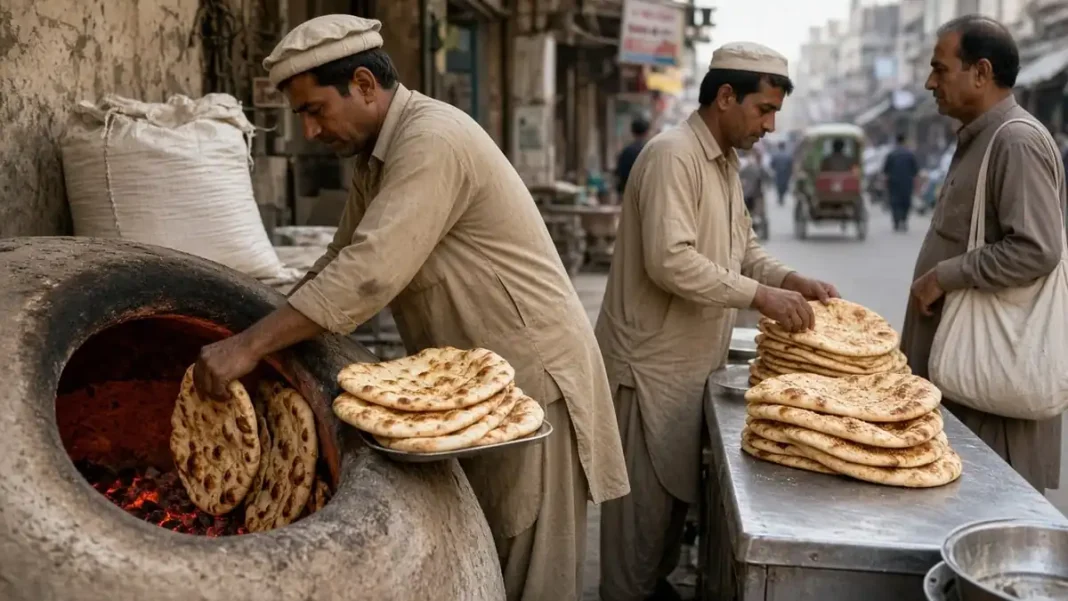
The pressure is already reaching the tandoor. Tandoor owners in several areas have raised roti prices on their own, with roti now selling for Rs17 to Rs20 in various localities.
Tandoor owners say LPG that should cost Rs300 per kilogram is being sold at arbitrary rates, with some paying as much as Rs600 per kilogram. At those input costs, they argue, a price hike on roti is unavoidable.
Citizens, however, say the administration must enforce official rates rather than leaving every shopkeeper free to charge what they wish. Residents have appealed to price control magistrates and the deputy commissioner to act, warning that self-imposed hikes are burdening households already hit by inflation.
When cooking gas doubles in the open market, the cost lands first on tandoors, then on every household buying bread.
An escalation of an earlier warning
The current surge is an escalation of a trend Feature Pakistan flagged earlier this month. In our October 18 investigation into LPG hoarding, the market rate had already diverged sharply from the notified price of Rs3,296, with dealers charging around Rs5,000 and regulators moving against stockpilers ahead of winter.
Four days later, the open-market rate in northern areas has climbed to Rs750 per kilogram, which translates to roughly Rs8,600 for a standard domestic cylinder before transport and retail margins. The Rs10,000 figure now being cited is therefore not a distant fear but the next step on the current trajectory.
That record matters for the policy debate. A monthly formula that lags the market by weeks creates predictable arbitrage: those who can store LPG buy at the old notified rate and sell into the shortage. Daily pricing would narrow that window, though it would also pass international volatility straight through to households.
What happens next
No timeline has been given for a decision. The government is weighing the importers’ proposal against the risk that daily revisions simply institutionalise higher prices, passing every uptick to consumers without the buffer that monthly averaging provides.
For households, the near-term outlook is difficult either way. Winter demand is rising, enforcement against hoarding remains patchy, and the notified price increasingly exists only on paper. Whether the answer is daily pricing, stricter enforcement, or both, the Rs750 per kilogram being charged in the north shows the current system is not holding.
The issue sits inside a wider fuel-price strain. Petrol and diesel were revised again for October 22, power consumers face capped but still heavy bills, and the petroleum levy dispute has put fuel taxation at the centre of street politics. LPG is now joining that list.
Frequently asked questions
What is the government considering on LPG prices?
Replacing the current monthly LPG price-setting system with daily revisions, so that official rates respond faster to market conditions during winter.
How high have LPG prices gone?
Up to Rs750 per kilogram in northern areas, raising fears that a domestic cylinder could cost more than Rs10,000. Tandoor owners report paying up to Rs600 per kilogram against a fair rate of about Rs300.
Why are roti prices rising?
Tandoor owners cite the LPG surge as forcing their hand, with roti now selling at Rs17 to Rs20 in several areas. Citizens want price control magistrates to enforce official rates instead.
Has a final decision been made?
No. The government is still examining the proposal, and importers’ calls for weekly or daily revisions remain under consideration.

 prices daily instead of once a month, as rates surge to Rs750 per kilogram in north)