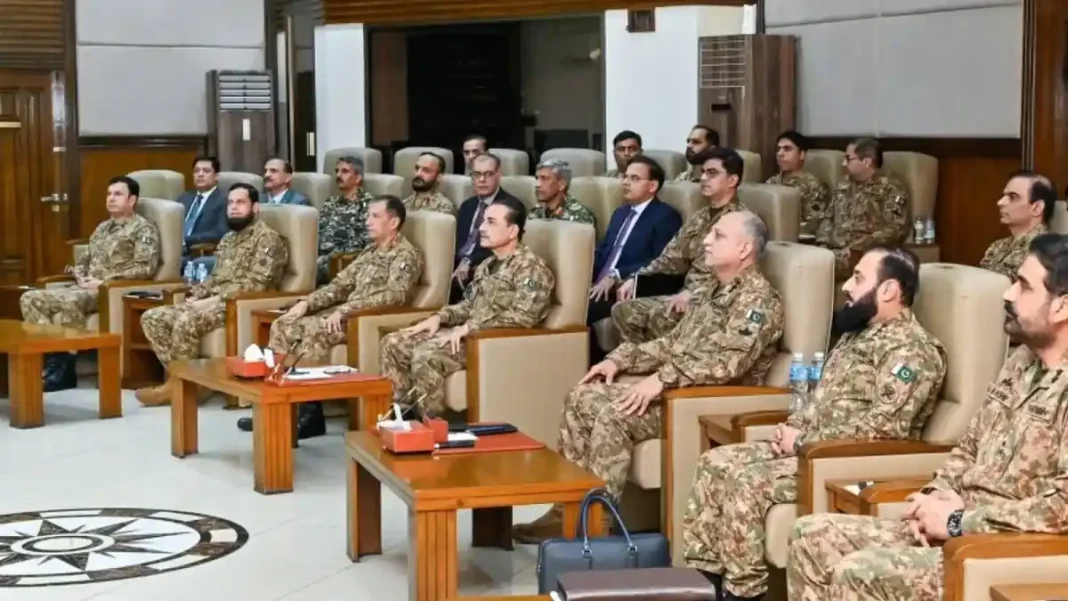
Chief of Defence Forces and Chief of Army Staff Field Marshal Asim Munir on Friday vowed to continue the campaign against “Indian-sponsored terrorist outfits” and “hit them hard wherever they are”, the military’s media wing said. The statement came during the CDF Munir Peshawar visit to the Corps Headquarters, his first major field engagement since the federal government’s emergency measures in Khyber-Pakhtunkhwa.
According to a statement issued by the Inter-Services Public Relations (ISPR), Munir was received by the Peshawar Corps Commander on arrival. He was briefed on the prevailing security situation, ongoing counter-terrorism operations, border management measures and the operational preparedness of formations deployed in the province.
“Field Marshal commended the high morale and professionalism of officers and troops, directing them to continue vigilance and highest standards of operational readiness to effectively counter threats,” the statement said.
“He underscored that we would continue the campaign against Indian-sponsored terrorist outfits to the fullest and hit them hard wherever they are,” ISPR quoted him as saying.
Tribute to sacrifices
Paying tribute to the sacrifices of the people of Pakistan, including the Shuhada and Ghazis of the security forces, Munir affirmed that with the support of the people, Pakistan would “surely inflict total defeat to the terrorists and their perverted ideology”.
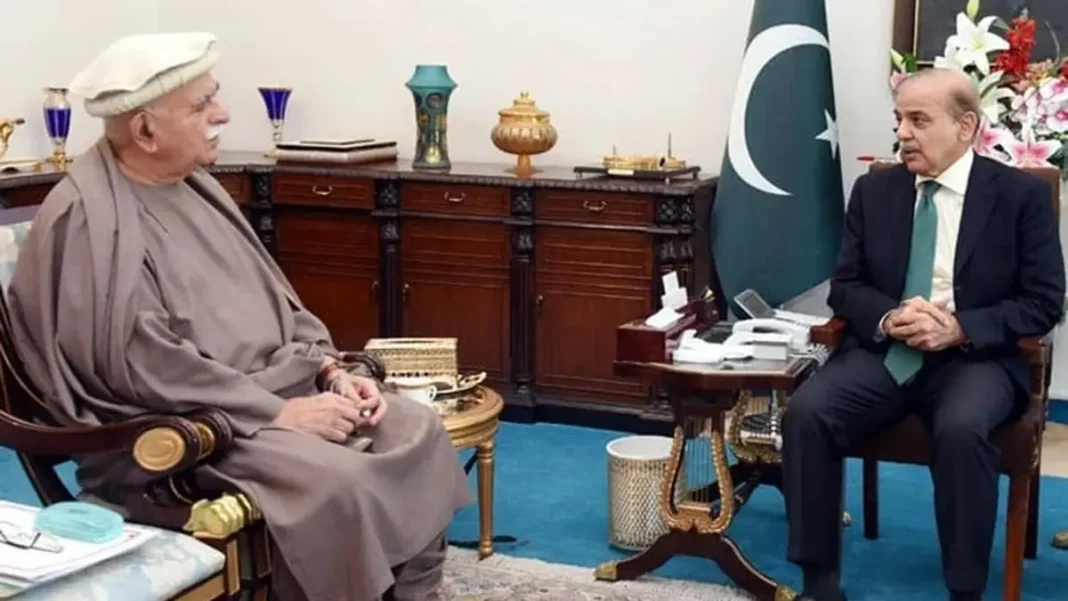
The visit followed a meeting of the Federal Apex Committee on the National Action Plan in Peshawar a day earlier, chaired by Prime Minister Shehbaz Sharif. The meeting reviewed the security situation in K-P, with the government reiterating its commitment to restoring peace and accelerating development in the province.
Shehbaz defended the imposition of emergency and governor’s rule in the province, saying the measures were necessitated by the deteriorating security situation and blaming the PTI for the resurgence of terrorism. Governor’s rule in K-P has been tied to counterterrorism cooperation, with the government insisting the constitutional steps are a last resort rather than a political move.
CDF Munir Peshawar visit: the security backdrop
The hard language reflects the scale of the challenge in K-P. Security assessments presented to the federal cabinet showed that terrorist incidents in the province increased by 195 per cent between March 2024 and September 2026, with police and security personnel bearing the brunt of the attacks.
On Thursday, four police personnel, including a Counter-Terrorism Department deputy superintendent of police, were martyred in an exchange of fire with armed men in Karak. In a separate incident in Bannu, two civilians were injured in a remote-controlled bomb explosion.
The same week, the military reported that ten terrorists were killed as security forces foiled attacks in Gwadar, Balochistan, in what ISPR described as an attempt by Indian-sponsored outfits to undermine the writ of the state. The state uses the term “Fitna al-Hindustan” for Balochistan-based groups to highlight what it says is Indian involvement in terrorism and destabilisation.
Frequently asked questions
What did CDF Munir say in Peshawar?
Field Marshal Asim Munir vowed to continue the campaign against “Indian-sponsored terrorist outfits” to the fullest and “hit them hard wherever they are”, during his visit to the Peshawar Corps Headquarters on October 23, 2026.
Why did the CDF visit Peshawar?
He was briefed on the security situation, ongoing counter-terrorism operations, border management and operational preparedness of formations in Khyber-Pakhtunkhwa, a day after the Federal Apex Committee on the National Action Plan met in the city.
What is the security situation in K-P?
Terrorist incidents in the province rose by 195 per cent between March 2024 and September 2026, according to assessments presented to the federal cabinet. Four police personnel were martyred in Karak a day before the visit.
What does the state mean by “Indian-sponsored” outfits?
Pakistan uses the term for Balochistan-based militant groups, such as the BLA, which it designates “Fitna al-Hindustan” to highlight what it says is Indian involvement in terrorism and destabilisation across Pakistan.