The UN loss and damage fund Nepal decision marks a turning point for global climate finance. The fund’s board agreed on Thursday to set aside $20 million for Nepal, the first time it has earmarked money for any country since it became operational.
In an extraordinary meeting, the board of the Fund for Responding to Loss and Damage responded to Nepal’s formal request for emergency support after the devastating Bhote Koshi floods of August. The decision is being described as a key test of the body’s credibility, and a possible model for how climate-vulnerable nations access help after disasters.
UN loss and damage fund Nepal move follows deadly August floods
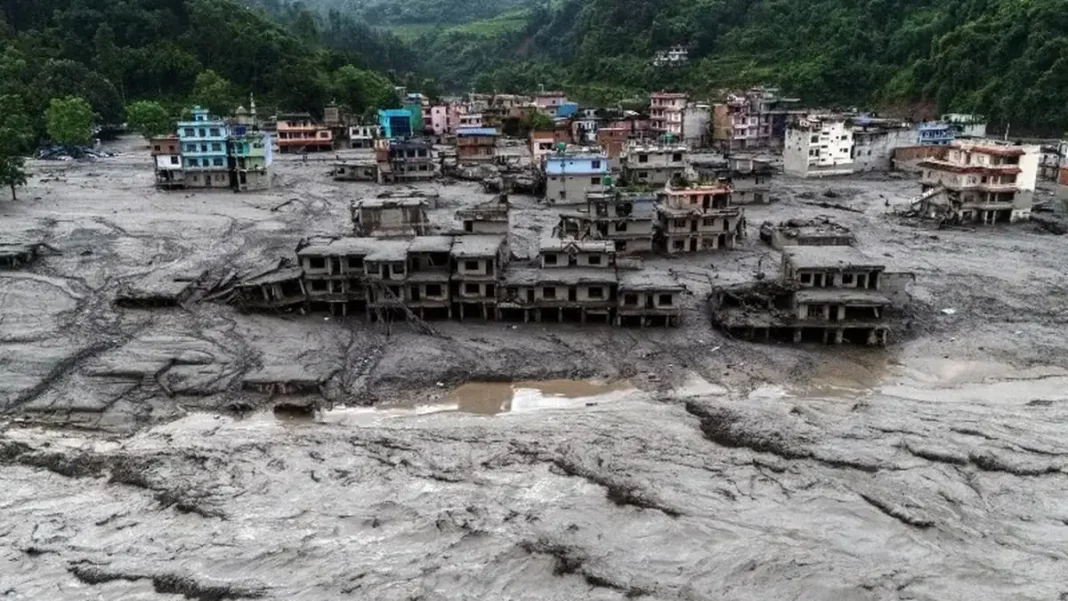
Nepal was struck on August 26 when a climate-induced ice and rock avalanche set off a debris flow and flooding along the Bhotekoshi-Trishuli-Narayani river system. The floods killed more than 1,400 people and left over 5,000 missing, according to figures cited by international news agencies.
On August 31, Nepal’s finance minister Swarnim Wagle and the country’s environment minister wrote to the board’s co-chairs. They asked the board to “take a special decision to respond rapidly, directly and effectively”, arguing that Nepal contributes negligibly to global emissions yet faces escalating climate impacts.
Board members from Africa, Asia-Pacific and the least developed countries then sought the extraordinary meeting. Members from Latin America, small island states, Eastern Europe and developed countries sent letters of support.
Camila Minerva Rodriguez Tavarez, the Dominican co-chair of the board, called the outcome “truly historic” and thanked members for “allowing us to act promptly and have a response to Nepal”.
Reacting to the news, Nepal’s finance minister Wagle said: “The fact that they could convene this emergency meeting in response to our letter and commit $20 million of grant money is very welcome.”
A fraction of the damage, but a first for the fund
The $20 million is the maximum amount countries can request in a single application. It covers less than 0.5 per cent of Nepal’s $4.78 billion estimate for reconstruction, and only about 0.7 per cent of preliminary damage estimates.
Nepal will first have to present a formal proposal for the board’s approval, with no firm timeline for the process. The board will consider the request at its next meeting in December. A separate $1.6 million oversight fee was also approved.
The creation of the Fund for Responding to Loss and Damage was hard-won at the UN climate conferences of 2022 and 2023 by developing countries, many of them among the least responsible for climate change yet most vulnerable to its impacts. It became operational at COP28 in 2023.
Since then, critics have faulted both the meagre pledges from rich nations, around $822 million to date, and the fact that no money has been disbursed until now.
Why this matters for Pakistan
The decision carries weight in Pakistan. The country pushed hard for the fund’s creation after its own catastrophic floods, and it watches closely whenever climate finance machinery moves. Pakistan’s new climate forecasting system, which aims to give disaster outlooks up to 12 months ahead, reflects the same urgency: early money and early warning decide how many lives a flood claims.
The timing also matters. COP31 opens in Turkey next month, and the Nepal decision will be presented as proof that the fund can act. Climate campaigners welcomed the move but urged the board to build a permanent rapid-response system, warning that the gap between available funding and real recovery needs remains wide.
Sindh’s own experience with rainfall deficits and flood cycles shows why the region tracks these mechanisms. With Lahore topping global pollution rankings and the World Bank urging faster reforms, the climate and development agenda keeps pressing on Pakistan from several directions at once. For countries like Nepal and Pakistan, the question is no longer whether climate disasters will come, but whether the money promised after them ever arrives.
The board’s answer, at least for Nepal, has now begun to take shape.
Frequently asked questions
What is the UN loss and damage fund?
The Fund for Responding to Loss and Damage was created at the UN climate conferences of 2022 and 2023 to give financial help to developing countries hit by climate disasters. It became operational at COP28 in 2023.