Pakistan Warns UN Peacekeeping Must Not Weaken
Pakistan has urged the United Nations not to let financial constraints and cost-cutting weaken UN peacekeeping, warning that cuts in resources could undermine the organisation’s ability to keep international peace and security.
The warning came as the General Assembly approved a $5.1 billion budget for peacekeeping in 2026-27, about 10 per cent lower than the previous year’s allocation. A funding crisis last year had already forced the organisation to cut mission spending and send home a quarter of its uniformed personnel.
Pakistan’s Permanent Representative, Ambassador Syed Haider Shah, told the Fourth Committee of the 81st session of the UN General Assembly on Friday that reforms should make peacekeeping more effective without giving up the capabilities missions need to do their jobs.
“What is needed is the political will in the Security Council to use this important instrument when circumstances require,” he said.
UN peacekeeping faces a funding squeeze
The gap between what missions are asked to do and what they are given to do it with sits at the centre of Pakistan’s case. Political aims should come first, Ambassador Shah argued, and a mission’s mandate should then decide the people, equipment and money it needs. Financial ceilings should not decide what a mission can do.
Peacekeeping missions help steady conflict zones, protect civilians, hold ceasefires and keep room open for talks. Those jobs depend on political processes and proper resources working together.
Pakistan also urged member states to protect what makes UN peacekeeping distinct: its universal legitimacy, predictable funding, set command and logistics systems, and its ability to draw troops and skills from across the membership.
“Efficiency and cost reduction must therefore strengthen peacekeeping, not hollow out the capabilities that give UN peacekeeping its unique value,” the ambassador said.
Pakistan’s record in UN peacekeeping
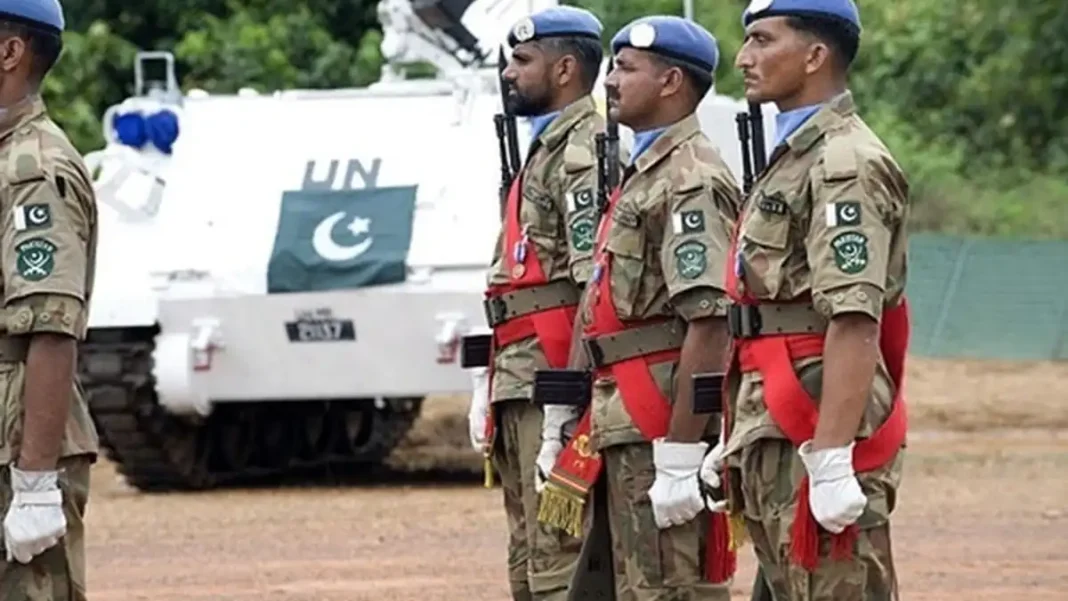
Pakistan is one of the largest and longest-serving contributors to UN peacekeeping. More than 170,000 Pakistani military and police personnel have served in UN missions over the past six decades, and 183 have lost their lives. Pakistan also hosts the United Nations Military Observer Group in India and Pakistan (UNMOGIP).
Pakistan’s terms on the UN Security Council set out how Islamabad sees the Council’s role, while Pakistan’s UN mission in New York carries that work day to day. The role of Pakistan’s representative to the UN covers the envoy’s brief in full.
Ambassador Shah’s intervention came as peacekeeping faced not only money problems but harder political conditions on the ground. Growing use of regional arrangements and ad hoc operations showed, he argued, that the need for a credible UN presence had not gone away.
Six priorities for reform
Pakistan set out six priorities for reform: giving primacy to political solutions; ensuring focused and adequately resourced mandates; preserving the institutional strengths of peacekeeping; preparing for future military and police needs; improving the safety and security of peacekeepers; and keeping peacekeeping a collective UN responsibility.
The protection of peacekeepers and accountability for crimes against them formed another large part of Pakistan’s case. Pakistan, alongside Denmark, played a leading role in advancing UN Security Council Resolution 2823, which was adopted unanimously with a record 153 co-sponsors. The resolution seeks to strengthen accountability for crimes against UN peacekeepers, an issue Pakistan has raised at the UN repeatedly.
Welcoming the secretary-general’s first report on accountability for crimes against peacekeepers, Ambassador Shah also noted the appointment of Assistant Secretary-General Elizabeth Spehar as Senior Focal Point on the matter.
He called for the resolution to be put into effect through stronger investigations and prosecutions, better tracking of cases and more support for national capacities, so those who attack peacekeepers face justice.
What happens next
Pakistan also stressed the role of the Special Committee on Peacekeeping Operations, known as C-34, describing it as the universal forum for shaping peacekeeping policy together. The consensus in the committee, along with the broad support for Resolution 2823, showed that member states still saw peacekeeping as a key tool of international cooperation.
“Peacekeeping remains a vital, effective and cost-efficient means for ensuring peace and security. We will need this instrument again. We should ensure that it is ready when we do,” Ambassador Shah said.
The test now is whether the budget squeeze eases or deepens. If funding keeps falling, missions will have to do more with less, and Pakistan’s warning is that the cost will show up in the field.
Frequently asked questions
What did Pakistan ask the UN to do?
Pakistan urged the UN not to let budget cuts weaken peacekeeping, and called for reforms that improve effectiveness without cutting the capabilities missions need.
How big is the UN peacekeeping budget?
The General Assembly approved a $5.1 billion budget for 2026-27, about 10 per cent lower than the previous year. A funding crisis last year forced missions to cut spending and repatriate a quarter of uniformed personnel.
How many Pakistanis have served in UN peacekeeping?
More than 170,000 Pakistani military and police personnel have served in UN missions over six decades, and 183 have lost their lives.
What is Resolution 2823?
It is a UN Security Council resolution, led by Pakistan and Denmark, that seeks stronger accountability for crimes against UN peacekeepers. It was adopted unanimously with a record 153 co-sponsors.