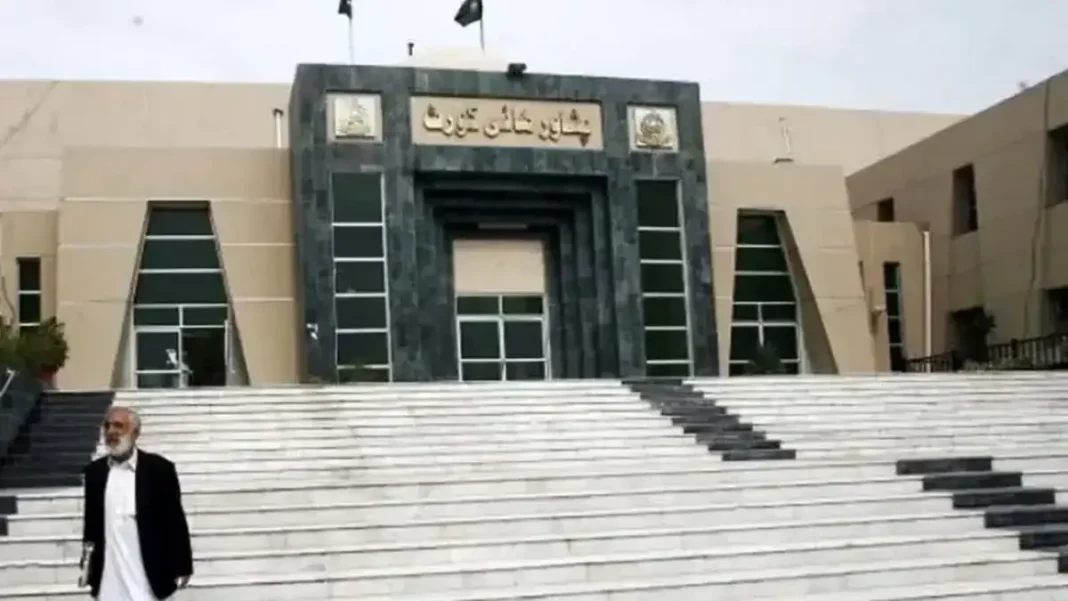
PHC Rules Video Link Evidence Must Protect Fair Trial
The Peshawar High Court has upheld video link evidence in criminal trials, but ruled that it must sit in harmony with the constitutional guarantee of a fair trial. A single-member bench of Justice Aurangzeb Khan gave the ruling in a 28-page judgement.
“The use of technology is a means of facilitating the administration of justice and cannot be permitted to become a source of prejudice to either party,” he observed. The court held that Article 10-A protects more than the formal conduct of a hearing: every party must have a real chance to present its case and challenge the evidence.
What the court decided on video link evidence
The bench allowed a complainant to appear as a witness by video link, but issued binding directions on how it must be done. If the safeguards could not be secured, the witness should appear in person. Article 164 of the Qanun-i-Shahadat Order, as amended in 2023, recognised modern devices to record evidence, and must be read with Article 10-A.
“Although the mode of recording may change, the essential safeguards relating to the identity, independence and credibility of a witness, as well as the right of an accused to effectively cross-examine such witness, remain intact,” the bench observed.
The Bannu case behind the ruling
The judgement came in a revision plea by a murder-trial suspect. He had challenged a Bannu trial court order of February 25, 2026, which refused his request for the complainant to appear in person. The trial court had allowed her to record her statement by video link on January 10, 2026, after she cited a security threat in Bannu. The defence raised no objection then.
On January 15, she appeared from the Sessions Courts in Peshawar. During her examination-in-chief, the defence objected that four advocates near the rostrum prompted her when she forgot something. The defence and the petitioner then left the courtroom, and her statement could not be recorded. Security in Bannu remains a live concern; Feature Pakistan has reported on Section 144 curbs in Bannu and Lakki Marwat.
Safeguards the trial court must follow
The bench directed the trial court to allow virtual examination only under Rule 4 of the court’s Virtual Court Proceedings Rules, 2026, meeting the requirements in Rule 4(7) for criminal proceedings. An authorised virtual assistant, nominated by the Peshawar district and sessions judge, must be present, and the witness’s identity must be verified under Rule 8(5) to (7). The trial judge must also examine the prompting objection and follow Rules 8(9) and (10), so no unauthorised person takes part without permission.
“The adoption of video conferencing does not relieve the trial court of its responsibility to supervise the process and ensure that the evidence is recorded in a fair, transparent and reliable manner,” the bench maintained.
The legal framework
The judgement discusses the Constitution, the Qanun-i-Shahadat Order, 1984, and the Code of Criminal Procedure, along with the court’s Virtual Court Proceedings Rules, 2026, notified on March 11, 2026. Rule 4 enables virtual proceedings, and sub-rules 12 and 14 state that proceedings held virtually are judicial proceedings, with the same formalities as in-person hearings. Schedule-B provides that where the person appears from another district’s court, the virtual assistant should be an official nominated by that district’s sessions judge.
Why the ruling matters
Video links are now routine in Pakistani courts, and this judgement sets a clear test for trial courts in Khyber Pakhtunkhwa. It accepts that technology can improve access to justice and help witnesses facing security threats, while keeping the rights of the accused in place. Remote proceedings are now common, from jail trials to hearings outside courtrooms. Rights groups have already raised concerns about anti-terror laws and fair trial rights in Punjab, as Feature Pakistan reported earlier. The Peshawar High Court is also hearing a petition against the KP emergency and a plea over the detention of Sohail Afridi’s brother.
Frequently asked questions
What did the Peshawar High Court decide about video link evidence?
The court upheld video conferencing to record evidence in trials, subject to the Article 10-A guarantee, and issued binding safeguards.
What is Article 10-A of the Constitution?
Article 10-A guarantees the right to a fair trial and due process: every party must have a real chance to present its case and challenge the evidence.
What are the Peshawar High Court Virtual Court Proceedings Rules 2026?
Notified on March 11, 2026, they govern virtual court proceedings in Khyber Pakhtunkhwa. Rule 4 is the main enabling provision, covering identity checks, the virtual assistant and unauthorised persons.
Can a witness be examined without appearing in person?
Yes, if the court grants permission and the safeguards are met. If they cannot be secured, the witness should appear in person or by another mode allowed by law.
What happens if the safeguards cannot be met?
If the safeguards cannot be secured through video conferencing, the trial court should consider requiring the witness to appear in person or adopt another mode allowed by law.