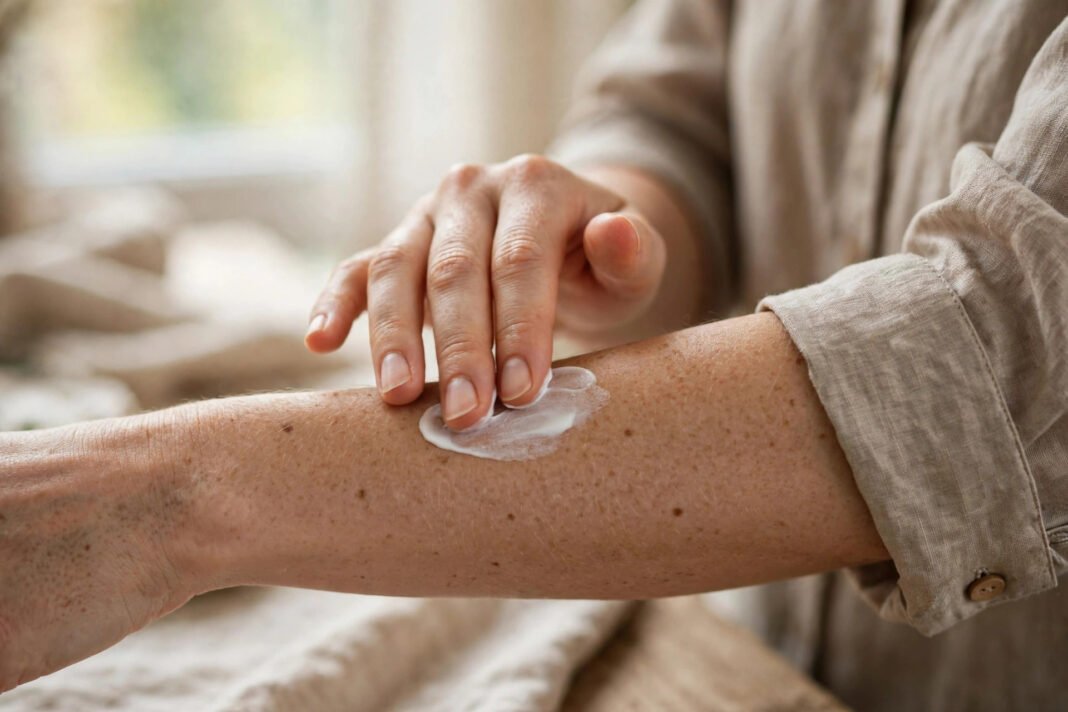
Autumn arrives, and so does the itch. Your skin feels tight, your arms and legs start to itch, and no amount of scratching seems to help. Autumn skin itching is one of the most common complaints of the colder months. Most of the time, it is just dry skin. But sometimes it is not. Sometimes that itch is eczema or dermatitis, and treating it like ordinary dry skin will not help. This article shows you how to tell the difference, what makes it worse, and when it is time to see a doctor.
Why Autumn Skin Itching Starts
Your skin has a natural barrier that holds moisture in and keeps irritants out. In autumn, that barrier comes under attack from two sides. Cold air outside holds less moisture, and indoor heating dries the air even more. So water leaves your skin faster than your skin can replace it.
Hot showers make it worse, because hot water strips away the oils that protect your skin. Harsh soaps can do the same. And as you get older, your skin makes less oil, so it dries out more easily. That is why autumn skin itching often starts in the weeks when the heating goes on and the temperature drops.
What Simple Dry Skin Looks Like
Simple dry skin, which doctors call xerosis, is the most common cause of itching. It usually feels tight and rough, and it may look flaky or ashy, especially after a bath or shower. You may see fine cracks, often on your shins, hands, elbows, or heels. The itch is usually mild, and it comes and goes.
The good news is that simple dry skin usually improves with regular moisturizer. If your skin feels better within a week or two of looking after it, it was probably just dry. Our guide on how to hydrate dry skin walks through a simple routine that helps. But if the itch keeps coming back, or if moisturizer does not help, something else may be going on.
Dry skin can appear anywhere, but it often shows up first on the shins, the backs of the hands, and the forearms. Dry skin is the most common cause of itching, so if your itch is mild and your skin looks flaky rather than inflamed, dryness is the most likely cause. And dry skin often improves quickly once you start moisturizing regularly.
When Autumn Skin Itching Means Eczema
Eczema is the name for a group of conditions that make the skin itchy and inflamed. The most common type is atopic dermatitis, a long-term condition that comes and goes in flares. People with eczema have a weaker skin barrier and an overactive immune response, so their skin reacts more strongly to irritants. Eczema is not contagious, and you cannot catch it from someone else.
The itch of eczema is often intense, and it can disturb your sleep. The skin may show inflamed patches. On lighter skin they look red or pink, and on darker skin they may look dark brown, purple, or grey. Patches may ooze, crust over, or thicken over time. In adults, eczema often appears on the hands, neck, inner elbows, the backs of the knees, and around the eyes. If your itch looks like this, it may be eczema, and a doctor can confirm it.
Eczema or Dermatitis: What Is the Difference?
The words eczema and dermatitis are often used to mean the same thing, and that can be confusing. Dermatitis is the broad term for inflamed skin. Eczema is a type of dermatitis, and atopic dermatitis is the most common form of eczema. So all eczema is dermatitis, but not all dermatitis is eczema.
One common type is contact dermatitis, which happens when something touches your skin and irritates it. The trigger may be an irritant, such as soap, detergent, or water. Or it may be an allergy, for example to nickel or rubber gloves. Contact dermatitis usually appears only where the skin touched the trigger. So if a rash appears on your hands after using a new soap, contact dermatitis is a likely cause.
How to Tell Autumn Skin Itching From Simple Dryness
So how do you tell the difference? Start with the itch. Dry skin itches mildly, but eczema itches intensely, and scratching often makes it worse. Then look at the skin. Dry skin flakes but is not usually inflamed. Eczema forms patches that may be swollen, bumpy, or dotted with small blisters.
Next, think about the pattern. Dry skin usually affects the hands, arms, and lower legs, and it improves with moisturizer. Eczema tends to come back in the same places, in flares that last weeks. A family history of eczema, asthma, or hay fever also makes eczema more likely. And if your skin does not improve after a couple of weeks of gentle care, that is a sign to get it checked.
Triggers That Make Autumn Skin Itching Worse
Several everyday things can make autumn skin itching worse. Long, hot showers strip the skin of its natural oils. Harsh soaps and cleansers do the same. Fragranced products can irritate sensitive skin, so fragrance-free products are a safer choice. Wool and rough fabrics can rub against the skin and trigger itching too.
Stress can also play a part, because stress can make eczema flare. Cold, dry air and indoor heating are the biggest autumn triggers of all. And scratching, although it feels good for a moment, damages the skin and lets more irritants in. So the itch-scratch cycle can keep the problem going for weeks.
Gentle Daily Care for Itchy Autumn Skin
Gentle care can make a big difference, whether your skin is simply dry or prone to eczema. Keep showers short, about five to ten minutes, and use warm water instead of hot water. Use a gentle, fragrance-free cleanser, and wash with your fingertips instead of a rough cloth. Pat your skin dry with a towel instead of rubbing it.
Moisturize while your skin is still damp, because that traps moisture in. Creams and ointments add more moisture than lotions, so they work better for dry skin. Use a humidifier in your bedroom if the air is very dry, and wear gloves when you go out in cold weather. Skin health starts from the inside too. Our guide to the best foods for healthy skin has simple ideas that support your skin.
What you wear matters too. Soft cotton and smooth fabrics are kinder to itchy skin than wool or rough synthetics. Wash new clothes before you wear them, and choose fragrance-free laundry products. At night, keep your bedroom cool and your bedding light, because overheating can make itching worse. And when the urge to scratch comes, try pressing a cool, damp cloth on the skin instead. It can calm the itch without damaging the skin.
When Itching Needs a Doctor
Most autumn itching settles with gentle care, but some itching needs a doctor. See a doctor if the itching lasts longer than a couple of weeks, or if it keeps you from sleeping. Get help quickly if your skin is swollen, oozing, or crusty. Open cuts or sores from scratching need a doctor too. These can be signs of infection.
Also see a doctor if the itch is all over your body, or if it is severe. Itching during pregnancy needs a doctor too, especially if it is severe or starts on the hands and feet. And if any product, including a moisturizer, causes burning or stinging, stop using it and tell your doctor. Only a doctor can diagnose eczema or dermatitis, so do not try to diagnose yourself.
Your Skin Is Talking to You
Your skin tells you a lot if you listen. Mild itching that improves with moisturizer is usually just dry skin. But intense itching, inflamed patches, and flares that keep coming back are your skin’s way of saying it needs more help. You do not have to put up with itching that disturbs your sleep or your daily life.
Autumn skin itching is common, but it is not something you have to accept. Gentle care helps most skin, and a doctor can help with the rest. So look after your skin, watch for the warning signs, and get help when you need it.
Has autumn itching ever kept you awake at night? What helped your skin the most?
This article is for general information only. It is not medical advice.