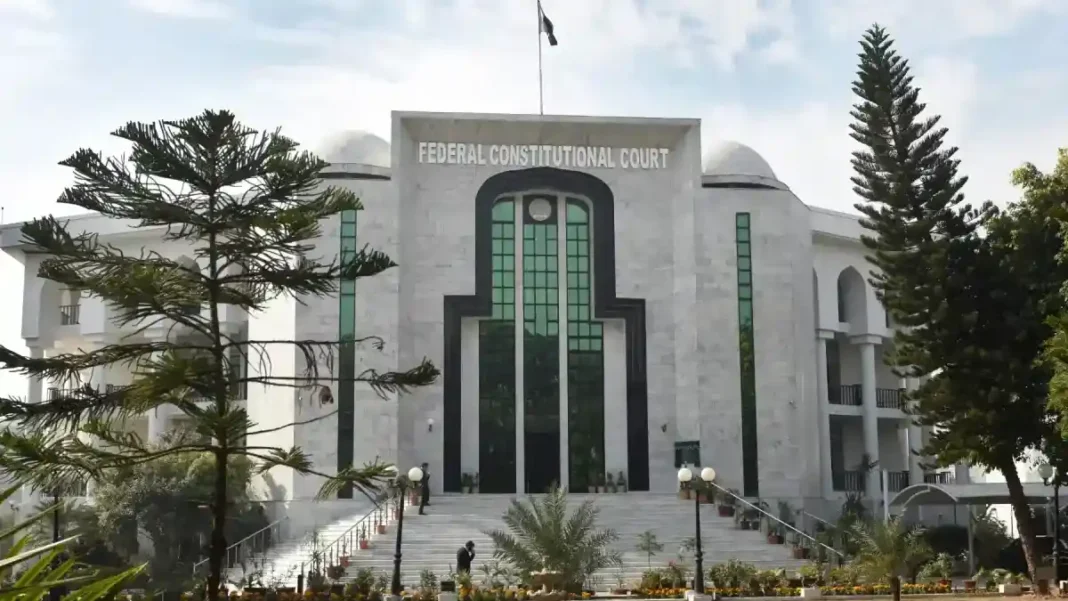
FCC: PHC Can Hear Other Cases, Not PTI Detention Cases
The Federal Constitutional Court (FCC) on Monday, November 16, clarified that the Peshawar High Court (PHC) can resume hearing constitutional petitions, but PTI detention cases under the Maintenance of Public Order (MPO) Ordinance and challenges to governor’s rule in Khyber Pakhtunkhwa stay barred.
A two-member bench headed by Chief Justice Aminuddin Khan, with Justice Aamer Farooq, issued the clarification while hearing a case about the high court’s constitutional jurisdiction. The court said its November 5 order, which had restricted proceedings under Article 199 of the Constitution, applied only to cases about governor’s rule and arrests under the MPO. The high court can therefore proceed with other constitutional petitions.
The clarification is a partial win for the PTI, but not the relief it sought. Party chairman Barrister Gohar Ali Khan told reporters afterwards that he was disappointed, saying the court had not allowed the high court to hear the detention cases themselves. He said thousands of PTI workers remained detained under the MPO without an effective legal remedy.
PTI detention cases: what the FCC decided
The bench allowed the PHC to take up other petitions under Article 199, but the bar stays on two categories: petitions challenging the October 11 proclamation of emergency and governor’s rule, and petitions about detentions under Section 3 of the MPO Ordinance.
The FCC had barred the PHC from hearing the cases on November 5. Its order suspended proceedings in cases filed under Article 199 on or after October 12, citing clauses 3 and 4 of Article 245, under which the armed forces were called in aid of civil power across KP. Under Article 245(3), a high court cannot exercise jurisdiction under Article 199 in an area where the armed forces are acting in aid of civil power.
The FCC is seized with more than 60 appeals against PHC interim orders, moved by the additional chief secretary of the KP Home and Tribal Affairs Department. Before the November 5 bar, the PHC had granted interim bail to detainees against surety bonds of Rs100,000 each, and had restrained arrests under Section 3 of the MPO. The high court’s administrative committee then stopped scheduling the affected petitions, and around 105 petitions were removed from its November 10 cause lists, including challenges to the emergency and governor’s rule and petitions seeking the recovery of detained leaders.
Gohar and the review board
Barrister Gohar argued that the November 5 order had badly affected proceedings before the high court and brought legal practice to a halt. He said several PTI workers remained in detention, many held at Police Lines in KP, and that questions about the maintainability of the petitions had yet to be decided.
Justice Farooq observed that a literal reading of Article 245 suggested Article 199 cases could not be heard, but a strict reading would bring the whole judicial system to a standstill.
Barrister Gohar further said no board had been set up in KP to review preventive detention cases. The advocate general replied it would be formed after three months, and detainees could approach it if their detention went beyond that period.
The court also allowed the Peshawar Bar Council to become a party to the proceedings, observing that the emergency raised an important constitutional question that warranted the participation of bar councils. Chief Justice Aminuddin Khan said several miscellaneous applications had been filed at the court’s Peshawar registry and would be examined when placed before the bench.
Why the emergency was imposed
The federal government imposed emergency and governor’s rule in KP on October 11, citing the provincial government’s deliberate disengagement from the fight against terrorism. President Asif Ali Zardari approved the move on the federal government’s recommendation. Governor Faisal Karim Kundi assumed executive authority, and the PTI-led provincial government became non-functional. The army was called in aid of civil power under Article 245.
Scores of PTI workers and leaders, including lawmakers, were detained after the October 11 move. Sohail Afridi, rendered non-functional as chief minister by the move, has not been seen since, and a federal minister confirmed he and some cabinet members were in preventive custody. Opposition leaders have already moved the FCC seeking their release, as Feature Pakistan reported.
The fallout has spread beyond the courts. Lawyers across KP observed a strike on November 10 against the suspension of the high court’s powers, and the KP Bar Council warned it would begin an indefinite strike if the powers were not restored by November 16. Section 144 has been imposed in five KP districts, as Feature Pakistan reported, and the PHC has also ruled on video-link evidence and fair trial. Related cases include Bushra Bibi’s plea before the Islamabad High Court and protests over the Diamer by-election.
Frequently asked questions
What did the FCC decide about the PHC and PTI detention cases?
The FCC clarified that the PHC can resume hearing constitutional petitions under Article 199, but not cases challenging governor’s rule and the emergency, and not detentions under the MPO Ordinance.
Why had the PHC been barred from hearing these cases?
The FCC barred the PHC on November 5 under Article 245(3) and (4), which bar a high court from Article 199 jurisdiction where the armed forces act in aid of civil power.
How many appeals is the FCC hearing in this matter?
More than 60 appeals against PHC interim orders, moved by the additional chief secretary of the KP Home and Tribal Affairs Department.
What did the KP government say about reviewing detentions?
No review board has been set up yet. The advocate general told the court it would be formed after three months, and detentions going beyond that period could be referred to it.
What happens to the detained PTI workers now?
Their detention cases stay barred from the PHC for now. Gohar said the party would keep pressing for the high court to hear them, arguing that denying MPO detainees access to bail and judicial hearings violates fundamental rights. The FCC adjourned the hearing for an indefinite period.