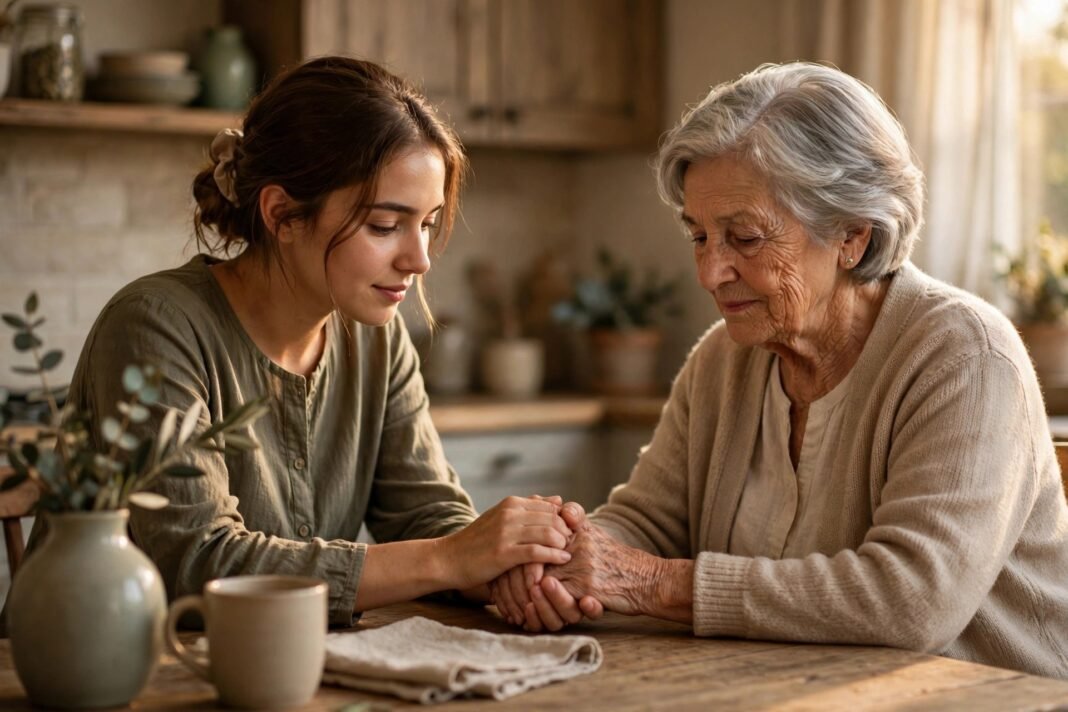
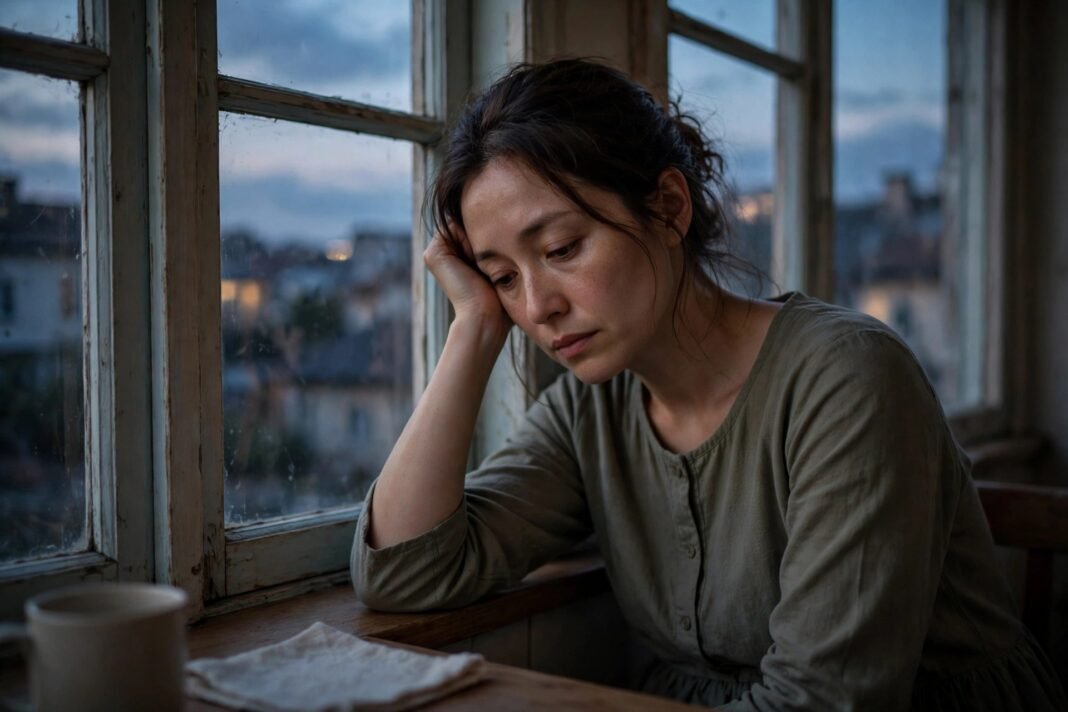
She smiles at work, laughs with her friends, and says “I’m fine” when anyone asks. Then she closes her front door, and the smile falls away. The tears come in the kitchen, or in the shower, where nobody can hear them. This is emotional exhaustion in women — a tiredness that rest cannot fix, hidden behind a brave face.
If this sounds familiar, you are not alone, and you are not weak. Many women carry this hidden burden for months or years before anyone notices. They keep going because others depend on them. But the cost grows quietly, day by day. So this article looks at why women hide their exhaustion, what it costs, and how to start feeling like yourself again.
Emotional Exhaustion in Women: What the Mask Hides
Masking means showing the world a calm face while you feel worn out inside. You answer messages with a smile, but you have no energy to meet anyone. You say yes to every favour, because saying no feels selfish. And you keep the tears for private moments, because you do not want to worry anyone.
For example, a woman may run a home, hold a job, and care for her parents — all while telling herself she should cope. She may feel numb one day and tearful the next. This is not a character flaw. It is what happens when the demands on you stay high and the rest stays low for too long.
The mask often starts as protection. You smile because you do not want questions, or because work expects it. At first, it feels like control. But over time, the gap between how you look and how you feel grows wider. And holding the two apart takes energy you do not have.
Why So Many Women Hide How Tired They Really Are
Many women learn early that being strong means never complaining. People praise them for coping, for smiling, and for putting others first. So admitting tiredness can feel like failure. They may also fear that honesty will burden the people they love.
There is another reason too. When a woman says she is exhausted, people sometimes tell her to rest more, as if rest were easy to find. But rest is hard when the work never stops. So emotional exhaustion in women often stays hidden, and the mask grows heavier. If loneliness is part of the weight, the hiding can feel even harder.
Culture adds another layer. Films, adverts, and social media often show women who do it all with a smile. So the gap between that image and real life can feel shameful. But the image is a performance, not a standard. Real women get tired, cry, and need help. And admitting that does not make you less of a woman. It makes you an honest one.
The Quiet Signs of Emotional Exhaustion in Women
Emotional exhaustion rarely arrives all at once. It builds slowly, and the signs are easy to miss. You may feel tired even after a full night of sleep. Small tasks may feel huge, and small problems may bring tears. You may also feel detached, as if you are watching your own life from far away. Tears may come easily, or you may feel numb for no clear reason.
Other signs include losing patience faster than usual, or losing interest in things you once loved. You may forget simple things, or find it hard to focus. None of these signs means something is wrong with you. They are signals that your emotional energy is running low, and that something needs to change.
What Science Says About Exhaustion
The World Health Organization describes burn-out in its ICD-11 classification as a syndrome that comes from chronic workplace stress that stays unmanaged. It lists three dimensions: feelings of energy depletion or exhaustion, increased mental distance from your job, and reduced professional efficacy. The WHO classes burn-out as an occupational phenomenon, not a medical condition, and says the term applies to the work context.
But emotional exhaustion is wider than work alone. It can grow from caring for family, from money worries, or from years of putting yourself last. So the WHO definition is a useful starting point, not the whole picture. If low mood follows the seasons, that may be a different pattern, and it helps to know the difference. Our guide on seasonal depression in women explains how the darker months can affect mood.
The Cost of Always Being the Strong One
Being strong for everyone has a price. It can strain your closest relationships, because the people you love never see the real you. It can also steal your joy, because you have no energy left for the things that make you happy. Over time, you may forget what you even enjoy.
Your body pays a price too. Ongoing stress can disturb your sleep, tighten your muscles, and leave you feeling run down. And because you hide it, nobody offers help. So the strongest woman in the room can also be the loneliest one. That is the cruel cost of the mask. If you feel alone even in your own marriage, our guide on feeling married but lonely may speak to you too.
Friendships can fade too. When you have no energy left, you cancel plans and stop replying. Friends may think you do not care, but the truth is simpler — you are running on empty. So the mask can leave you lonelier than the tiredness itself. And loneliness makes the exhaustion harder to shake.
Emotional Exhaustion in Women: Small Steps That Help
You do not need a big life change to start feeling better. Small steps count, and they add up fast. Firstly, protect one small pocket of rest each day, even if it is only fifteen minutes. Use it for something that restores you, like a walk, a bath, or a quiet cup of tea. Rest is not a reward for finishing everything. It is fuel for carrying on.
Secondly, drop one thing from your list. Not everything needs your hands on it, and some tasks can wait. Thirdly, tell one person the truth about how you feel. You do not need a long talk. A simple “I feel exhausted, and I need some help” can open a door. Small honesty is often the first step back to yourself.
Sleep matters too, even though tiredness and poor sleep feed each other. A regular bedtime helps, even if your sleep is still broken. And a short walk in daylight can lift your mood more than scrolling on your phone. These are small habits, not big fixes. But small habits are often the ones that stick.
How to Ask for Help Without Feeling Like a Burden
Asking for help feels hard when you always give it yourself. But most people are glad to help when they know what you need. So be specific. Ask for one thing at a time, like help with the school run, or an hour to yourself on Sunday. Clear asks are easier to meet than vague ones. You can also write it down if saying it feels too hard. A short message can carry the same honesty as a long talk.
Also, remember that accepting help is not weakness. It is how relationships work — give and take, over time. The people who love you would rather know the truth than watch you fade. So let them in, even a little. The load may feel much lighter than you expect.
Where to Get Help
If the exhaustion feels overwhelming, please reach out. In the United States, you can call or text 988 to reach the Suicide and Crisis Lifeline, free and available around the clock. Samaritans in the United Kingdom offers free, confidential support at any hour on 116 123. In Australia, Lifeline is available on 13 11 14.
You can also talk to your doctor or another healthcare professional, especially if the tiredness does not lift. They can check for other causes and talk through your options. And if you are in immediate danger, call your local emergency number right away. You deserve support, and asking for it is a brave step.
Emotional Exhaustion in Women: You Do Not Have to Carry It Alone
The mask helped you survive, but you do not have to wear it for ever. Feeling tired does not make you weak. Asking for help does not make you a burden. And putting yourself on your own list of people to care for is not selfish. None of that makes you less strong. It makes you honest, and honesty is where healing starts.
Start with one small step today. Take the fifteen minutes, drop the one task, or tell the one person. Then notice what changes. Do you smile in public and cry behind closed doors? What would help you take the mask off, even for a little while? Tell us in the comments, because your words may help another woman feel seen.
This article is for general information only. It is not medical advice. If you are struggling, please talk to a healthcare professional or a trusted person.