
In short: Artificial intelligence is tutoring students, helping doctors spot disease and guiding farmers and businesses, and the same technology is costing jobs, powering deepfakes and doing students' homework for them. Areeza Assad Ali argues AI is neither a pure blessing nor a curse: its future depends on whether people use it as a tool in human hands, with rules, instead of letting it make the decisions.
In today's rapidly changing world, technology has become an essential part of human life. Among the many technological developments, Artificial Intelligence (AI) has emerged as one of the most powerful inventions of the modern age. From smartphones and social media to education, healthcare, and business, AI is influencing almost every aspect of our daily lives. It has made many tasks easier, faster, and more convenient.
However, behind these remarkable benefits lies a serious question: Is artificial intelligence truly a blessing for humanity, or is it a hidden curse that may create problems for future generations? Although AI offers countless opportunities, its growing influence also brings challenges that deserve our attention.
The Bright Side of Artificial Intelligence
Artificial intelligence has brought significant changes to modern society. Its greatest advantage is its ability to complete difficult tasks in less time and with greater efficiency. It helps people save time, reduce effort, and improve the quality of their work. Tasks that once required hours of human effort can now be completed within minutes with the help of AI-powered tools.
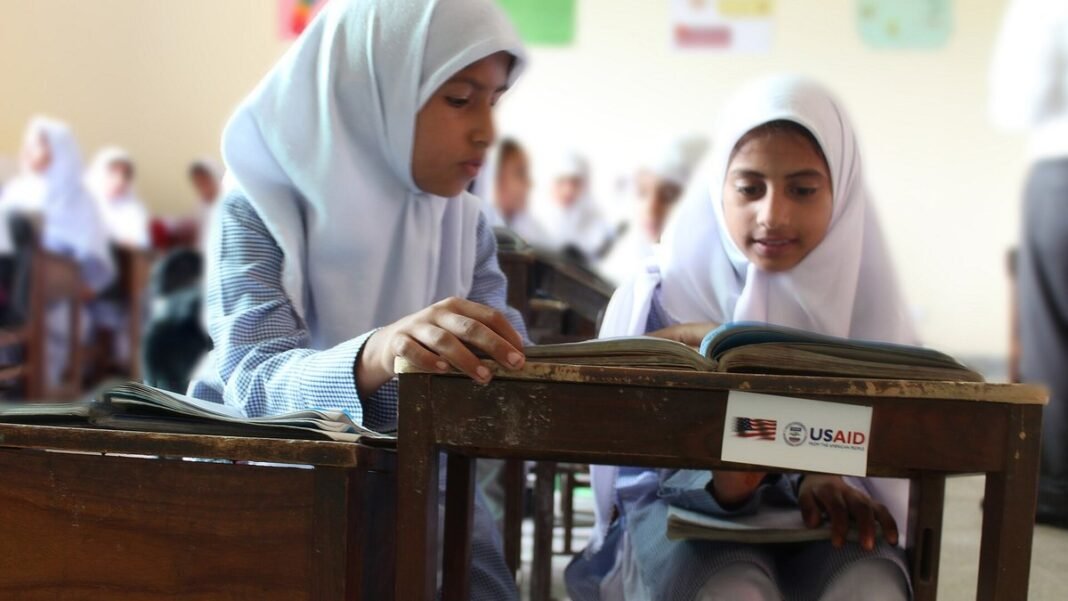
Education is one of the fields where artificial intelligence has become particularly useful. Students can use AI tools to understand difficult topics, prepare notes, improve their English, and explore new ideas. It also provides teachers with opportunities to develop better teaching materials and create interesting learning activities. For students who face difficulties in understanding certain subjects, AI can act as a personal learning assistant. When used correctly, it can make education easier and more accessible.
Similarly, artificial intelligence is playing an important role in healthcare. Doctors and medical researchers use AI systems to study medical reports, identify possible diseases, and support medical decisions. These technologies can help detect certain health problems at an early stage and improve the quality of medical services.
Apart from education and healthcare, AI has also improved business, agriculture, communication, and transportation. Businesses use it to understand customer needs and manage their work efficiently. Farmers can use modern AI technologies to monitor crops and improve production. Navigation applications help people find locations and select suitable routes. These developments show that artificial intelligence has become a valuable tool for human progress.
The Hidden Curse Behind Artificial Intelligence
Despite its many advantages, artificial intelligence has a darker side that cannot be ignored. One of the biggest concerns is the increasing threat to employment. Many companies are replacing certain human tasks with automated machines and AI systems. As a result, workers in different industries may lose their jobs. Although AI also creates new career opportunities, people without proper digital skills may struggle to find employment in an increasingly technology-based world.
Another serious issue is the misuse of artificial intelligence. Today, AI can generate realistic pictures, videos, voices, and written information. Unfortunately, some people use these abilities to spread fake news, create misleading content, and damage the reputations of others. Deepfake technology is a clear example of this problem. It can create videos that make people appear to say or do things that never actually happened. Such activities can spread confusion, destroy trust, and create serious social problems.
The growing dependence on AI is also affecting students' learning habits. Many students now use AI to complete assignments, write essays, and prepare answers without making their own efforts. Instead of developing their thinking abilities, they sometimes depend entirely on machine-generated information. This can weaken creativity, independent learning, and critical thinking. Education is not simply about completing assignments; it is about developing knowledge, understanding, and the ability to express original ideas.
Privacy is another major concern. Many AI applications collect personal information and user data. If this information is not properly protected, it can be misused for online fraud, identity theft, and other harmful activities. Therefore, the increasing use of artificial intelligence also demands greater attention to digital safety.
Finding a Balance Between Technology and Humanity
The real question is not whether artificial intelligence should be accepted or rejected, but how it should be used. Technology becomes beneficial when people use it with responsibility and awareness. Governments should introduce proper laws to protect personal information and prevent the misuse of AI. Educational institutions should guide students towards using AI as a learning assistant rather than a shortcut to avoid studying.
Students, in particular, must understand that AI cannot replace their own intelligence, creativity, and hard work. They should use it to improve their knowledge, explore ideas, and develop new skills while maintaining their ability to think independently.
Human values must also remain important in this technological age. Machines can provide information and perform complex calculations, but human emotions, kindness, moral judgement, and personal experiences give meaning to human life. Therefore, technology should support human abilities instead of replacing them.
The Future Is in Our Hands
Artificial intelligence is neither entirely a blessing nor completely a curse. It is a powerful invention with the ability to transform society in both positive and negative ways. Its future impact will depend on how wisely humanity chooses to use it. If used responsibly, it can open new doors to education, healthcare, scientific research, and economic development. However, if misused or allowed to control important aspects of human life without proper limits, it can create serious challenges.
Ultimately, artificial intelligence should remain a tool in human hands, not a force that controls human decisions. The purpose of technological progress should be to make life better, not to make people dependent or powerless. AI may be a blessing in disguise, but without responsibility and control, that blessing could easily turn into a hidden curse.
Frequently Asked Questions
How is artificial intelligence helping education and healthcare?
Students use AI to understand difficult topics, prepare notes and improve their English, and teachers use it to build better materials. In healthcare, AI helps doctors study reports, identify possible diseases early and support medical decisions.
What are the biggest risks of AI?
Job losses as tasks are automated, deepfakes and fake news that damage trust, students becoming dependent on AI instead of thinking for themselves, and the misuse of personal data collected by AI applications.
How should students use AI responsibly?
As a learning assistant, not a shortcut: use it to explore ideas and understand difficult topics, then do the thinking and the assessed work yourself, so creativity, knowledge and independent judgement keep growing.
Related reading on Feature Pakistan: Integrating AI into Education: A New Approach for Pakistan’s Learners by M Abdul Rafay Azhar and Who Is Shaping the Next Generation: Young People or Social Media Algorithms? by M Abdul Rafay Azhar.
The views expressed in this article are the writer’s own and do not necessarily reflect the editorial policy of Feature Pakistan.