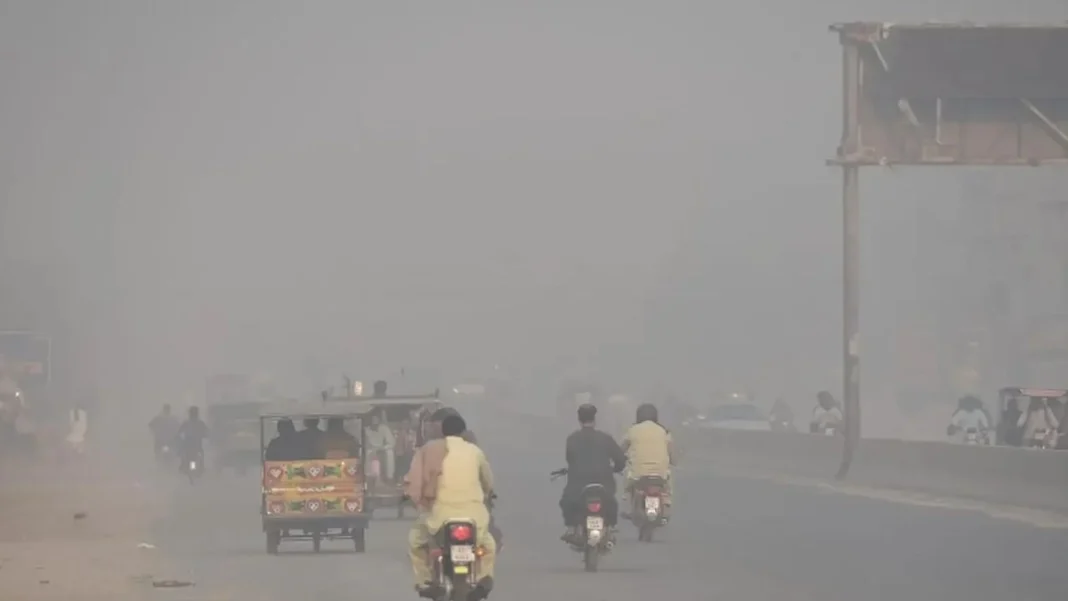
Lahore Air Pollution Tops World Ranking as AQI Crosses 300
Lahore air pollution put the city back at the top of the world’s most polluted major cities on Wednesday, 18 November, with an Air Quality Index (AQI) of 339. The reading placed Lahore ahead of Dhaka, Baghdad, Tashkent and Kolkata in the IQAir live ranking from 10am to 11am.
Several other Punjab cities recorded even worse air that morning. Dawn reported that Faisalabad led the provincial ranking at 686, more than double Lahore’s.
Lahore air pollution: what the readings show
IQAir placed Lahore first among major cities worldwide at 339. Dhaka followed at 221, Baghdad at 199, Tashkent at 182 and Kolkata at 178. Karachi ranked sixth at 174.
Readings above 300 fall in the hazardous category. Dawn reported that such levels carry serious health risks, above all for children, older people and people with breathing or heart conditions. Lahore has topped the ranking repeatedly this month, with UCA News reporting readings of 447 on 3 November and 590 on 9 November.
Faisalabad tops Punjab ranking at 686
The picture inside Punjab looked worse than the global ranking. The real-time Pakistan city ranking placed Faisalabad at the top with an AQI of 686, followed by Gujranwala at 550, Kahna Nau at 516 and Multan at 437. Kasur recorded 371, while Khanewal stood at 327 and Sargodha at 314.
Under the AQI scale, readings from 201 to 300 count as very unhealthy, while anything above 301 counts as hazardous. Faisalabad’s 686 was more than twice that threshold.
EPA sends senior officers to supervise stubble burning drive
The Punjab Environment Protection Agency (EPA) has sent senior officers from its headquarters to divisions across the province to supervise anti-stubble-burning operations. The move aims to strengthen field monitoring and action against crop-residue fires during the smog season.
EPA Director General Abdullah Nayyer Sheikh said the deployment would ensure direct supervision rather than relying only on routine reports from field formations. He said the officers would verify reported fires on the ground, spot gaps in the response and ensure hotspots received timely action.
An order issued on 13 November assigned five directors to supervise operations in different divisions on 14 and 15 November: Waseem Ahsan Cheema to Gujrat, Mian Ejaz Majeed to Sahiwal, Anjum Riaz to Faisalabad, Noor Ahmad to Lahore and Nazim Ayaz Alam to Gujranwala.
Farm fires behind the smog
The district monitoring dashboard, updated on 14 November, found 898 fire anomalies across eight districts of Punjab. The agency said 820 incidents had been attended to and 823 fires extinguished, while 96 anomalies remained pending. A total of 67 quick response crews were deployed, with a response rate of 91.3 per cent.
Hafizabad was the largest hotspot, with 430 anomalies, or nearly 48 per cent of the provincial total. Of these, 381 had been extinguished, while 49 remained pending. Feature Pakistan earlier reported on the Punjab farm fires that put Hafizabad at the centre of the smog crisis.
Sheikhupura recorded 172 anomalies, Nankana Sahib 120 and Faisalabad 93. Faisalabad’s response rate was 96.8 per cent. Hafizabad, Sheikhupura and Nankana Sahib together accounted for 722 of the 898 detected anomalies. Separately, motorway surveillance recorded 20 fire anomalies in the latest 24 hours, with 13 attended to and seven pending, a response rate of 65 per cent, across 1,770 kilometres. Feature Pakistan also reported on the Lahore smog squad racing to douse stubble fires as the season took hold.
What AQI 339 means for Lahore residents
An AQI of 339 sits well inside the hazardous band, so the air is unsafe for everyone. Children, older people and people with breathing or heart conditions face the highest risk and should avoid outdoor exertion. Residents can cut their exposure by staying indoors during peak smog hours and wearing a mask outdoors.
Islamabad has banned vehicles without fitness and emission tests, while Punjab is building a climate observatory that will run on artificial intelligence to track air quality across the province.
Frequently asked questions
What is Lahore’s AQI today?
Lahore recorded an AQI of 339 between 10am and 11am on 18 November, ahead of Dhaka at 221.
What does an AQI above 300 mean?
Readings above 300 fall in the hazardous category. They carry serious health risks, above all for children, older people and people with breathing or heart conditions.
Which Punjab city had the worst air quality on 18 November?
Faisalabad recorded the worst air in Punjab with an AQI of 686, followed by Gujranwala at 550 and Kahna Nau at 516.
What is causing the smog in Lahore?
Crop-residue fires are a major driver. The EPA dashboard detected 898 fire anomalies across eight districts, with Hafizabad alone accounting for 430.
What is the Punjab EPA doing about stubble burning?
The EPA has deployed senior officers to supervise the drive. A total of 67 quick response crews are in the field, and 823 fires had been extinguished by 14 November.