SICHN Newborn Mortality Falls to Four-Year Low
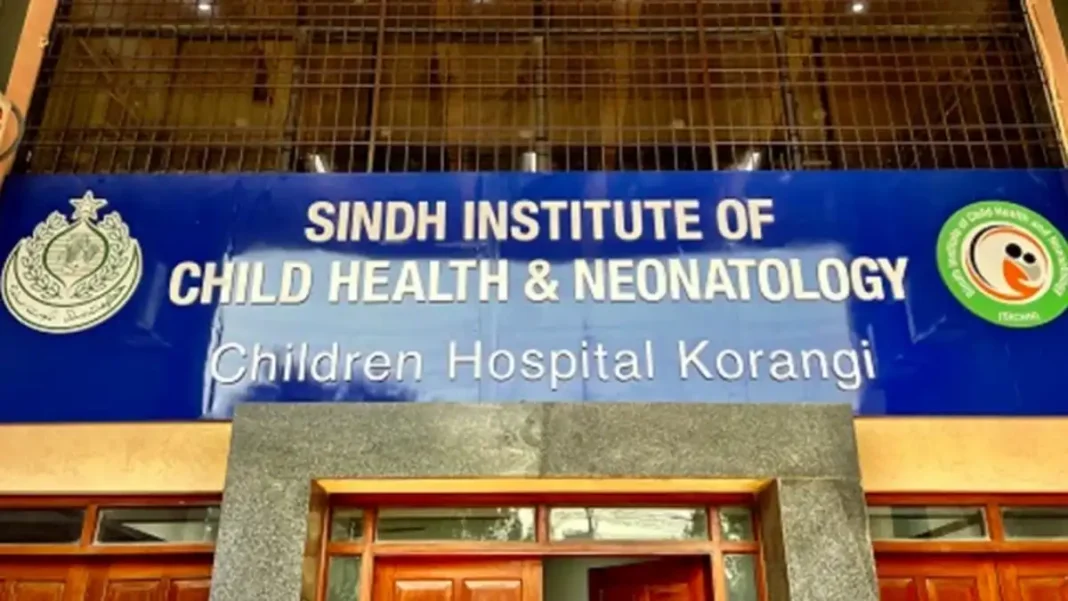
SICHN newborn mortality has fallen to its lowest level in four years, after major improvements in neonatal intensive care, medical equipment and staff training at the Sindh Institute of Child Health and Neonatology. A survey at the Mother and Child Health Centre at Jinnah Postgraduate Medical Centre (JPMC) put the rate at 15 deaths per 1,000 live births.
The institute aims to cut the rate to 12 per 1,000 by next year, which would meet the United Nations’ global target ahead of 2030. Dr Syed Rehan Ali, Head of the Neonatal Intensive Care Unit at SICHN Korangi, gave the figures at a ceremony to mark World Prematurity Day.
He said about 37 out of every 1,000 babies born alive in Pakistan die within the first 28 days of life. At SICHN, the same rate stood at 37 per 1,000 when the institute began work in this specialised field four years ago. It has now fallen to 15 per 1,000.
How SICHN newborn mortality fell
The fall did not happen by chance. Dr Rehan Ali linked it to better intensive care facilities, modern medical equipment and trained healthcare professionals, the three changes the institute has made over the past four years.
A newborn intensive care unit treats babies who are born too early, too small or too sick to survive without support. These babies often struggle to breathe, feed and fight infection, and they need warmth, oxygen, careful feeding and constant monitoring. The difference between a unit that can provide that care and one that cannot is often the difference between life and death. SICHN’s progress shows what focused investment can do.
The national picture
The national figure of 37 deaths per 1,000 live births shows how far Pakistan still has to go. Inadequate maternal and child healthcare facilities, above all in underdeveloped areas, remain a major obstacle to reaching the target, Dr Rehan Ali said.
More than 10 million babies are born prematurely around the world each year, and they often face breathing difficulties, infections and other complications. Timely treatment, trained staff and well-equipped intensive care units are essential to saving their lives.
Dr Rehan Ali urged parents not to lose hope if their babies were born prematurely or with low birth weight, saying modern facilities and timely care could save even extremely low-birth-weight infants.
“Every child is precious, and our mission is to further reduce preventable neonatal deaths,” he said.
Child health is a wider national challenge. Polio drives in Khyber Pakhtunkhwa show how hard it is to reach every child with basic care, and health services across the country are being reshaped by new investment and reform. The World Bank is also supporting a health programme in Pakistan, while average lifespans in the country show how much basic health still matters.
What the UN target means
The United Nations target is 12 neonatal deaths per 1,000 live births by 2030, under its sustainable development goals for child survival. SICHN’s aim to reach 12 per 1,000 by next year would put its centres ahead of that deadline.
Reaching the target across Pakistan is the harder task. It needs the same combination that worked at SICHN, intensive care units, modern equipment and trained staff, in district hospitals and rural health centres as well as in Karachi.
What happens next
SICHN will now work towards its target of 12 deaths per 1,000 live births by next year. The institute’s record over four years, from 37 to 15, suggests the target is within reach for its own centres. The wider question is whether the same gains can reach the underdeveloped areas where maternal and child healthcare remains weakest, and where most of Pakistan’s newborn deaths still happen.
Frequently asked questions
What is the newborn mortality rate at SICHN?
A survey at the Mother and Child Health Centre at Jinnah Postgraduate Medical Centre put it at 15 deaths per 1,000 live births, its lowest in four years.
What was the rate four years ago?
Four years ago, when SICHN began work in this field, the rate stood at 37 per 1,000 live births. It has now fallen to 15 per 1,000.
What is the national newborn mortality rate in Pakistan?
About 37 out of every 1,000 babies born alive in Pakistan die within the first 28 days of life, according to Dr Syed Rehan Ali of SICHN.
What is the United Nations target?
The United Nations target is 12 neonatal deaths per 1,000 live births by 2030. SICHN aims to reach 12 per 1,000 by next year, ahead of the deadline.
Why do premature babies need special care?
They often face breathing difficulties, infections and other complications, so timely treatment, trained staff and well-equipped intensive care units are essential to saving their lives.