CDWP Clears 11 Development Projects Worth Rs191.8 Billion
The Central Development Working Party has cleared 11 development projects worth Rs191.8 billion, including a Pakistan Atomic Energy Commission project to explore radioactive minerals for nuclear power and a Rs104.4 billion World Bank-backed plan to help Punjab’s farmers save water and earn more.
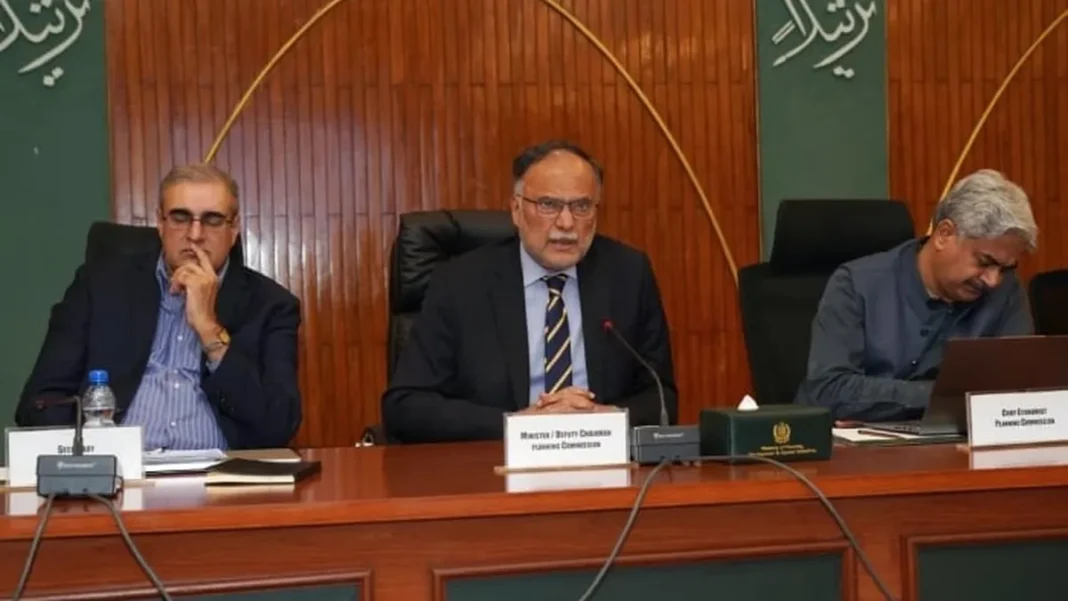
The forum, chaired by Federal Minister for Planning, Development and Special Initiatives Prof Ahsan Iqbal, approved seven projects costing Rs19.3 billion and sent four bigger projects worth Rs172.4 billion to the Executive Committee of the National Economic Council for final approval.
The projects cover food and agriculture, infrastructure, governance, health, information technology, jobs and skills, power, transport and communications, and the environment.
The biggest of the 11 development projects
The largest project is Punjab’s Resilient and Inclusive Agriculture Transformation project, known as PRIAT, which the CDWP recommended to ECNEC. Of its Rs104.4 billion cost, about Rs91.1 billion will come from the World Bank and around Rs13.3 billion from the Punjab government.
The project aims to help farmers save water and earn more, as agriculture faces pressure from changing rainfall, rising input costs and shrinking water supplies. Punjab grows most of Pakistan’s wheat and cotton, so a project of this size matters well beyond the province.
The CDWP also gave in-principle approval to the third revised Prime Minister’s Youth Skill Development Program for 2023 to 2028, worth Rs47.6 billion, and recommended it to ECNEC. The programme is meant to give young people the skills employers need, and it sits alongside the government’s wider push to raise employment among graduates.
Roads and border terminals
Two road projects were also sent to ECNEC. These include the revised construction and widening of the Sibi to Talli road, covering 23.52 kilometres, and the Kohlu to Rakhni road, covering 85.16 kilometres, at a combined cost of Rs11.1 billion. A black-topped road from Sui to Kashmore, costing Rs9.3 billion, was also referred.
The forum approved two border terminals on the Pakistan-Iran border. The terminal at Taftan in District Chaghi, Balochistan, will cost about Rs4.8 billion through Public Sector Development Programme funding, while the terminal at Gabd will cost around Rs4.3 billion. Better border facilities should speed up trade and movement across a frontier that carries a large share of Pakistan’s commerce with Iran.
Energy, connectivity and health
The Pakistan Atomic Energy Commission’s Rs1.4 billion project for exploring radioactive minerals in the Marwat Range was also approved. The work feeds into the country’s nuclear power programme, which supplies a growing share of electricity to the national grid.
The CDWP approved a Rs4.4 billion project to expand cellular services in Azad Jammu and Kashmir and Gilgit-Baltistan, two regions where mobile coverage still lags behind the rest of the country. It also approved the modified and revised project for the Mirwaiz Molvi Muhammad Farooq Shaheed Medical College in Muzaffarabad, costing around Rs3.4 billion through the PSDP.
The Youth Education, Employment and Empowerment Project Sindh, costing Rs600 million, was also cleared. The forum further approved the revised Strengthening Institutions for Refugees’ Administration project worth Rs255.8 million, financed through technical assistance under a World Bank IDA loan. The Sindh youth project targets young people in a province where jobs and training remain scarce.
What the CDWP and ECNEC do
The CDWP is the forum that screens development projects before they go to ECNEC, the cabinet-level body that gives final approval to large schemes. Projects below a cost threshold can be approved by the CDWP itself, while bigger ones are referred upward with a recommendation.
That is what happened here. Seven projects worth Rs19.3 billion were approved outright, while the four largest, worth Rs172.4 billion, now go to ECNEC for a final decision. The split keeps smaller projects moving quickly while the biggest spending still gets cabinet-level scrutiny.
The meeting comes a month after the CDWP cleared a separate batch of projects worth Rs213 billion in October. The pace shows the Planning Commission is working through a long queue of schemes, including the ML-3 rail project and Reko Diq link, which the government deferred this month. Reko Diq itself, whose cost has risen to $9.1 billion with first production delayed to 2030, remains the largest single project in the pipeline.
The approvals also sit alongside the government’s push to widen access to finance for smaller firms, with SME financing crossing Rs1.1 trillion in October. Development spending and credit growth are both aimed at lifting growth, but the test will be whether the projects are finished on time and on budget.
Frequently asked questions
What is the CDWP?
The Central Development Working Party is the forum that screens federal development projects. It approves smaller schemes itself and recommends larger ones to the Executive Committee of the National Economic Council, known as ECNEC, for final approval.
How much did the CDWP clear on November 20?
The CDWP cleared 11 development projects worth Rs191.8 billion. It approved seven projects costing Rs19.3 billion and referred four bigger projects worth Rs172.4 billion to ECNEC.
What is the largest project in the batch?
Punjab’s Resilient and Inclusive Agriculture Transformation project, worth Rs104.4 billion. About Rs91.1 billion comes from the World Bank and around Rs13.3 billion from the Punjab government.
Which projects were sent to ECNEC?
The Punjab agriculture project, the Rs47.6 billion Prime Minister’s Youth Skill Development Program, the Sibi-Talli and Kohlu-Rakhni road works worth Rs11.1 billion, and the Sui to Kashmore road worth Rs9.3 billion.
What else was approved?
Two border terminals at Taftan and Gabd, a Rs4.4 billion cellular expansion in Azad Jammu and Kashmir and Gilgit-Baltistan, a Rs1.4 billion atomic energy minerals project in the Marwat Range, a medical college project in Muzaffarabad, a Rs600 million youth project in Sindh, and a Rs255.8 million refugees administration project.