Corruption Vulnerabilities in Ten Institutions, Says Tarar
The federal government has found corruption vulnerabilities in ten institutions, Law Minister Azam Nazeer Tarar said on Friday, November 20. The findings come from a survey titled the National Risk Assessment of Corruption Vulnerabilities.
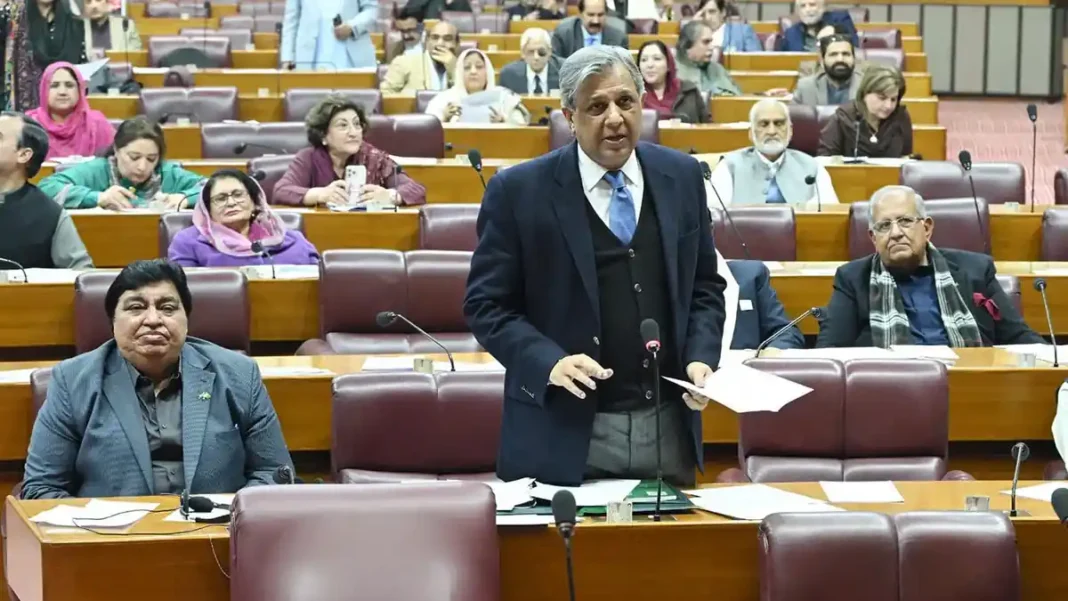
Tarar shared the findings at a press conference he joined by video link. He said the report was not a charge sheet against any institution. Instead, it pointed to weaknesses that needed to be fixed through reforms, so that corruption could be prevented and merit and transparency promoted.
Corruption vulnerabilities across ten institutions
The Ministry of Law and Justice coordinated with various agencies and institutions to prepare the report. It examined vulnerabilities across federal institutions using different indicators, Tarar said.
Ten institutions were examined in depth because of their operations, the minister said. Most deal with finance-related matters, which he said presented opportunities for corruption.
Tarar said the survey would also be shared with international agencies. He claimed that no other government had made efforts like this until today. The claim is his own. Tarar named several of the institutions, including the Federal Board of Revenue, Pakistan Railways, Sui Northern, the National Highway Authority, the Benazir Income Support Programme and the distribution companies, but the full report has not been published.
Twenty-five institutions were selected for the survey, and more than 300 indicators were used. The report outlined a strategy of 400 reform measures, grouped into 74 reform blocks, with a completion period of two to five years. Tarar also said the number of taxpayers had risen from 3.7 million to 7 million and that more than 2.1 million smart meters had been installed to curb electricity theft.
Power reforms and Rs3,500bn savings claim
The minister also pointed to what he called positive steps by Prime Minister Shehbaz Sharif. He cited power generation projects and reforms in the electricity and energy sectors. He said the government had worked with relevant departments on a detailed exercise to address various issues.
“As a result of these reforms, the government is expected to save Rs3,500 billion in the electricity and energy sectors,” he said.
The figure is the minister’s own estimate. He did not give a breakdown of how the savings would be reached or over what period.
PIA sale and PWD closure cited as proof
Tarar recalled the privatisation of Pakistan International Airlines last year. He said it was conducted through an open auction and competitive bidding after previous attempts failed to materialise. “You will see positive changes in that in the coming days,” he added.
State-owned enterprises lost Rs342.8 billion as privatisation gathered pace, which shows why the government is pushing ahead with sales of loss-making state firms.
The minister also referred to the government’s plans to right-size departments deemed unnecessary. As an example, he highlighted the closure of the Pakistan Public Works Department, which he said faced allegations of corruption and wastage of money.
“It was closed and a package finalised for its employees. Some legal amendments are pending in the Assembly,” he said, adding that the government saved billions of rupees through its closure. The department’s work will now be carried out through smaller institutions or provincial departments.
Why the survey matters
The announcement comes a year after the International Monetary Fund published its Governance and Corruption Diagnostic Assessment for Pakistan. That report urged a risk-based approach to corruption in federal agencies and an action plan covering the ten highest-risk ones.
Weak oversight in tax and finance has long cost the state revenue. The Federal Board of Revenue has warned that splitting the tax body could push more activity into the informal economy, and banks have acted as conveyor belts for money laundering.
The accountability drive is not limited to federal departments. A commission has been set up to probe illegal gold mining in Khyber Pakhtunkhwa, after reports of large-scale unlawful extraction.
What happens next
The test will be what follows. The government has promised reforms, but it has not said when the report will be made public or what action will follow.
The legal amendments for the PWD closure are still pending in the Assembly. The Rs3,500 billion power savings figure also needs checking against actual results, since it comes from the minister alone.
Frequently asked questions
What did the survey find?
It found weaknesses that could create opportunities for corruption in ten federal institutions, most of them dealing with finance-related matters.
Who announced the findings?
Law Minister Azam Nazeer Tarar announced them at a press conference he joined by video link on Friday, November 20. The Ministry of Law and Justice coordinated the survey.
Is the report a charge sheet against the institutions?
No. Tarar said the report was not a charge sheet. He said it identified weaknesses that needed to be addressed through reforms to prevent corruption and promote merit and transparency.
What savings did the minister claim in the power sector?
He said power and energy reforms were expected to save Rs3,500 billion, but gave no breakdown of the figure.
Which departments did the minister cite as examples?
He cited the privatisation of Pakistan International Airlines through an open auction and the closure of the Pakistan Public Works Department over corruption allegations.