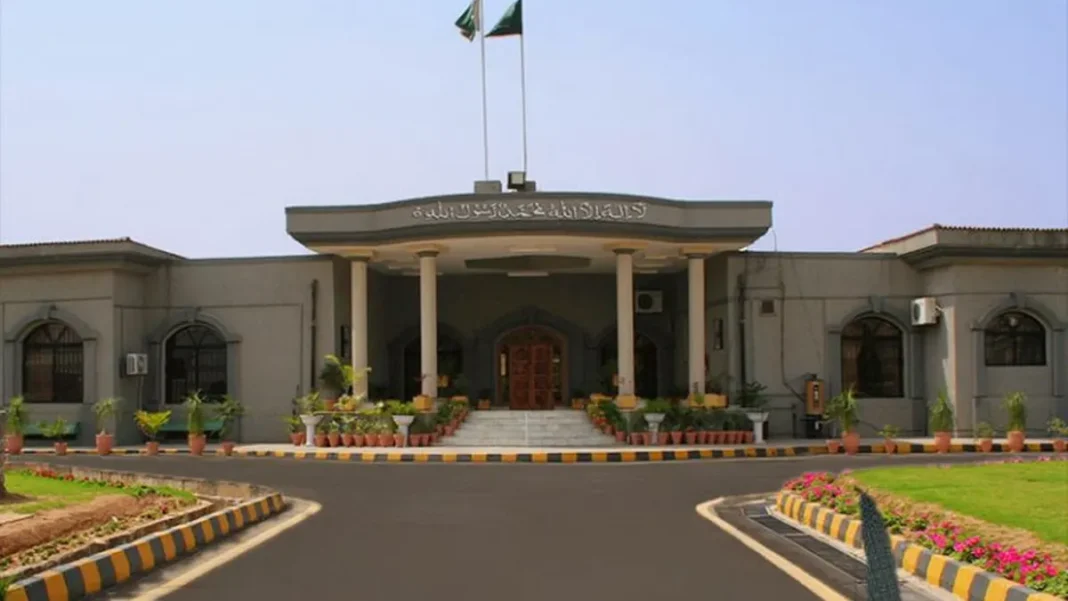
NAB Challenges Plea Against FCC Jurisdiction in IHC
The National Accountability Bureau (NAB) has questioned the maintainability of a petition challenging the transfer of second appeals in accountability cases from the Supreme Court to the Federal Constitutional Court (FCC), in the latest test of NAB FCC jurisdiction.
Tribune reported that the Islamabad High Court (IHC) heard the plea on Friday and asked NAB to present arguments on whether the petition can proceed. The court then adjourned the case without fixing a date for the next hearing.
The maintainability question comes first in the NAB FCC jurisdiction dispute. Before the court can rule on the amendment itself, it must decide whether the challenge can be heard at all.
What happened in court
Justice Umair Majeed Malik heard the constitutional petition, filed by the Judicial Activism Panel through counsel Muhammad Azhar Siddique. The petition challenges an amendment to Section 32-A of the National Accountability Ordinance.
Advocate Shahid Khokhar appeared for the petitioner and said senior counsel Azhar Siddique was in Lahore. He sought a short adjournment, which the court granted. The judge observed that a person challenging a law carries a heavy responsibility.
The National Assembly, the Senate and NAB have all submitted their replies to the petition. NAB Prosecutor Rafi Maqsood, Additional Attorney General Rashid Hafeez and an assistant attorney general were also present at the hearing.
The amendment under challenge
The petition challenges an amendment under which appellate jurisdiction in NAB cases, after decisions by high courts, moved from the Supreme Court to the FCC. The change came through amendments to the accountability law introduced on March 5, 2026.
A second appeal is the final stage of challenge after a high court has decided a case. In NAB matters, that stage once sat with the Supreme Court. Under the amendment, it now sits with the FCC.
In July, the Supreme Court ruled that the FCC had exclusive jurisdiction over criminal appeals and pending petitions under the accountability law. It directed that pending matters be transferred to the constitutional court.
The FCC is the constitutional court that now hears such appeals, and the IHC petition is the latest challenge to that arrangement.
Why the NAB FCC jurisdiction case matters
The maintainability question goes to the heart of the dispute. If the IHC finds the petition cannot proceed, the challenge to the amendment will end at the first step. If it finds the petition maintainable, the court will hear arguments on the amendment itself.
The outcome will affect how accountability cases move through the courts, since the forum for second appeals shapes the end of high-profile NAB cases.
Feature Pakistan has followed the FCC’s growing role in recent months. A Senate panel has reviewed a bill on the court’s jurisdiction, and the court has issued a detailed ruling on provincial levies that also touched on its powers.
The JUI-F’s reserved-seat appeal also reached the FCC, which rejected it. That case showed the court is already deciding live disputes, not only hearing arguments about its own role.
Accountability institutions remain under scrutiny more broadly. A recent government report flagged high corruption risk in 10 of 25 federal institutions, which has kept the accountability system in public focus.
What happens next
NAB will present its arguments on maintainability at the next hearing, once the IHC fixes a date. The petitioner will then have a chance to answer those arguments.
If the court finds the petition maintainable, the case will move to the real question: whether the March 5 amendment can stand. That hearing would draw close attention, since it concerns the forum for the final appeal in accountability cases.
Until then, the FCC keeps exclusive jurisdiction over criminal appeals and pending petitions under the accountability law, as the Supreme Court directed in July.
Frequently asked questions
What has NAB challenged?
NAB has questioned the maintainability of a petition challenging the transfer of second appeals in NAB cases from the Supreme Court to the FCC.
Which amendment is under challenge?
The petition challenges an amendment to Section 32-A of the National Accountability Ordinance, introduced on March 5, 2026, which shifted appellate jurisdiction in NAB cases to the FCC.
What did the Supreme Court rule in July?
The Supreme Court ruled that the FCC had exclusive jurisdiction over criminal appeals and pending petitions under the accountability law, and directed that pending matters be transferred to the constitutional court.
When is the next hearing?
No date has been fixed. The IHC heard the plea on Friday, sought arguments on maintainability, and adjourned the case. It will announce the next hearing date separately.
What is the FCC?
The FCC is the Federal Constitutional Court. Under the March 2026 amendments, it hears second appeals in NAB cases after decisions by high courts, a role the Supreme Court confirmed in July.