Musadik Malik SCO Forum: Climate Threatens Heritage
Musadik Malik SCO forum talks in New Delhi put climate change and shared heritage at the centre of Pakistan’s message to the region on Saturday. The climate change minister warned that a warming planet posed a serious threat to civilisation and cultural heritage, and put historical sites at risk, while he addressed the first Shanghai Cooperation Organisation Civilisational Dialogue Forum.
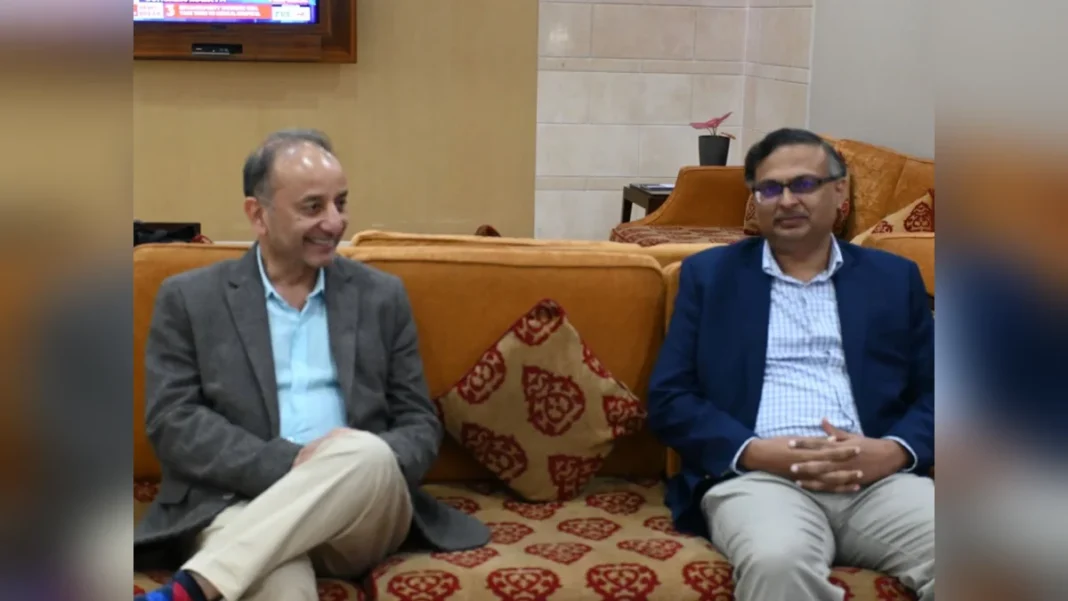
His visit is the first by a Pakistani federal minister to India since 2023, when then foreign minister Bilawal Bhutto Zardari travelled to Goa for an SCO meeting. Malik arrived in New Delhi to lead Pakistan’s delegation at the forum, and his speech ranged from the climate threat to the shared history of the region.
Musadik Malik SCO warning on climate and heritage
Malik described Pakistan’s cultural identity as a product of diverse civilisations, communities and historical influences. He said the country’s heritage had been shaped by centuries of interaction among people from different regions, and its history could not be understood through a single cultural lens.
He said different communities had brought their own languages, identities and traditions, and diversity and the free exchange of ideas were essential to understanding the country’s cultural heritage. He compared this diversity to a colourful bouquet, and said its beauty lay in the presence of different flowers rather than in uniformity.
He said diversity meant different identities coexisting and interacting freely, and dialogue mattered most where people and viewpoints differed.
Delhi, Taxila and shared history
Malik turned to Delhi’s own history to make his point. He said the city had been shaped by people who arrived from outside the region, just as its own communities had contributed to its growth. Archaeological research was examining the city’s history layer by layer, with each layer reflecting different periods and communities, he said.
He said there was no need to pick one layer of the city’s history as the only authentic one. At Delhi’s Old Fort, he noted, Humayun of Central Asia laid the foundations, while his rival Sher Shah Suri also became part of its story.
The minister said Pakistan’s historical connections extended northwards to Bukhara and Samarkand in Central Asia, while its cultural links also reached westwards to Persia and Arabia. He said the country’s heritage reflected a mix of influences from the Indus Valley and Gandhara civilisations, Central Asia, Persia and the Arab world.
He also cited Taxila as a centre of learning, and said Gandhara’s Buddhist art had spread through Central Asia towards China.
Meetings on the sidelines
Malik also held a bilateral meeting with Tajikistan’s Minister of Culture, Sattoriyon Amonzoda, on the sidelines of the forum, the Pakistan High Commission in India said in a post on X. In a separate meeting, he met the president of Iran’s Islamic Culture and Relations Organisation, Mohammad Mahdi Imanipour.
He said cultures and historical connections crossed borders, and called the forum an extraordinary opportunity for the countries taking part.
“The SCO Civilisational Dialogue Forum offers participating countries an important multilateral platform to exchange views on their common historical experiences, cultural traditions and civilisational links,” he said.
Evidence first on terrorism
A day earlier, on the first day of the event, Malik pushed back when Indian media asked about terrorism. He said that rather than focusing on a single incident of terror or Pakistan-India bilateral issues, it would be far better to address the problems of the entire region through a structured mechanism and concrete evidence.
“I do not wish to present a narrative of mere victimhood. We are doing our utmost to address the situation,” he said. He added that he was in New Delhi to attend a multilateral forum and wished for the discussions to proceed in a proper and orderly manner.
He said the region’s challenges stretched beyond the two countries, into Iran, Central Asia and Afghanistan, and both sides must present evidence when they accuse each other.
“Our objective is to establish a transparent mechanism, a proposal we have put forward on several occasions. Such a mechanism would help restore trust and could lead to viable solutions,” he said. He noted that thousands of Pakistanis had been killed in terrorism, and said the necessary evidence was often never presented.
Pakistan has been a full SCO member since 2017, and the forum gives members a rare table where culture sets the agenda. Deputy Prime Minister Ishaq Dar made a similar case for multilateralism in an interview the same day, and said bloc politics and unilateral action would not work. The climate warning also fits a wider debate, as COP31 talks have stumbled over fossil fuel language and delegates have raised access failures at the summit.
Frequently asked questions
What is the SCO Civilisational Dialogue Forum?
It is the first Shanghai Cooperation Organisation forum devoted to civilisation, culture and shared heritage, held in New Delhi. Pakistan has been a full SCO member since 2017.
What did Musadik Malik say about climate change?
He warned that climate change posed a serious threat to civilisation and cultural heritage, and put historical and cultural sites at risk.
Who did Musadik Malik meet in New Delhi?
He met Tajikistan’s Culture Minister Sattoriyon Amonzoda and the president of Iran’s Islamic Culture and Relations Organisation, Mohammad Mahdi Imanipour, on the sidelines of the forum.
What did he say about terrorism?
He said the region’s problems should be addressed through a structured mechanism and concrete evidence, and both Pakistan and India must present evidence when they accuse each other.
Why does the visit matter?
It is the first visit to India by a Pakistani federal minister since 2023, and it puts Pakistan back at a multilateral table in New Delhi after a long gap in high-level contact.