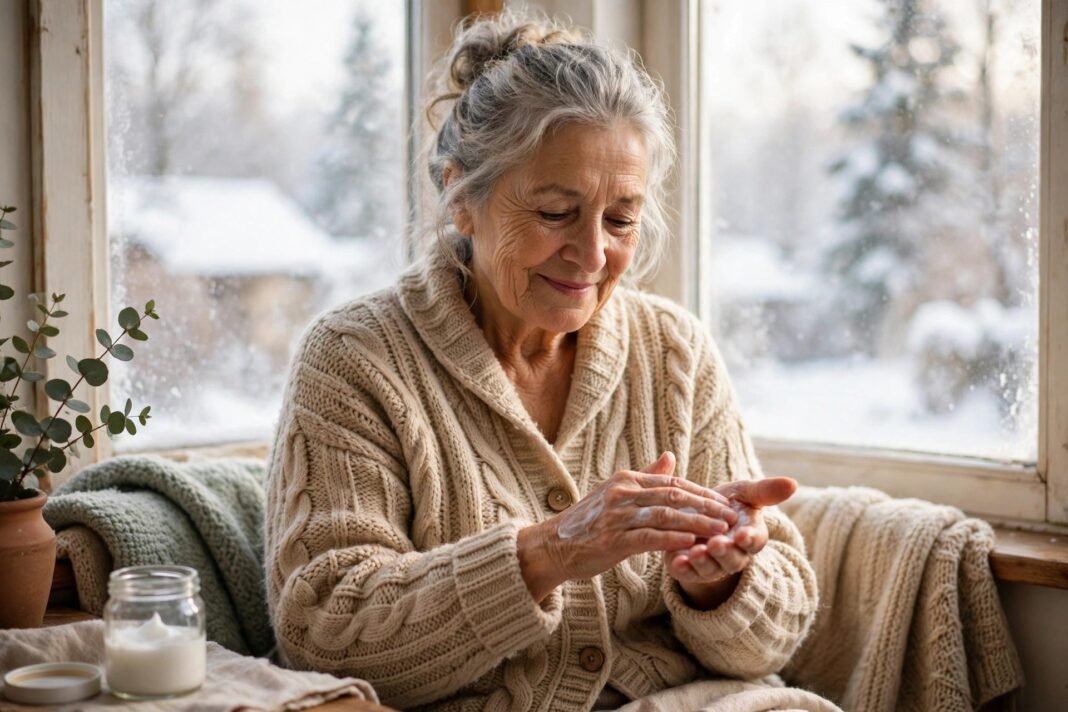
You pull on your favourite winter jumper, and your arms begin to itch within minutes. The skin on your shins looks flaky, and your heels feel rough and sore. For many older readers, the winter skin problems elderly people face each year begin exactly like this. Cold air outside and dry heating inside quietly steal moisture from ageing skin. As a result, even simple days can start to feel uncomfortable.
Still, this discomfort is not something you must simply accept. In fact, ageing skin responds very well to gentle daily care. Small changes in washing and moisturising can bring real relief. Moreover, these habits are simple, inexpensive, and easy to start today. This guide explains why winter skin problems elderly people face grow worse in the cold. It also shares kind, practical steps that protect your comfort all season.
Perhaps the itching wakes you at night and steals your sleep. Or your heels crack so deeply that walking becomes painful. In addition, the skin on your hands can split after simple chores like washing dishes. These small troubles can quietly shrink your world in winter. However, each one has gentle answers, and none of them is your fault.
Why Winter Skin Problems Elderly People Face Get Worse in the Cold
As we age, our skin naturally becomes thinner and more delicate. It also makes less of the natural oil that once kept it soft. In addition, older skin holds water less well than younger skin does. Consequently, moisture escapes faster, and the surface turns dry and rough. Heels, shins, and hands usually show the damage first.
Winter then adds its own pressures on top of ageing. Cold outdoor air carries very little moisture at all. Meanwhile, indoor heating dries the air inside your home even further. Hot baths and strong soaps strip away the little oil that remains. For example, a long hot shower may feel wonderful on a cold morning. Afterwards, however, your skin often feels tighter and itchier than before.
Older skin also heals more slowly than it once did. A small scratch or knock can therefore linger for weeks. Thin skin bruises easily, and even a tight sleeve can cause a tear. As a result, protection matters just as much as moisturising. Gentle handling keeps tiny injuries from becoming bigger worries.
Gentle Washing Habits That Protect Fragile Skin
Warm water is far kinder to older skin than hot water. So keep baths and showers short, and choose lukewarm water instead. Use a mild, fragrance-free cleanser rather than a strong soap. In fact, many older people need cleanser on only a few areas each day. Wash with your hands or a soft cloth, not a rough sponge. Afterwards, pat your skin dry gently with a soft towel. Rubbing, by contrast, can irritate thin skin and even tear it.
Bathing less often can also help during the coldest weeks. Between baths, a gentle wash of the face, hands, and key areas is usually enough. Above all, listen to your own skin and notice how it feels. If a product stings or leaves your skin red, stop using it. Simple, gentle products almost always suit elderly skin best.
Your laundry choices matter more than you might expect. Strongly perfumed detergents can cling to clothes and irritate sensitive skin. Instead, choose mild, fragrance-free washing products when you can. Similarly, wear gloves for washing dishes and for household cleaning. Hot water and cleaning fluids are especially harsh on ageing hands. As a result, protected hands stay softer and crack less often.
Simple Daily Care for Winter Skin Problems Elderly Skin Needs
Moisturiser works best when the skin is still slightly damp. So apply a thick cream or ointment within a few minutes of bathing. This simple timing traps water against the skin’s surface. In addition, creams and ointments protect older skin better than thin lotions do. Look for fragrance-free products with petroleum jelly, glycerin, or shea butter. Our guide to winter dry skin care shares more everyday protection tips.
During the day, reapply cream to your hands, shins, and heels whenever they feel tight. A humidifier in the bedroom can also add moisture to dry indoor air. Soft cotton clothing feels kinder next to the skin than rough wool. Furthermore, drinking water regularly through the day supports your whole body. What you eat matters too, and our article on the best foods for healthy skin offers gentle ideas. Finally, resist the urge to scratch, because broken skin can let infection in.
Cold wind outdoors deserves the same gentle planning. Cover your hands with soft gloves before you step outside. A plain, fragrance-free lip balm also protects lips from cracking. In the evening, smooth extra cream onto your heels and feet. Then pull on soft cotton socks to hold the moisture in overnight. By morning, rough heels often feel noticeably calmer and softer.
When Dry Skin Needs a Doctor’s Eye
Most winter dryness improves with steady, gentle care at home. However, some signs deserve a doctor’s attention without delay. Seek help if itching lasts more than two weeks despite daily moisturising. Also seek help if the itching keeps you awake at night. Cracked skin that looks red, hot, swollen, or painful needs checking too. Likewise, never ignore sudden itching that spreads across the whole body.
This article is general information, not medical advice. Please speak to a healthcare professional if you are worried about your health.
Above all, be patient with yourself while new habits settle in. Skin rarely changes overnight, yet steady care builds comfort day by day. If you care for an elderly parent, these same steps can help them too. Kindness, after all, is the heart of good skin care in later life.
Winter will always bring winter skin problems elderly people know well, but they do not have to rule your days. With warm water, gentle products, and daily cream, comfort can return step by step. Indeed, many elderly readers find that one calm week of care changes everything. Your skin has carried you faithfully through a lifetime of seasons. Now it simply asks for a little extra kindness in return. So tell us — which of these gentle habits will you try first this winter?