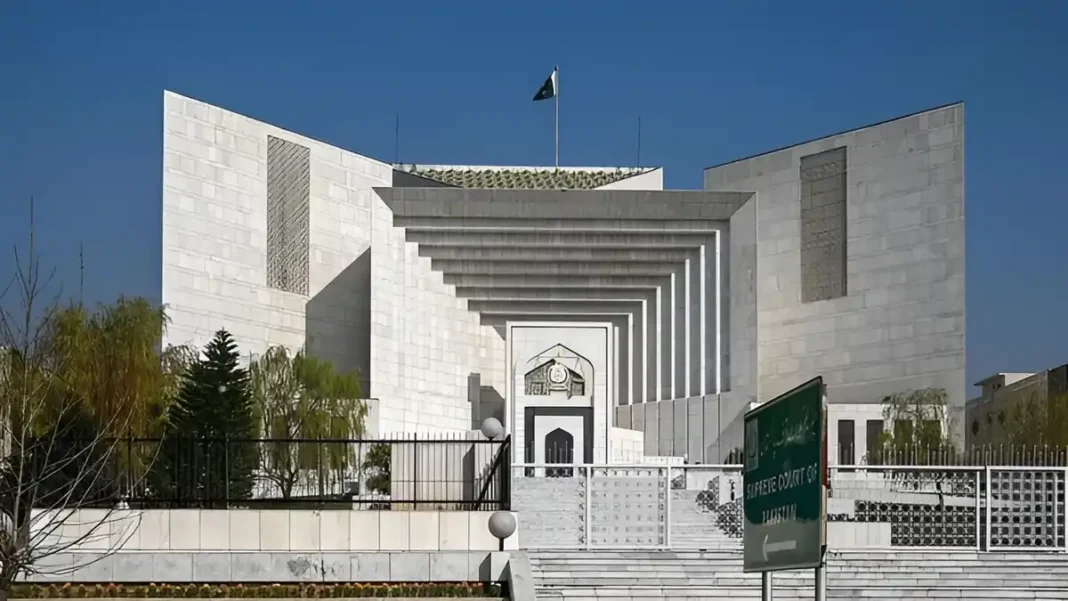
The Constitution of Pakistan 1973 declares Islam the state religion, and Part IX — the chapter on Islamic Provisions — gives that declaration legal content. Article 227 is the centrepiece: it sets the rule that no law in Pakistan may contradict the injunctions of Islam as laid down in the Holy Quran and Sunnah.
Quick answer: Article 227 requires all laws to conform to the injunctions of the Holy Quran and Sunnah — no law repugnant to Islam can be enacted in Pakistan.
In this guide
- What Article 227 requires
- The institutions that give Article 227 teeth
- How Article 227 shapes Pakistani law
- Article 227 and fundamental rights
- Why Article 227 matters
- Frequently asked questions
- What is Article 227 of the Constitution of Pakistan?
- What is the Council of Islamic Ideology?
- What is the Federal Shariat Court?
- Does Article 227 override fundamental rights?
What Article 227 requires
Article 227 works in two directions, covering both the old and the new:
- Existing laws must be brought into conformity. All existing laws are to be brought into conformity with the injunctions of Islam as laid down in the Holy Quran and Sunnah. This is a continuing obligation — the statute book is meant to be reviewed and aligned over time, not frozen as it stood in 1973.
- No repugnant law may be enacted. No law shall be enacted which is repugnant to such injunctions. This binds every legislature in the country — Parliament and the Provincial Assemblies alike — for all future legislation.
Together, these two commands make Islamic conformity a standing constitutional test for the entire legal system: what exists must be aligned, and what is made must not contradict.
The institutions that give Article 227 teeth
Article 227 does not operate alone. The Constitution creates specific institutions to carry out its programme:
- The Council of Islamic Ideology (Article 228). An advisory body of scholars and experts, the Council examines laws and advises Parliament, the Provincial Assemblies, the President and Governors on whether proposed laws are repugnant to the injunctions of Islam, and recommends how to bring existing laws into conformity. Its role is advisory — it recommends; the legislatures decide.
- The Federal Shariat Court (Article 203C). Where the Council advises, the Federal Shariat Court adjudicates. Any citizen, the federal government or a provincial government can petition it to examine whether a law or provision is repugnant to the injunctions of Islam. If the Court finds repugnancy, it declares the law void to the extent of the repugnancy and sets a date from which it ceases to have effect.
This division of labour — advice from the Council, adjudication by the Court — is how Article 227 moves from principle to practice.
How Article 227 shapes Pakistani law
The influence of Article 227 runs through many areas of Pakistani law. Family law, criminal law and financial law have all been examined through its lens. The Supreme Court’s engagement with Islamic family-law questions — for instance in rulings on khula and dissolution of marriage — takes place within a constitutional order that Article 227 defines. The growth of Islamic finance in Pakistan, from Shariah-compliant savings accounts to Shariah-compliant fintech and Islamic credit cards, reflects the same constitutional direction applied to the economy.
Article 227 and fundamental rights
A question students of the Constitution often ask is how Article 227 relates to the fundamental rights in Part II. The two chapters are not rivals; they are both supreme law, and the courts read them together. The fundamental rights protect the citizen against the state, while Article 227 sets the Islamic character of the legal order within which those rights are exercised. Where tensions have been argued — for example, over the scope of religious freedom or equality provisions — the superior courts have worked out the balance case by case, treating the Constitution as a single coherent document.
Why Article 227 matters
Article 227 is what makes Pakistan’s claim to be an Islamic republic a legal reality rather than a slogan. It commits the state, in binding constitutional language, to a legal order consistent with the Quran and Sunnah — and it builds the machinery (the Council and the Court) to pursue that commitment. Whether one views that project as complete or still underway, Article 227 is its constitutional anchor.
Frequently asked questions
What is Article 227 of the Constitution of Pakistan?
Article 227 requires that all existing laws be brought into conformity with the injunctions of Islam as laid down in the Holy Quran and Sunnah, and that no law be enacted which is repugnant to those injunctions.
What is the Council of Islamic Ideology?
A constitutional advisory body (Article 228) that examines legislation and advises Parliament, the provincial assemblies and the executive on conformity with Islamic injunctions. Its recommendations are advisory, not binding.
What is the Federal Shariat Court?
A constitutional court (Article 203C) that examines laws for repugnancy to the injunctions of Islam. It can declare a repugnant law or provision void, setting the date from which it ceases to have effect.
Does Article 227 override fundamental rights?
No. Both are parts of the Constitution, and the courts interpret them together as a single document. Article 227 defines the Islamic character of the legal order; the fundamental rights define the citizen’s protections within it.
Related Constitution Guides