


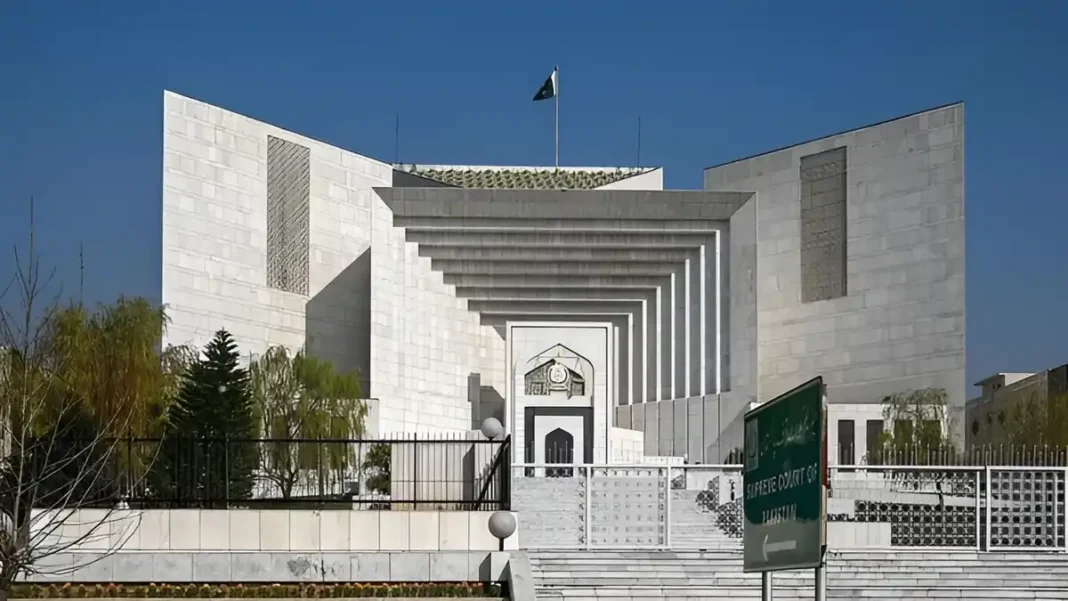
The Constitution of Pakistan 1973 has been amended 27 times, and each amendment tells a story about the Pakistan of its moment. The 12th Amendment, passed in 1991, is the story of a government confronting a crime wave — and reaching for the Constitution to answer it.
Quick answer: The 12th Amendment (1991) created special courts for the speedy trial of heinous offences, with a built-in expiry date — it has since lapsed.
In this guide
- What the 12th Amendment did
- The context: crime and the state’s response
- A built-in time limit
- Why the 12th Amendment still matters
- Relation to the wider amendment history
- Frequently asked questions
- What was the 12th Amendment in the Constitution of Pakistan?
- Is the 12th Amendment still in force?
- Why was the 12th Amendment passed?
- What is a sunset clause in a constitutional amendment?
What the 12th Amendment did
Passed in 1991 during the first government of Prime Minister Nawaz Sharif, the 12th Amendment inserted Article 212B into the Constitution. The new article empowered the federal government to establish special courts for the speedy trial of heinous offences. Ordinary courts, the government argued, were too slow and too exposed to deal with the organised and violent crime then troubling the country — particularly in Sindh, where Karachi’s law-and-order situation was deteriorating. The amendment created a constitutional basis for a parallel system of special courts designed to try serious criminal cases swiftly.
The context: crime and the state’s response
The early 1990s were a difficult period for public safety in Pakistan. Kidnapping for ransom, armed robbery, murder and other heinous offences were rising, and convictions in the ordinary courts were slow in coming. The Sharif government’s answer was institutional: special courts, staffed and procedurally equipped to move faster than the regular judiciary. The 12th Amendment was the constitutional instrument that made those courts possible, giving them a footing in the Constitution itself rather than in ordinary legislation alone. Debates about special courts and speedy justice have never fully left Pakistani public life — from new special courts for overseas Pakistanis’ property disputes to continuing arguments about anti-terror laws and the right to a fair trial.
A built-in time limit
The most distinctive feature of the 12th Amendment was its temporary character. Article 212B carried a sunset clause: the special courts it authorised were given a limited life, and when the time limit expired, the provision lapsed. The amendment was not meant to rewrite the judicial system permanently. It was an emergency measure with an expiry date — a constitutional acknowledgement that extraordinary courts are justified, if at all, only for extraordinary times. When the clock ran out, the special courts established under the amendment ceased to have constitutional cover.
Why the 12th Amendment still matters
Though it has lapsed, the 12th Amendment remains instructive for several reasons:
- It shows the amendment procedure in action. Passed through the two-thirds majority mechanism of Article 239, it is a textbook example of how the Constitution can be altered to meet a perceived national need.
- It illustrates the tension between speed and due process. Every proposal for special or speedy courts since — and there have been many — replays the argument the 12th Amendment embodied: that justice delayed is justice denied, set against the warning that justice hurried can be justice compromised.
- It demonstrates the sunset-clause technique. By building in its own expiry, the amendment answered in advance the criticism that emergency powers tend to become permanent.
- It belongs to a pattern. The 12th Amendment was one of several amendments of the 1990s through which civilian governments tried to reshape state institutions — a decade of constitutional experimentation between longer periods of military rule.
Relation to the wider amendment history
The 12th Amendment sits early in the sequence of 27 amendments the Constitution has seen. It came between the politically charged 8th Amendment of the Zia era and the 13th Amendment of 1997, which stripped the President of the power to dissolve the National Assembly. Each amendment reflects the anxieties of its government; the 12th reflects an anxiety about crime and the capacity of the ordinary courts. Students of the Constitution often study it alongside the 21st Amendment (2015), which created military courts after the Army Public School attack — another moment when the state turned to special courts in response to violence.
Frequently asked questions
What was the 12th Amendment in the Constitution of Pakistan?
The 12th Amendment (1991) inserted Article 212B into the Constitution, authorising the federal government to set up special courts for the speedy trial of heinous offences. It was passed during Nawaz Sharif’s first government as a response to rising crime.
Is the 12th Amendment still in force?
No. Article 212B carried a built-in time limit, and the provision lapsed when that period expired. The special courts established under it lost their constitutional cover.
Why was the 12th Amendment passed?
The government argued that ordinary courts were too slow to deal with heinous offences such as murder, kidnapping for ransom and armed robbery, and that special courts were needed for speedy trials.
What is a sunset clause in a constitutional amendment?
A provision that gives the amendment a fixed lifespan, after which it automatically expires. The 12th Amendment’s sunset clause meant the special-courts regime was temporary by design, not a permanent change to the judicial system.
 created special courts for speedy trial of heinous offences under Nawaz Sharif — why it was passed and why it lapsed.)