Pakistan’s human rights system rests on three pillars: a constitution that guarantees fundamental rights, statutory commissions that promote them, and courts that enforce them.
Quick answer: Human rights in Pakistan are guaranteed by Articles 8–28 of the 1973 Constitution, enforced by the Supreme Court and High Courts, and promoted by statutory bodies including the National Commission for Human Rights (established 2015), the National Commission on the Status of Women and the National Commission on the Rights of the Child. Landmark laws include the 2022 anti-torture law and the 2018 Transgender Persons (Protection of Rights) Act.
In this guide
The Constitutional Basis
Everything begins with the 1973 Constitution. Its Part II, Chapter 1 — Articles 8 to 28 — is titled “Fundamental Rights,” and Article 8 gives the chapter teeth: any law inconsistent with a fundamental right is void to the extent of the inconsistency. That single provision is why constitutional litigation remains the strongest tool for rights protection in Pakistan. For the full architecture of the Constitution itself, see our complete guide to the 1973 Constitution.
The rights that matter most in practice include: security of person (Article 9), safeguards on arrest — grounds communicated, right to counsel, magistrate within 24 hours (Article 10), the inviolability of human dignity (Article 14, explored in depth in our Article 14 guide), freedom of speech and press (Article 19), religious freedom (Article 20), equality of citizens (Article 25), and free compulsory education for children aged 5 to 16 (Article 25A).
The Statutory Commissions
Parliament has created dedicated bodies to promote and protect rights — each with a defined legal mandate:
The National Commission for Human Rights (NCHR)
Established under the NCHR Act 2012 and functional since 2015, the NCHR can take cognisance of human rights violations on its own motion or on complaint, inspect detention facilities, and advise the government on legislation. Between 2018 and 2022 it received over 1,300 complaints related to custodial abuse and visited 150 police stations nationwide, according to its own reporting. It is currently chaired by Rabiya Javeri Agha, and in February 2026 the Dutch Embassy presented it with the Human Rights Tulip Award.
The National Commission on the Status of Women (NCSW)
The NCSW inquires into violations of women’s rights and reviews laws and policies affecting women. It works alongside provincial women’s commissions and a national helpline (1099) for women in distress.
The National Commission on the Rights of the Child (NCRC)
The NCRC monitors child rights and inquires into violations, working with the Zainab Alert Response and Recovery Authority (ZARRA) — the rapid-alert system for missing and abducted children.
The Wafaqi Mohtasib (Federal Ombudsman)
Less visible but heavily used, the Federal Ombudsman and provincial ombudsmen hear complaints of maladministration against state agencies — a practical remedy for ordinary citizens facing bureaucratic abuse.
The Courts: The Enforcement Engine
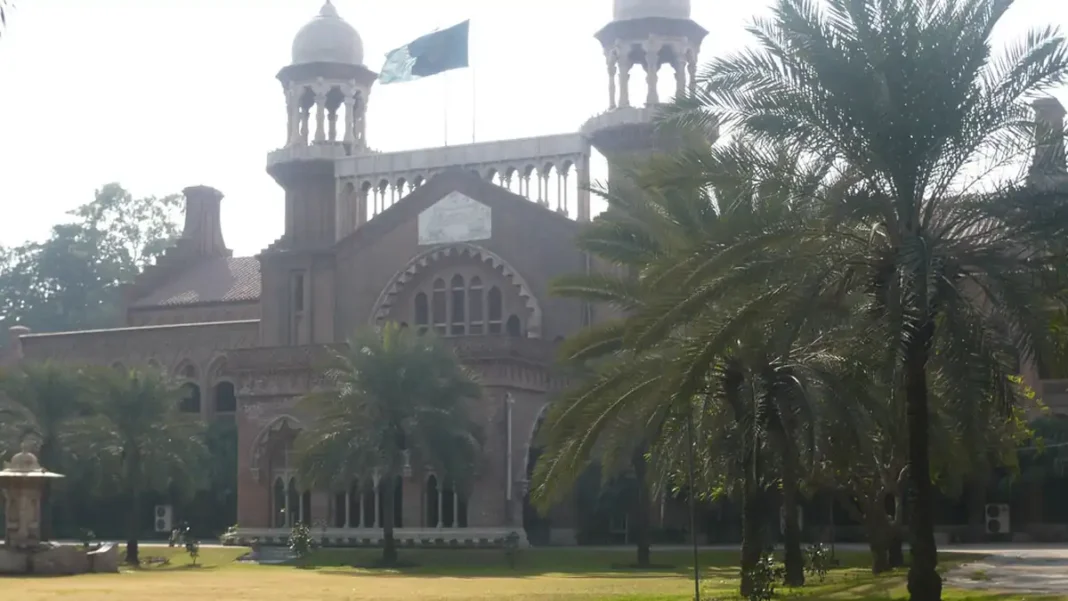
Fundamental rights in Pakistan are directly enforceable. Under Article 184(3), the Supreme Court can take up matters of public importance involving fundamental rights, and under Article 199, High Courts can issue writs — habeas corpus, mandamus, prohibition — against rights violations. No commission can match the binding power of a court order, which is why the judiciary remains the centre of gravity of the whole system.
The Key Laws, At a Glance
Beyond the Constitution, the statutes that did the most to advance rights in Pakistan include the Protection against Harassment of Women at the Workplace Act (2010), the Acid Control and Acid Crime Prevention Act (2011), the Transgender Persons (Protection of Rights) Act (2018) — which recognised the right to self-perceived gender identity — the Torture and Custodial Death (Prevention and Punishment) Act (2022), and the National Commission for Minorities’ Rights Bill (2025), passed by a joint sitting of Parliament in December 2025.
Civil Society’s Watchdog Role
No account of human rights in Pakistan is complete without its independent monitors. The Human Rights Commission of Pakistan (HRCP), active since 1987, publishes the benchmark annual “State of Human Rights” reports. The Catholic Church’s National Commission for Justice and Peace (NCJP) documents minority-rights violations in its yearly Human Rights Monitor.
Frequently Asked Questions
Which articles of Pakistan’s Constitution guarantee human rights?
Articles 8 to 28 of the 1973 Constitution guarantee fundamental rights, including equality (25), dignity (14), speech and press freedom (19), religious freedom (20) and education (25A). Article 8 voids any inconsistent law, and Articles 184(3) and 199 make these rights directly enforceable by the Supreme Court and High Courts.
What does the NCHR do?
The National Commission for Human Rights takes cognisance of rights violations on complaint or on its own motion, inspects jails and police stations, investigates custodial abuse, and advises the government on human rights law and policy. It was established under the NCHR Act 2012 and became functional in 2015.
How can a citizen enforce a fundamental right in Pakistan?
The most powerful route is a constitutional petition before a High Court under Article 199, or a public-interest matter before the Supreme Court under Article 184(3). Citizens can also complain to the NCHR, the NCSW, the NCRC or the Wafaqi Mohtasib, and women can call the national helpline 1099.