


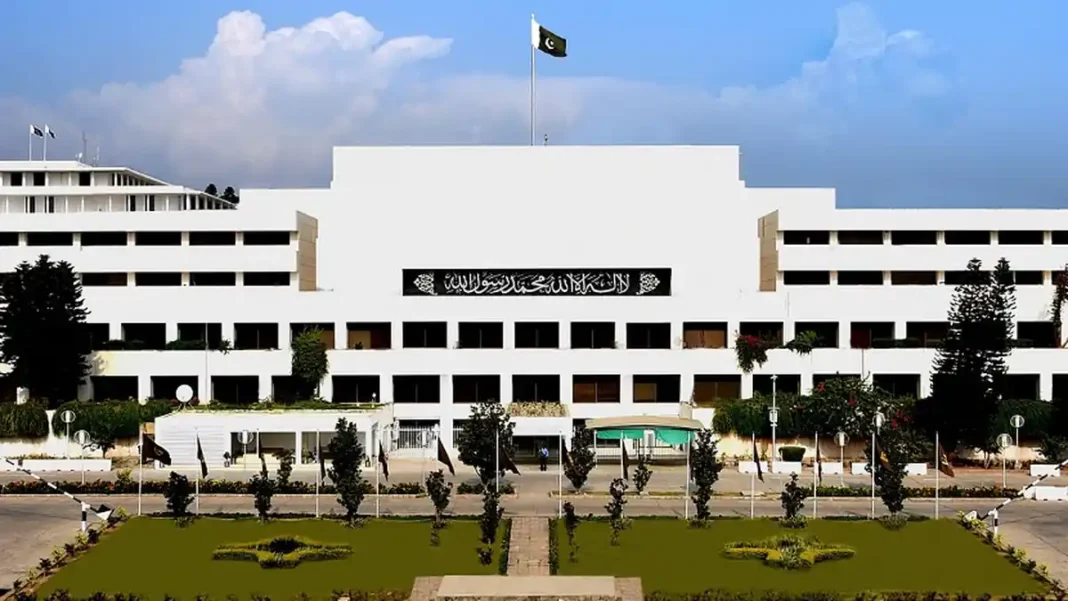
Parliament of Pakistan: National Assembly, Senate & How Laws Are Made
Pakistan’s Parliament — officially the Majlis-e-Shoora — is where the country’s laws are made. It has three parts: the President, the National Assembly and the Senate. This guide explains each part, how they work together, and how a bill becomes law.
Quick answer: Pakistan’s Parliament (Majlis-e-Shoora) consists of the President, the National Assembly (lower house, 336 seats) and the Senate (upper house, 96 seats). Bills must pass both houses and receive the President’s assent to become law.
In this guide
The Three Parts
| Part | Role | Head |
|---|---|---|
| President | Head of state; gives assent to bills | Asif Ali Zardari |
| National Assembly | Lower house — 336 directly/proportionally chosen members | Speaker Ayaz Sadiq |
| Senate | Upper house — 96 members, equal provincial representation | Chairman Senate |
National Assembly (Lower House)
The National Assembly is the house of the people: 336 seats (266 general + 60 women + 10 minorities), elected for 5 years. The party (or coalition) commanding a majority forms the government, and its leader becomes Prime Minister — currently Shehbaz Sharif. Money bills can only originate here. Full detail: National Assembly seats guide and the 336 seats explained.
Senate (Upper House)
The Senate has 96 members — 23 from each province (including women and technocrat seats), plus representatives from Islamabad — elected by the provincial assemblies for 6-year terms, with half retiring every 3 years. Because it is never fully dissolved, the Senate provides continuity when the Assembly’s term ends. It is chaired by the Chairman Senate, who is second in the line of succession to the presidency.
How a Bill Becomes Law
- A bill is introduced in either house (money bills: National Assembly only).
- It passes through committee scrutiny and three readings.
- If passed, it goes to the other house, which may pass, amend or reject it.
- If both houses pass it, it goes to the President for assent — then it is an Act of Parliament.
- Constitutional amendments need a two-thirds majority in each house.
Both houses meet at the Parliament House, Red Zone, Islamabad. The constitutional foundation is in our Constitution of Pakistan 1973 pillar.
Related Guides
Frequently Asked Questions
What is the official name of Pakistan’s parliament?
Majlis-e-Shoora (Parliament). It consists of the President, the National Assembly (lower house) and the Senate (upper house).
Which is the upper house of Pakistan?
The Senate, with 96 members serving 6-year terms. The National Assembly (336 members, 5-year terms) is the lower house.
How does a bill become law in Pakistan?
A bill must pass both the National Assembly and the Senate (money bills start in the Assembly), then receive the President’s assent. Constitutional amendments require a two-thirds majority in each house.

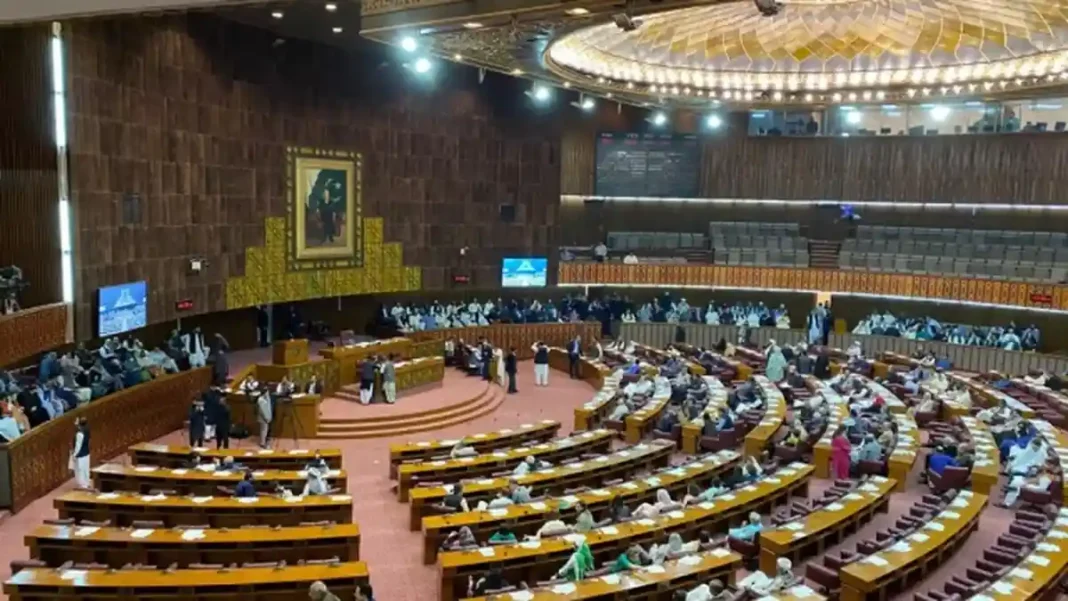
: National Assembly, Senate and President — how laws are made, explained simply.)