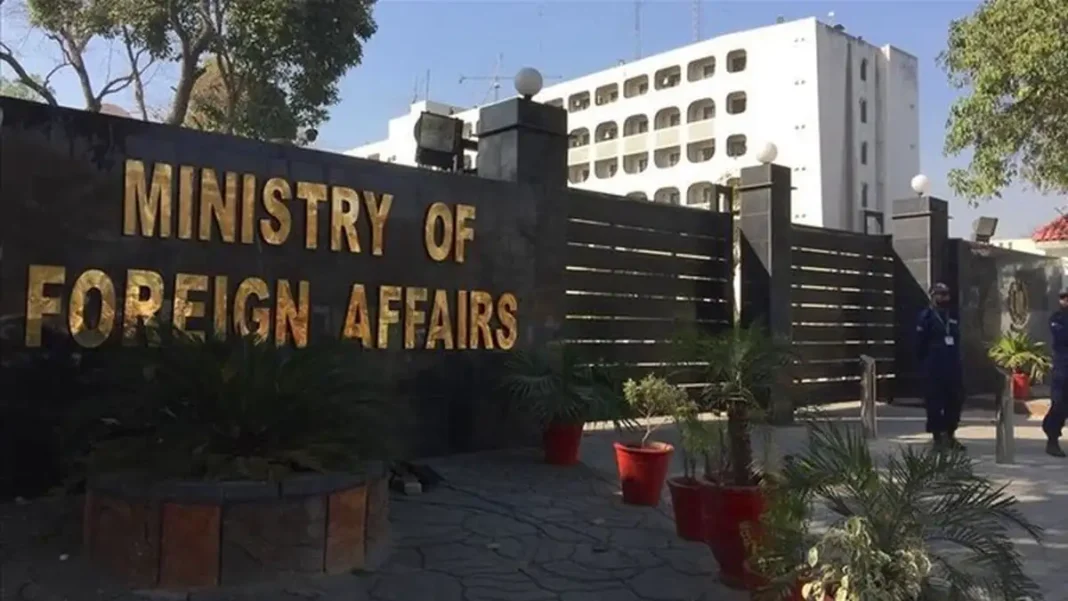
The most prestigious way to work abroad as a Pakistani is to become the person stamping the visas: a Foreign Service officer. Jobs in the Foreign Ministry of Pakistan — officially the Ministry of Foreign Affairs — come overwhelmingly through the Central Superior Services (CSS) exam. This guide maps every route in.
Quick answer: Jobs in Pakistan’s Foreign Ministry are filled mainly through the CSS exam: qualifiers allocated to the Foreign Service of Pakistan (FSP) train at the Civil Services Academy and the Foreign Service Academy in Islamabad (nine-month Specialized Diplomatic Course), join as Assistant Directors (BS-17), learn a foreign language abroad, and rise to Ambassador (BS-21) and Foreign Secretary (BS-22).
In this guide
The CSS Route
The Federal Public Service Commission (FPSC) holds the CSS competitive examination annually. Eligibility: Pakistani citizen, bachelor’s degree (second division), age 21–30 (with relaxations). Candidates list occupational groups by preference; the Foreign Service of Pakistan (FSP) is consistently the most merit-hungry — only top merit positions secure allocation. The written exam (12 papers), psychological assessment and viva voce decide your fate. For context on the ministry they would serve, see our immigration and foreign-affairs overview.
Training: CSA to Foreign Service Academy
Allocated probationers first complete the Common Training Programme at the Civil Services Academy, Walton (Lahore), alongside all service groups. FSP officers then move to the Foreign Service Academy, Islamabad for the nine-month Specialized Diplomatic Course — foreign policy, international law, economics, diplomacy and languages. Within months of graduating, officers are typically sent abroad for a year-long foreign-language course (Arabic, Chinese, French, Spanish and others) at top institutes.
Ranks and Career Ladder
The ladder is clear: Assistant Director (BS-17) at headquarters or Third Secretary abroad → Deputy Director/Second Secretary (BS-18) → Director/First Secretary (BS-19) → Director General/Ambassador at smaller missions (BS-20) → Additional Foreign Secretary/Ambassador at major capitals (BS-21) → Foreign Secretary (BS-22), the ministry’s top bureaucrat. Postings alternate between Islamabad and missions abroad roughly every three years.
Other Ways In
CSS is the main door but not the only one. The Foreign Office hires support staff (assistants, stenographers, translators) through FPSC; locally engaged staff at embassies abroad; and occasional contract specialists (legal, IT, media). Lateral entry at senior diplomatic rank is rare — the service guards its cadre jealously.
Life as a Diplomat
FSP life means furnished postings, diplomatic immunity, international schooling for children, and a front-row seat to history — balanced against constant relocation, security risks at some stations, and the golden-handcuff reality that private-sector salaries dwarf government pay. It remains, by most CSS aspirants’ ranking, the most glamorous service in Pakistan.
Frequently Asked Questions
How do I join the Foreign Service of Pakistan?
Pass the FPSC CSS exam with high enough merit to be allocated to the Foreign Service of Pakistan, then complete training at the Civil Services Academy and the Foreign Service Academy in Islamabad.
What is the starting rank and salary in the Foreign Service?
Officers start as Assistant Directors (BS-17) at headquarters or Third Secretaries abroad, with standard BS-17 government pay plus diplomatic allowances on foreign postings.
Can women join Pakistan’s Foreign Service?
Yes — and in growing numbers. The 37th Specialized Diplomatic Course had 50% female representation, the highest in the service’s history, and Pakistan has appointed women ambassadors to major capitals.