Article 209 of the Constitution of Pakistan: Who Judges the Judges
Judicial independence needs a counterweight: a way to remove judges who misconduct themselves without letting the executive purge the bench. Article 209 strikes that balance through the Supreme Judicial Council — the only constitutional body that can inquire into a superior judge’s conduct and recommend removal. Here is how it works, who sits on it, and the references that made headlines.
Quick answer: Article 209 of the Constitution of Pakistan establishes the Supreme Judicial Council — comprising the Chief Justice of Pakistan, the two next most senior Supreme Court judges and the two most senior Chief Justices of the High Courts — to inquire into the conduct of superior court judges and recommend removal to the President where incapacity or misconduct is found.
In this guide
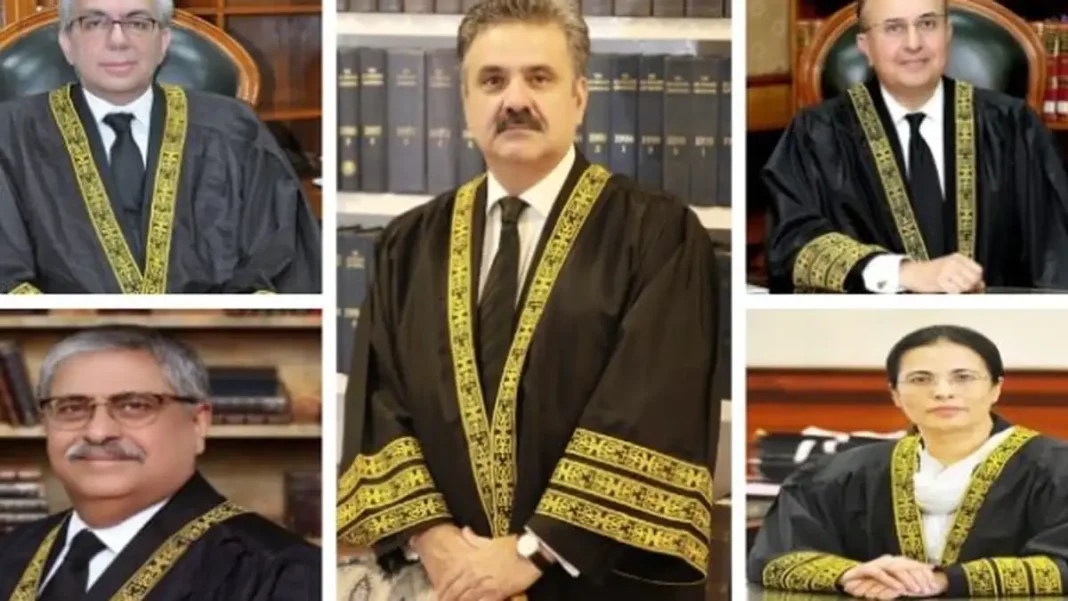
Who sits on the Council
| Member | Role | |
|---|---|---|
| Chief Justice of Pakistan | Chairman of the Council | |
| Two next most senior judges of the Supreme Court | Members | |
| Two most senior Chief Justices of the High Courts | Members |
The composition is deliberate: judges judging judges, with no executive member. The 18th Amendment-era debates and the 26th Amendment’s judicial reforms touched the Council’s context, but its core design — peer accountability — has survived every amendment.
How a reference works
- Reference filed. The President, on the Council’s own motion or on information received, may direct the Council to inquire — or the Council may act on its own.
- Inquiry. The Council investigates, hears the judge, and records evidence. Proceedings are typically in-camera to protect judicial dignity during inquiry.
- Opinion. If the Council finds the judge incapable of performing duties or guilty of misconduct, it reports its opinion to the President.
- Removal. The President may then remove the judge from office. Without the Council’s adverse opinion, the President cannot remove a superior judge.
The standard is high by design: “incapable of properly performing the duties of his office” or “guilty of misconduct.” Mere unpopular judgments are not misconduct — the Council protects independence as much as it polices behaviour.
References that made history
The most politically charged reference in recent memory was against Justice Qazi Faez Isa in 2019, filed by the government over his family’s foreign properties. In June 2020 the Supreme Court quashed the reference, holding the proceedings tainted — a judgment that simultaneously affirmed the Council’s role and policed its misuse. Earlier, the Council’s opinions led to the removal of judges including Justice Shaukat Aziz Siddiqui of the Islamabad High Court (2018) over a controversial speech. Each episode replays the same tension: accountability versus independence.
Why Article 209 matters for your rights
Fundamental rights are only as real as the judges who enforce them. Article 209 keeps the enforcement machinery honest: the High Courts and Supreme Court that guard Articles 8–28 are themselves answerable — but only to their peers, never to the executive alone. That is the constitutional theory: independence from the government, accountability to the law.
Frequently asked questions
What is Article 209 of the Constitution of Pakistan?
Article 209 establishes the Supreme Judicial Council to inquire into the conduct of Supreme Court and High Court judges, and to advise the President on removal where incapacity or misconduct is found.
Who are the members of the Supreme Judicial Council?
The Chief Justice of Pakistan (chairman), the two next most senior Supreme Court judges, and the two most senior Chief Justices of the High Courts.
Can the President remove a judge directly?
No. A superior court judge can only be removed after the Supreme Judicial Council inquires and reports that the judge is incapable or guilty of misconduct.