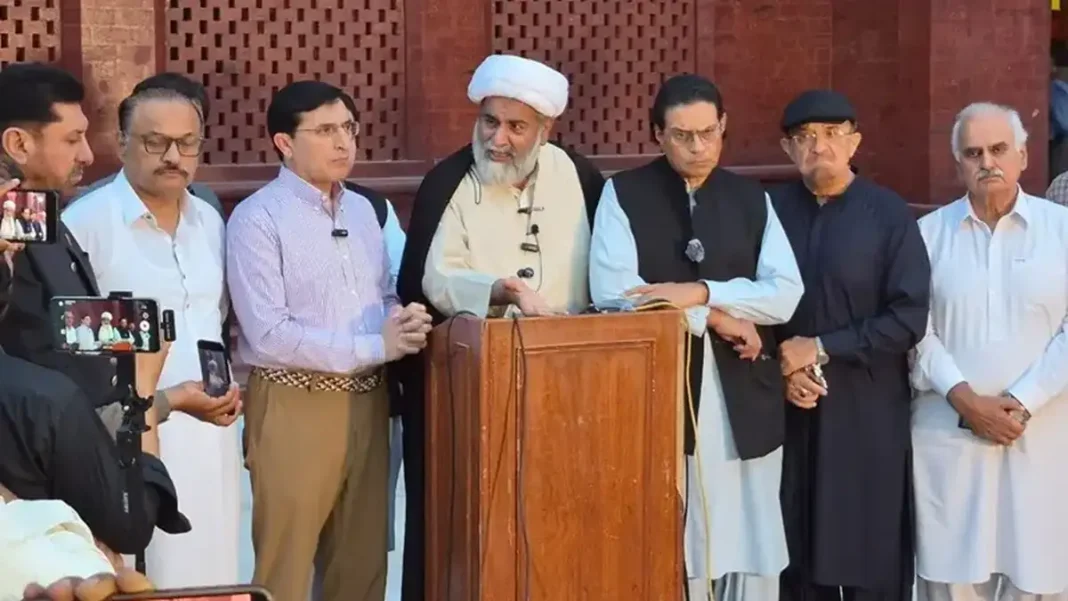
The opposition alliance Tehreek-i-Tahafuz Ayin-i-Pakistan (TTAP) condemned the emergency in Khyber Pakhtunkhwa on Sunday: TTAP condemns governor’s rule as unconstitutional and against democratic principles. Speaking in Islamabad hours after the decision took effect, the alliance said it would fight the move in the courts, in the assemblies and in public forums.
Earlier on Sunday, emergency and governor’s rule were imposed in KP after the federal cabinet decided the step and the president approved it. The PTI, the alliance’s largest party, lost its provincial government in the process. Its long march, the alliance confirmed, will still go ahead as planned.
TTAP condemns governor’s rule: Gohar rejects the Centre’s case
PTI Chairman Barrister Gohar Ali Khan led the response. He said governor’s rule and an emergency would not solve the province’s problems. Instead, he argued, the fight against terrorism needs one shared strategy, built through political consensus.
Gohar also rejected the claim that the KP government had refused to cooperate with the Centre on security. The provincial administration, he said, had raised police capacity, provided security resources and sat in counterterrorism meetings. He further said terrorism had not even been discussed in 15 meetings with government representatives before October 2.
His sharpest question concerned the reach of the decision. “If the problem of terrorism exists in 12 districts, why has governor’s rule been imposed across the province?” he asked, according to Dawn’s report.
The PTI chairman stressed that his party condemns terrorism in all its forms. However, he argued that counterterrorism must not become a reason to act against one party, and that sidelining an elected chief minister sat poorly with democratic principles.
Demands on prisoners, arrests and Imran Khan
Gohar then turned to the party’s detained workers and leaders. He called for the release of political prisoners, and he demanded the restoration of the legal rights of PTI founder Imran Khan. Specifically, he asked that Imran be moved to a hospital for treatment, that his family be allowed to meet him, and that details of his health be shared with them. The party, he said, had approached the Supreme Court and the high courts 19 times for relief for its founder.
He claimed around 1,500 PTI workers were imprisoned in Punjab, plus 10 provincial assembly members, including three ministers, and eight National Assembly members. The government has presented its own account, and our report on how Naqvi defended the KP emergency sets out that position.
Raja says the talks were working
PTI Secretary General Salman Akram Raja backed the same line. Decisions on security operations, he said, should follow consultation with all political parties, using the Parachinar agreement, the February 2026 Apex Committee meeting and a peace jirga resolution as the agreed basis.
Raja said Chief Minister Sohail Afridi had held a clear position throughout: the province could not hand the Centre open-ended authority and then simply endorse whatever followed. He also described the timing as hasty, because negotiations involving Mahmood Khan Achakzai, Allama Raja Nasir Abbas and Maulana Fazlur Rehman had been progressing well. Only days earlier, the PTI had offered talks to the federal government as the march pressed on. Raja confirmed that Afridi’s long march announcement stands unchanged, because peaceful protest is a constitutional right.
Abbas calls for the National Action Plan
Majlis Wahdat-i-Muslimeen chief Allama Raja Nasir Abbas spoke last. Pakistan, he said, is a federation whose provinces are bound by one Constitution. He criticised the treatment of the PTI, called for the National Action Plan to be implemented in full, and said operations in which ordinary citizens become victims cannot win the alliance’s backing.
What happens next
The alliance’s next steps now run on three tracks: a court challenge, a fight in the assemblies, and the long march, which the party insists will remain peaceful.
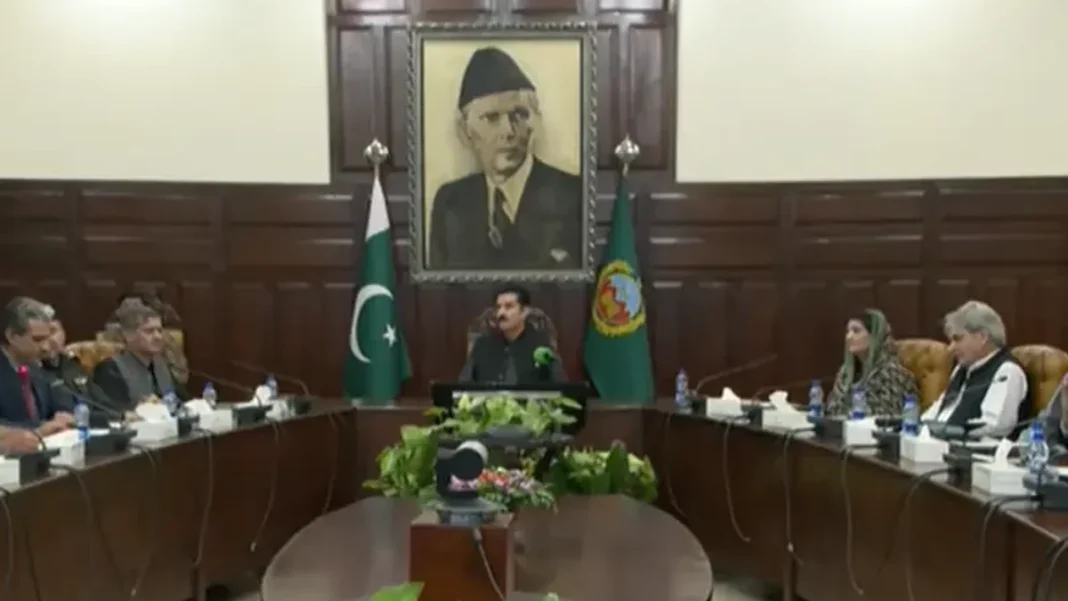
On the ground, the new setup is already working. The Pakistan Army has deployed in KP in aid of civil power, and Governor Faisal Karim Kundi has held the first meeting of his advisory council, as our report on how Kundi chaired the first KP Advisory Council meeting explains.
FAQ
What did the TTAP say about governor’s rule in KP?
The alliance called the move unconstitutional and against democratic principles. It will challenge governor’s rule in the courts, the assemblies and public forums, and the PTI long march will go ahead.
What did Gohar Ali Khan demand for Imran Khan?
He demanded the restoration of Imran Khan’s legal rights, his transfer to a hospital, family meetings, and full details of his health to be shared with the family.
Why does the opposition reject the Centre’s security argument?
Its leaders say the KP government cooperated on counterterrorism and attended security meetings. A shared strategy agreed by all parties, they argue, is the way to address terrorism.