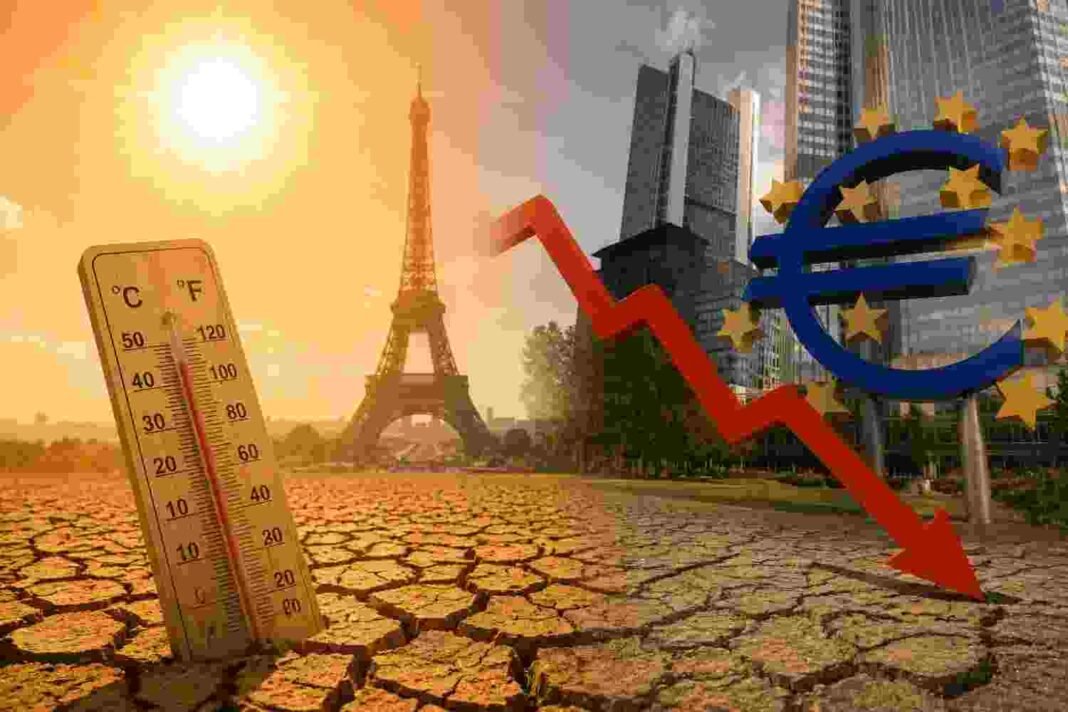
Europe is facing serious economic challenges as extreme temperatures continue to affect businesses across the continent. The ongoing heatwave has disrupted daily activities and created financial pressure for different industries.
The Europe Heatwave Economy crisis is a growing concern as companies face falling sales, higher operating costs, and reduced worker productivity. Experts believe rising temperatures are creating long-term challenges for European markets.
Recent reports show that intense heat has affected supply chains, tourism, agriculture, and industrial operations. Businesses are struggling to maintain normal activities as temperatures remain unusually high.
Furthermore, Europe is experiencing one of its strongest heatwave periods in recent years. The extreme weather has reduced customer spending because many people avoid outdoor activities during peak heat hours.
In Italy’s city of Padua, restaurants, cafes, and hotels have struggled as customer behavior shifts. Many people now prefer indoor, air-conditioned spaces instead of spending time outdoors.
A survey covering nearly 600 hospitality businesses in Padua and surrounding areas revealed major financial losses. More than 80 percent of businesses reported a revenue decline of around 20 percent during the recent heatwave.
Meanwhile, analysts estimate that last summer’s heatwaves caused around €43 billion in economic losses across Europe. Insurance companies covered only a small portion of these damages, creating further concerns for business owners.
Europe’s heatwaves have also highlighted problems in traditional insurance systems. Unlike floods or storms, extreme heat often damages businesses indirectly by reducing productivity and interrupting operations.
Climate experts say heat-related losses require new approaches because businesses face financial problems without direct physical damage to buildings or equipment. Companies often lose revenue through lower demand, employee health concerns, and higher energy costs.
Additionally, extreme temperatures have affected transportation networks across Europe. High heat has disrupted train services and created challenges for industries that depend on smooth logistics.
The agricultural sector has also suffered because prolonged hot weather reduces crop production. Farmers are facing difficult conditions as water shortages and rising temperatures affect farming activities.
Factories across Europe are spending more money on cooling systems to maintain safe working environments. At the same time, workers experience reduced efficiency during long periods of extreme heat.
The Europe Heatwave Economy situation shows how climate change is becoming a major economic issue. Businesses and governments are now focusing on strategies to reduce the financial impact of rising temperatures.
Europe remains the fastest-warming continent, according to climate researchers. Recent data showed that Western Europe recorded temperatures significantly higher than historical averages.
Experts warn that future heatwaves could create greater pressure on economies if countries do not improve climate adaptation plans. Businesses are looking for better solutions to protect workers, maintain operations, and reduce financial risks.
The latest heatwave has once again demonstrated the connection between climate conditions and economic stability. European businesses now face the challenge of adapting to a warmer future while protecting their growth.