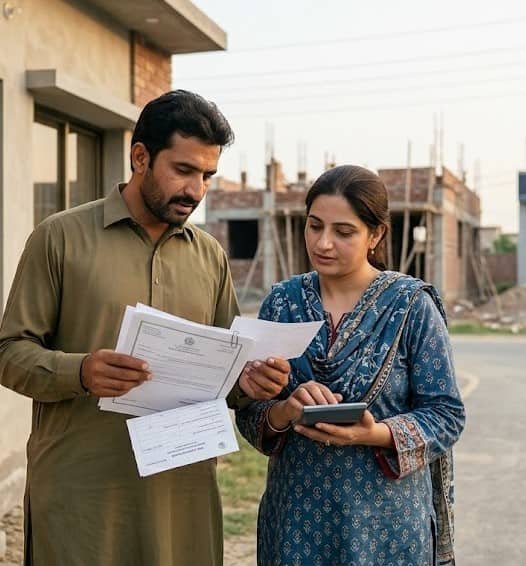
Pakistan’s housing finance sector may soon see a major change as the Securities and Exchange Commission of Pakistan (SECP) has proposed increasing the maximum limit for microfinance housing loans to Rs5 million.
The proposal could provide more financial support to people who want to build, repair or improve their homes.
Currently, many low-income families struggle to arrange enough money for housing projects. Rising prices of construction materials, land and labour have made home construction more expensive.
The SECP proposal aims to address this challenge by allowing microfinance institutions to provide larger housing loans to eligible borrowers.
Microfinance housing loans are designed for people who often cannot access traditional bank financing. These borrowers may include small business owners, self-employed workers and individuals with limited income sources.
The proposed increase in the loan limit could make housing finance easier for thousands of families across Pakistan.
The SECP said the move is part of efforts to improve financial inclusion and strengthen the microfinance sector.
The regulator believes that better access to housing finance can help more people complete construction projects and improve their living conditions.
For many Pakistanis, owning a home remains a major life goal. However, limited access to affordable loans has prevented many families from starting or completing housing projects.
Traditional banks usually require detailed income records, collateral and strict eligibility criteria. These requirements can make it difficult for low-income households to qualify.
Microfinance institutions offer another option because they focus on providing smaller and more accessible financial products.
With the proposed Rs5 million limit, borrowers may get more flexibility for home construction, renovation and expansion.
The increase could also support Pakistan’s construction industry.
When more families receive housing finance, demand for construction materials, labour and related services can increase.
The construction sector supports millions of jobs and connects with several industries, including cement, steel, transport and property services.
A stronger housing finance system can therefore create wider economic activity.
The proposal also highlights the changing role of microfinance institutions in Pakistan.
In the past, microfinance mainly focused on small business loans and income-generating activities.
Over time, these institutions have expanded their services to include education loans, agricultural financing and housing solutions.
Housing finance has become an important area because Pakistan continues to face a shortage of affordable homes.
Population growth and urban expansion have increased demand for residential facilities, while construction costs continue to rise.
The SECP’s proposal could help reduce some of these challenges by increasing access to formal housing finance.
However, experts say responsible lending will remain important.
A larger loan facility can benefit borrowers, but financial institutions must ensure that customers can manage monthly repayments.
Borrowers should understand loan terms, repayment schedules and additional charges before taking financing.
The purpose of housing finance is to provide support, not create unnecessary financial pressure.
The proposed increase will also require proper eligibility rules.
Microfinance institutions will need to evaluate borrower income, repayment ability and financial background before approving loans.
These measures can help protect both borrowers and financial institutions.
The SECP regularly introduces reforms to improve Pakistan’s financial sector and encourage wider access to financial services.
The regulator oversees non-bank financial institutions and works on policies related to market development, transparency and consumer protection.
If approved, the new microfinance housing loan limit could become an important step towards expanding affordable housing opportunities in Pakistan.
The proposal may especially benefit families who need additional funding but cannot meet the requirements of traditional mortgage systems.
For small homeowners, a higher loan limit could mean the difference between leaving a construction project incomplete and finally finishing their dream home.
The move could also encourage more people to use formal financial channels instead of depending on informal borrowing methods.
Formal financing provides clearer terms, regulated processes and better consumer protection.
Pakistan’s housing sector needs long-term solutions, and easier access to finance is one important part of that solution.
The SECP proposal to increase the microfinance housing loan limit to Rs5 million shows a push towards making housing finance more accessible.
While the proposal still requires further consideration and approval, it could open new opportunities for families looking for affordable ways to build or improve their homes.