Pakistan’s Ministry of Finance has acknowledged a sharp rise in inflation while saying that the benefits of macroeconomic stability have started to appear across several productive sectors of the economy.
According to the ministry’s latest Monthly Economic Update and Outlook, Pakistan’s economy showed encouraging signs of recovery during the first two months of fiscal year 2026-27, particularly in manufacturing, agriculture, automobile production and the external sector.
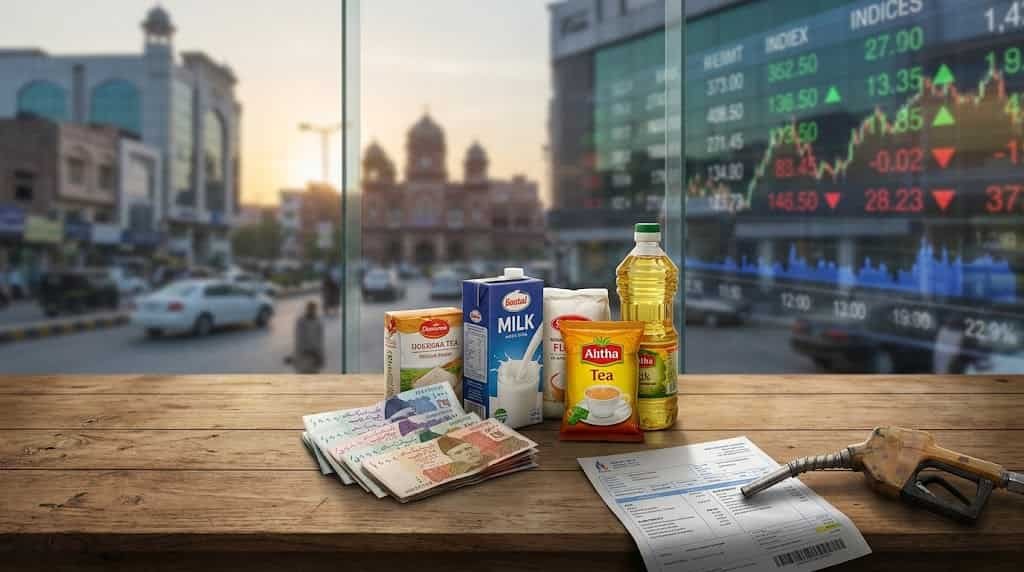
However, inflation remained a major concern for households and businesses. Annual inflation increased to 11.1 percent in August 2026, compared with 9.2 percent in July and only 3.1 percent in August last year.
On a month-to-month basis, inflation increased by 1.2 percent during August.
The government said food, housing and utilities, and transport remained the main drivers of rising prices. Together, these categories contributed around 8.2 percentage points to overall inflation.
Food alone contributed around 4.9 percentage points, highlighting the continued pressure on household budgets.
Core inflation also remained high. It stood at 8.8 percent in urban areas and 8.5 percent in rural areas.
Meanwhile, Pakistan’s fiscal deficit increased during the early part of the current financial year. The overall deficit reached Rs596.6 billion, equal to around 0.4 percent of GDP.
During the same period last year, the deficit stood at Rs261.5 billion, or around 0.2 percent of GDP.
Despite the wider fiscal deficit, the government recorded a primary surplus of Rs196.3 billion.
Higher interest payments played a major role in increasing government expenditure. Federal current spending reached Rs1.092 trillion in July 2026, compared with Rs761.6 billion in July last year.
Interest payments alone increased from Rs490.4 billion to Rs792.9 billion.
Tax collection also recorded moderate growth during July and August.
The Federal Board of Revenue collected Rs1.722 trillion in net taxes during the two-month period, showing an increase of 3.7 percent.
Sales tax collection increased by 13.8 percent to Rs718.9 billion, while federal excise duty collection rose by 2.2 percent to Rs117.9 billion.
However, direct tax collection fell by 2.9 percent to Rs689.6 billion. Customs duties also declined by 4 percent to Rs195.9 billion.
The external sector showed relatively stronger performance.
Pakistan’s current account deficit declined to $543 million during July and August, compared with $853 million during the same period last year.
Imports of goods increased by 11.4 percent to $11.6 billion, while exports increased by 4 percent to $5.44 billion.
Workers’ remittances provided important support to the external account. Remittances jumped by 14.7 percent to $7.29 billion.
Services exports also performed strongly and increased by 28.8 percent to $1.81 billion.
Foreign investment improved during the period as well.
Foreign direct investment increased by nearly one-fourth to $494.5 million. Portfolio investment also moved from negative territory into positive territory and reached $67.7 million.
As a result, total foreign investment increased by 80.2 percent to $562.2 million.
According to the report, the country’s foreign exchange position also strengthened.
Following the issuance of a $3 billion Eurobond in September, the State Bank of Pakistan’s liquid foreign exchange reserves stood at $21.4 billion on September 18, 2026.
Pakistan’s total liquid foreign exchange reserves reached approximately $26.8 billion.
The State Bank of Pakistan also kept its policy rate unchanged at 11.5 percent during the Monetary Policy Committee meeting held on September 14.
The manufacturing sector showed signs of recovery during the opening months of the financial year.
Large-scale manufacturing output increased by 3.03 percent year-on-year in July 2026. On a monthly basis, production increased by 9.5 percent compared with June.
Several industrial sectors recorded strong growth.
Automobile production increased by 57 percent, apparel production rose by 22 percent, while tobacco production increased by 35.8 percent.
During July and August, overall automobile production increased by 27.6 percent, while vehicle sales grew by 29.9 percent.
The cement industry also reported higher domestic demand.
Total cement dispatches increased by 2.8 percent to around 8.5 million tonnes. Domestic dispatches rose by 8 percent, although cement exports dropped by 16.7 percent.
Agriculture also showed some positive early indicators.
The government linked the improvement to higher cultivated area for important Kharif crops and encouraging cotton arrivals.
Agricultural credit disbursement increased by 16.4 percent to Rs271.9 billion in July 2026, compared with Rs233.7 billion during the same month last year.
Urea consumption during Kharif 2026 increased by 2.9 percent to around 2.755 million tonnes.
However, DAP consumption declined by 24.5 percent to around 417,000 tonnes.
Tractor sales increased by 4.7 percent to 2,294 units during July and August.
Pakistan also imported agricultural machinery and equipment worth approximately $29.2 million during the period.
Private-sector credit trends remained mixed.
Between July 1 and September 11, 2026, the private sector made net loan repayments of Rs364.5 billion, compared with Rs170 billion during the same period last year.
However, the total outstanding stock of private-sector credit remained around 13 percent higher than a year earlier.
Pakistan’s stock market also remained at historically high levels despite fluctuations.
The KSE-100 Index ended August at 176,976 points after gaining around 882 points, or nearly 0.5 percent, during the month.
Market capitalization reached Rs19.83 trillion at the end of August.
However, by September 29, the benchmark index had declined to around 169,600 points, while market capitalization stood at approximately Rs18.89 trillion.
The report also highlighted overseas employment as an important source of economic opportunities and foreign exchange.
During August 2026, the Bureau of Emigration and Overseas Employment registered 27,656 Pakistani workers for employment abroad.
Meanwhile, the Pakistan Poverty Alleviation Fund provided 5,169 interest-free loans through 24 partner organizations during the month.
The total value of these loans reached around Rs381 million.
The government has also introduced measures aimed at limiting the impact of high global oil prices.
According to the report, the Prime Minister’s Fuel Relief Scheme aims to provide targeted assistance to lower-income households through a digital system.
At the same time, the federal government has introduced austerity measures to control its own fuel and administrative expenses.
These measures include a 50 percent reduction in fuel allocations for non-operational government vehicles,