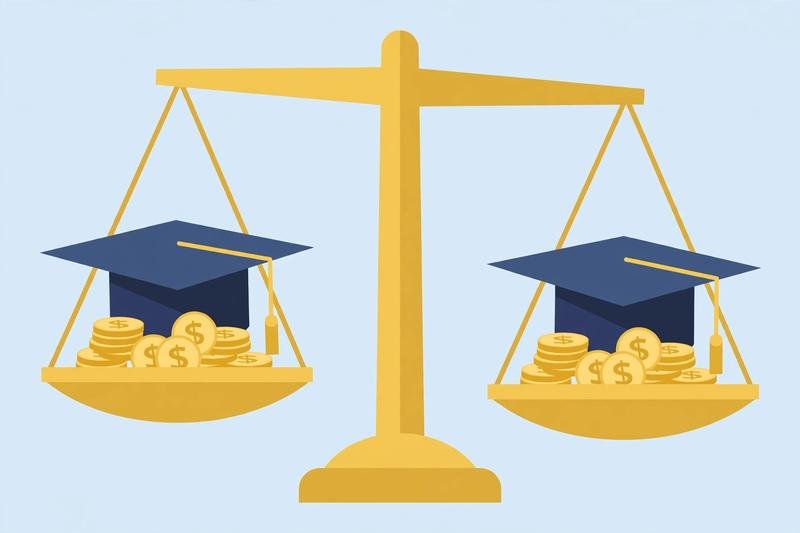
If two students each borrow $5,500 for college, one could pay nearly $1,900 more than the other. The reason is simple. One student chose a subsidized loan, and the other chose an unsubsidized loan.
Understanding the difference between subsidized and unsubsidized loans can save you thousands of dollars. These are the two main types of federal Direct student loans. They look almost identical on your financial aid award letter. However, they treat interest very differently while you are in school.
In this guide, you will learn exactly how each loan works. We will compare eligibility rules, interest charges, and borrowing limits. You will also see a real cost example with actual numbers. By the end, you will know which loan to accept first and which costly mistakes to avoid.
What Is the Difference Between Subsidized and Unsubsidized Loans?
Here is the short answer. With a subsidized loan, the federal government pays your interest while you study. With an unsubsidized loan, interest starts building from the day the money reaches your school.
That single difference changes the total cost of your degree. For example, a $5,500 unsubsidized loan can grow by about $1,400 during four years of college. A subsidized loan for the same amount stays at $5,500 until you leave school.
Both loans come from the federal Direct Loan program. Both offer fixed interest rates and flexible repayment plans. In addition, neither loan requires a credit check. The sections below break down every important detail.
Subsidized Student Loans Explained
Subsidized loans are the cheapest way to borrow for college. The government covers your interest during key periods. As a result, your balance does not grow while you focus on your studies.
Who Qualifies for Subsidized Loans?
Only undergraduate students can receive subsidized loans. In addition, you must show financial need. Your school determines your need using information from your FAFSA form.
Financial need means your cost of attendance is higher than your Student Aid Index. If you qualify, your award letter will list a subsidized loan amount. You cannot receive more in subsidized loans than your calculated need.
Graduate and professional students are not eligible for subsidized loans. Congress ended subsidized loans for graduate students in 2012. Therefore, graduate borrowers use unsubsidized loans only.
How Interest Works on Subsidized Loans
The U.S. Department of Education pays the interest on your subsidized loan during three periods. First, it pays while you are enrolled at least half-time. Second, it pays during your six-month grace period after you leave school. Third, it pays during approved deferment periods.
This benefit is powerful. If you borrow $5,500 as a freshman, you will still owe $5,500 when you graduate four years later. No interest has touched your balance. However, once your grace period ends, interest starts accruing like any other loan.
Unsubsidized Student Loans Explained
Unsubsidized loans are available to far more students. However, they cost more over time because interest never pauses. Understanding this trade-off helps you borrow wisely.
Who Qualifies for Unsubsidized Loans?
Both undergraduate and graduate students can receive unsubsidized loans. Financial need is not required. Almost every student who completes the FAFSA can access them.
Your school still sets your loan amount. However, the limit is based on your grade level and dependency status, not your financial need. For example, a first-year dependent undergraduate can borrow up to $5,500 in total Direct loans per year.
How Interest Accrues on Unsubsidized Loans
Interest on an unsubsidized loan starts the day your school receives the funds. It keeps building while you study, during your grace period, and during deferment. The government never pays it for you.
You can choose to pay this interest while you are in school. If you do, your balance stays flat. If you do not, the unpaid interest capitalizes. Capitalization means the lender adds the interest to your principal. After that, you pay interest on the interest.
For example, $5,500 at a 6.39% rate builds about $351 of interest per year. Over four years of college, that adds roughly $1,400 to your balance. Your $5,500 loan becomes a $6,900 loan before you make a single payment.
Difference Between Subsidized and Unsubsidized Loans: A Real Cost Example
Numbers make the difference clear. Let us compare two students who each borrow $5,500 in their first year. Both use the 2025–2026 undergraduate rate of 6.39%. Both repay over the standard 10-year plan.
Student A takes the subsidized loan. The government pays all interest during four years of school and the six-month grace period. She graduates owing exactly $5,500. Her monthly payment is about $62. Over 10 years, she pays roughly $7,460 in total.
Student B takes the unsubsidized loan. Interest accrues for four and a half years before repayment starts. About $1,400 of unpaid interest capitalizes. He starts repayment owing about $6,900. His monthly payment is about $78. Over 10 years, he pays roughly $9,360 in total.
The difference is striking. Student B pays about $1,900 more for the same $5,500 of borrowed money. This example is simplified, but it shows why loan type matters so much. Choosing the subsidized loan first is one of the smartest money moves a student can make.
Borrowing Limits: How Much Can You Take?
Federal loan limits depend on your year in school and your dependency status. Subsidized loans also have their own tighter caps within those totals.
For dependent undergraduates, annual Direct loan limits are $5,500 in year one, $6,500 in year two, and $7,500 in later years. Of those totals, at most $3,500, $4,500, and $5,500 respectively can be subsidized. The rest must be unsubsidized.
Independent undergraduates can borrow more: $9,500, $10,500, and $12,500 per year. However, the subsidized caps stay the same. The extra amounts are always unsubsidized.
Lifetime aggregate limits also apply. Dependent students can borrow $31,000 total, with no more than $23,000 subsidized. Independent students can borrow $57,500 total, again with a $23,000 subsidized maximum. Graduate students face a $138,500 aggregate limit, all unsubsidized.
Which Loan Should You Accept First?
Always accept free money first. Grants and scholarships do not need repayment, so take every dollar offered. Next, accept subsidized loans up to your full eligibility. They are the cheapest borrowed money available.
After that, consider unsubsidized loans if you still need funds. They cost more, but they still beat most private loans. Federal loans offer fixed rates, income-driven repayment, and strong borrower protections.
Only after exhausting federal options should you look at Parent PLUS loans or private student loans. Private loans often carry higher rates and fewer safety nets. Therefore, the smart order is: grants, then subsidized loans, then unsubsidized loans, then everything else.
You can also decline part of your award. For example, you might accept the full subsidized loan but only half of the unsubsidized offer. Borrow only what you truly need. Every dollar you skip is a dollar plus interest you never repay.
Repayment: What Happens After Graduation
Both loan types enter repayment after your six-month grace period ends. During grace, subsidized loans stay interest-free. Unsubsidized loans keep accruing interest, so paying during grace saves money.
Once repayment begins, the two loans work identically. You can choose the standard 10-year plan, graduated payments, or an income-driven plan. Both qualify for Public Service Loan Forgiveness and teacher forgiveness programs.
In addition, both offer deferment and forbearance if you face hardship. During deferment, the government resumes paying interest on subsidized loans. However, unsubsidized interest keeps building during any pause. As a result, long deferments cost unsubsidized borrowers significantly more.
How to Maximize Your Subsidized Loan Eligibility
Many students leave subsidized money on the table. A few smart moves can increase the subsidized share of your aid package.
First, file the FAFSA as early as possible. Some states and schools award aid on a first-come basis. An early application protects your place in line.
Second, understand what drives your Student Aid Index. Income from two years earlier shapes your SAI. If your family’s finances changed since then, ask your school about a professional judgment review. A job loss or large medical bills can lower your SAI and raise your subsidized eligibility.
Third, compare aid offers carefully. Different schools calculate need differently. A school with a lower net price might still offer a larger subsidized share. Therefore, the cheapest sticker price is not always the cheapest real cost.
Finally, reapply every single year. Your eligibility changes as your finances change. A student who missed subsidized loans as a freshman might qualify as a sophomore. Never assume last year’s result will repeat.
5 Costly Mistakes to Avoid
Students lose thousands by making these common errors. Avoid each one.
- Ignoring the interest while in school. Paying even $25 per month toward unsubsidized interest prevents capitalization.
- Borrowing the maximum without a plan. Accept only what your budget requires, not the full award amount.
- Skipping the FAFSA. You cannot get subsidized loans without it, and many students wrongly assume they earn too much.
- Choosing private loans first. Private loans lack income-driven repayment and federal forgiveness options.
- Missing the grace period deadline. Mark your calendar. Your first payment arrives six months after you drop below half-time enrollment.
Frequently Asked Questions
Can you receive both subsidized and unsubsidized loans?
Yes. Most undergraduates receive a mix. Your school awards subsidized loans up to your financial need first. Then it fills the rest of your annual limit with unsubsidized loans. For example, a freshman with need might get $3,500 subsidized plus $2,000 unsubsidized.
Do subsidized loans charge interest after graduation?
Yes. The interest subsidy ends when your grace period ends. From that point, your subsidized loan accrues interest at its fixed rate, just like an unsubsidized loan. The benefit only covers your time in school and approved pauses.
What is the current interest rate on federal student loans?
For the 2025–2026 award year, the rate is 6.39% for undergraduate Direct loans, both subsidized and unsubsidized. Graduate unsubsidized loans carry 7.94%. Congress sets new fixed rates every July 1, so check the current rate before you borrow.
Can graduate students get subsidized loans?
No. Since July 2012, graduate and professional students can only borrow unsubsidized Direct loans. They may borrow up to $20,500 per year. Interest accrues from disbursement, so graduate borrowers should consider interest payments during school.
What happens if I decline my unsubsidized loan?
You can decline all or part of any loan offer. Your school will not replace it with a subsidized loan beyond your eligibility. If you later need the money, contact your financial aid office. In most cases, you can request the declined funds within the same academic year.
Are Parent PLUS loans subsidized or unsubsidized?
Parent PLUS loans are unsubsidized. Interest accrues from the day of disbursement, and the current rate is higher than Direct loan rates. Parents should compare PLUS loans with private options and consider whether the student can cover costs with Direct loans instead.
Conclusion: Key Takeaways
The difference between subsidized and unsubsidized loans comes down to one thing: who pays the interest while you study. The government pays it on subsidized loans. You pay it, sooner or later, on unsubsidized loans.
- Subsidized loans are for undergraduates with financial need, and the government covers interest during school, grace, and deferment.
- Unsubsidized loans are open to all students, but interest accrues from day one and capitalizes if unpaid.
- A $5,500 unsubsidized loan can cost about $1,900 more than the same subsidized loan over 10 years.
- Always accept grants first, then subsidized loans, then unsubsidized loans, and only then consider private options.
Before you sign your award letter, run your own numbers. Use the federal Loan Simulator to compare repayment plans. Then talk to your school’s financial aid office about maximizing your subsidized eligibility. A few smart choices now can save you thousands later.
This article is for general information only and is not financial advice.