Putin Warns West Against Escalation, Cites 'Dangerous Moment'
Putin Warns West Against Escalation, Cites ‘Dangerous Moment’
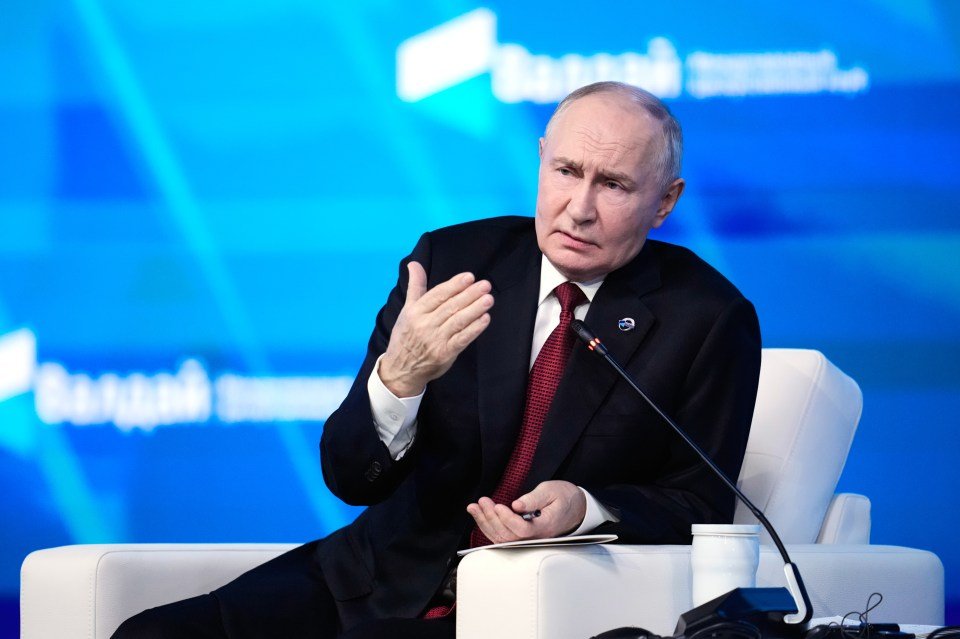
President Vladimir Putin has issued a stark Kaliningrad warning to the West, telling the Valdai Forum in Moscow that the world is living through a dangerous moment and cautioning Western governments against escalating the standoff over Ukraine.
Speaking to international Russia experts on Thursday, Putin said Russia had no plans to attack any European country and wanted to coexist peacefully, but he repeated that Moscow would use all weapons in its arsenal, including nuclear ones, if its Baltic exclave of Kaliningrad came under threat.
What Putin said about Kaliningrad
Kaliningrad, Russia’s most westerly territory, sits wedged between NATO members Poland and Lithuania. Putin said any direct attack on it would put the use of Russia’s full arsenal on the table.
“If it comes to a direct attack on the Russian Federation – in this case, we are referring to Kaliningrad, and perhaps other territories as well – the question of the Russian Federation deploying all the weapons at our country’s disposal will, of course, inevitably and immediately be on the agenda,” he said. “This is inevitable.”
The remarks followed a diplomatic note Russia sent to NATO this week, warning the alliance it was ready to resort to nuclear weapons if NATO attempted to cut off the exclave. NATO Secretary General Mark Rutte responded that the alliance was defensive and that nuclear threats were not helpful.
Why the Kaliningrad warning matters
Putin framed his remarks as a caution against spiralling retaliation. “We must realise that the moment when nothing can be changed any longer may come very quickly and unexpectedly for everyone,” he said. “The logic of escalating, increasingly harsh retaliatory measures leads to a fatal point of no return.”
He described NATO as “an enemy twice our size” and pointed to what he called Russia’s competitive advantage in weapons, while noting that France and Britain were also nuclear powers. Recent NATO military drills near Kaliningrad, which the alliance describes as defensive exercises, have drawn sharp protests from Moscow, which warned in late September it would retaliate if the exclave were blockaded by air or sea.
No ceasefire on strikes
Putin also ruled out a proposal to pause long-range strikes in Ukraine, calling the idea “simply ridiculous”. The proposal followed a meeting between US President Donald Trump and Ukrainian President Volodymyr Zelenskyy in New York on September 22, where Kyiv said it was ready to halt attacks on Russian energy facilities if Moscow did the same.
Putin conceded that Ukrainian strikes on oil refineries across Russia had cost the country about one per cent of its gross domestic product, adding that Moscow was now responding in kind. He said Russia had intensified long-range attacks on Ukraine’s steel industry and supply chains, particularly railways, as Kyiv braces for winter.
Talks still on the table
Despite the warnings, Putin said Russia would prefer to end the war through talks and wanted Ukraine to remain neutral after hostilities cease. He said he was open to a trilateral meeting with Chinese President Xi Jinping and US President Donald Trump if a proper agenda was worked out first.
He also dismissed repeated Western claims that Russia was preparing a military attack on a NATO country, and said Moscow was not planning to strike arms factories in Europe supplying Ukraine. European governments, for their part, have accused Moscow of waging a “hybrid war” through cyberattacks and sabotage, a charge Russia denies.
FAQs
What did Putin say at the Valdai Forum?
He said the world is living through a dangerous moment and warned the West not to escalate the standoff over Ukraine by threatening Kaliningrad, adding that all weapons, including nuclear ones, would be on the agenda if the exclave were attacked.
Where is Kaliningrad?
It is a heavily militarised Russian exclave on the Baltic Sea, wedged between Poland and Lithuania and separated from the rest of Russia.
Did Putin rule out a ceasefire in Ukraine?
He ruled out a pause on long-range strikes, calling the proposal “simply ridiculous”, but said Russia prefers to end the conflict through talks and wants Ukraine to be neutral.
How did NATO respond?
NATO Secretary General Mark Rutte said the alliance was defensive and that nuclear threats were not helpful, after Russia sent a diplomatic note warning of a nuclear response if Kaliningrad were cut off.