

World Bank presses Pakistan to implement policy actions under $20bn reform partnership
World Bank presses Pakistan to implement policy actions under $20bn reform partnership
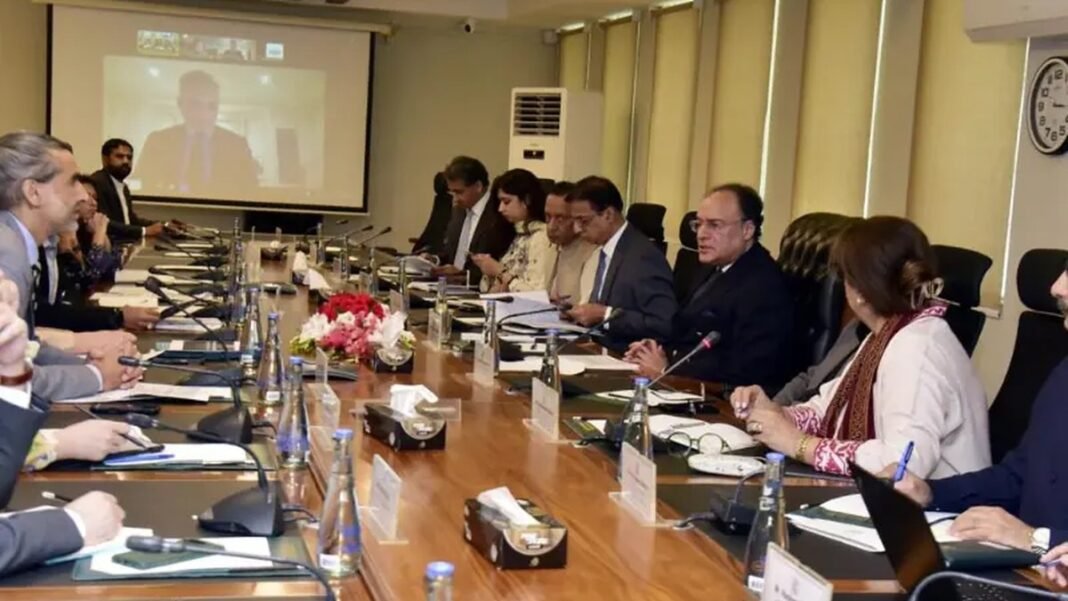
The World Bank $20bn reform partnership moved into focus on Friday as Finance Minister Muhammad Aurangzeb met a World Bank delegation led by Country Director Bolormaa Amgaabazar to review progress under the ongoing economic reform partnership. Both sides agreed the focus must now move from designing reforms to implementing them.
The meeting took stock of the World Bank’s support for Pakistan’s broader economic reform agenda, with discussion spanning growth, jobs, fiscal management, revenue mobilisation, capital-market development, trade, investment and institutional reforms.
World Bank $20bn reform partnership shifts from design to delivery
The $20bn Country Partnership Framework, a ten-year programme, sits at the centre of the relationship. Aurangzeb underscored the need to translate reform priorities into targeted, implementable actions, with stronger coordination between ministries, provincial governments and implementing agencies. The aim, he said, was practical measures that deliver measurable improvements in economic activity, investment, jobs and the business environment.
The two sides discussed the proposed World Bank growth and jobs operation, covering the investment framework, reduction of regulatory and business constraints, access to finance for small and medium enterprises, and export-finance products for the EXIM Bank of Pakistan to support trade flows.
Reforms under the Prime Minister’s Access to Finance initiative were also reviewed, including a unified insolvency framework and factoring legislation to support SME financing. Sectoral interventions covered pharmaceuticals and medical products, and agriculture — including seed registration, deregulation of selected commodities and stronger international accreditations to open up export markets.
Fiscal, tariff and capital-market reforms on the table
On fiscal and revenue reforms, the meeting reviewed World Bank technical assistance for tax-policy capacity, the Medium-Term Revenue Strategy and GST harmonisation, with better federal-provincial coordination and data sharing. Progress on agricultural income tax reforms and provincial property-tax reforms, including market-based valuation frameworks, was also discussed.
The finance minister and the delegation reviewed implementation of the National Tariff Policy and analytical work on tariff reforms, including the automotive sector, to support competitiveness, productivity, investment and exports. On capital markets, the World Bank Group is supporting a roadmap through the Capital Markets Development Council to deepen domestic markets and broaden financing avenues.
The meeting also covered sovereign credit ratings. Aurangzeb said the government would work to strengthen the drivers of Pakistan’s credit standing, including fiscal and debt sustainability, external buffers, sustainable growth and institutional effectiveness, to support further rating improvements.
FAQs
What is the World Bank’s $20bn reform partnership with Pakistan?
It is the ten-year Country Partnership Framework, under which the World Bank has committed $20bn in sovereign lending to support Pakistan’s economic reforms, development and private-sector growth.
What did Aurangzeb discuss with the World Bank delegation?
Implementation of reforms across growth, jobs, fiscal management, revenue mobilisation, capital markets, trade, investment and institutional reforms, with emphasis on moving from design to delivery.
What are the priority reform areas?
Growth and jobs operations, SME finance, the EXIM Bank’s export-finance products, GST harmonisation, agricultural income tax, property-tax reform, the National Tariff Policy and capital-market development.
Who led the World Bank delegation?
The delegation was led by Bolormaa Amgaabazar, the World Bank’s Country Director for Pakistan.