


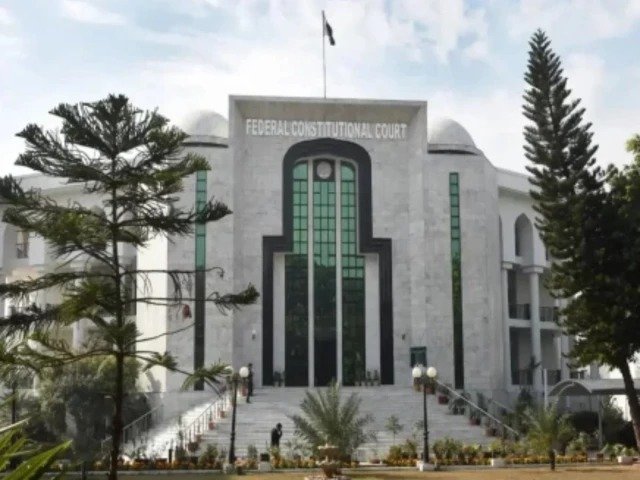
FCC rules out second review petitions after final disposal of first review
FCC rules out second review petitions after final disposal of first review
The Federal Constitutional Court has held that second review petitions are barred once a court has given its final decision on the first review, shutting a door through which settled cases were sometimes reopened under a new name.
The court observed that a request dressed up as a plea for “recall” or “restoration” of an order cannot be used to seek a fresh reconsideration of a judicial decision. In substance, such requests amount to second review petitions, which the law does not permit. It added that a recall of an order may still be considered where a party establishes an independent procedural defect. But where the relief sought in substance requires the court to revisit the reasoning or outcome of an earlier judicial order, the request amounts to a second review petition, which the law does not permit.
What the court decided
Justice Syed Hasan Azhar Rizvi gave the order on a Civil Miscellaneous Appeal No. 37/2026, filed by the Managing Director of the Oil and Gas Development Company Limited (OGDCL). The court upheld the Registrar’s objection dated July 3, 2026, and dismissed the appeal.
The court held that under Order 27, Rule 8 of the Supreme Court Rules, 2025, a second review petition cannot be entertained after the final disposal of the first review petition. It further noted that Order 10, Rule 2 limits alteration of, or addition to, a judgment pronounced in open court to the correction of clerical or arithmetical mistakes, or an accidental slip or omission.
The finality rule behind the ban on second review petitions
A review petition is a limited remedy. It lets a party ask the same court to look at its own judgment again, usually on narrow grounds such as an error apparent on the face of the record or the discovery of new and important evidence. It is not a second appeal, and it is not an invitation to rehear the whole case.
The reason is finality: if litigants could keep returning with fresh review petitions, no judgment would ever truly be final, and courts would clog while winning parties were denied the certainty of a decided outcome.
The FCC’s ruling reinforces that principle. Once the court has heard and decided the first review, the matter is closed. Calling the next request a “recall” does not change what it really is.
An active court on procedure
The decision continues a steady stream of procedural rulings from the Federal Constitutional Court, which has recently dealt with questions such as bench formation and the handling of cases involving doctors and drug stores. The practical message for litigants is plain: make the first review count, because a second attempt, however styled, will not be entertained.
What happens next
The ruling is binding on lower courts and tribunals dealing with similar applications. Parties with pending “recall” or “restoration” applications that in substance seek a second review can now expect those applications to be dismissed on the authority of this judgment. Genuine clerical or arithmetical errors remain correctable under Order 10, Rule 2.
What is a review petition?
A review petition is a request to the same court that passed a judgment to reconsider it, available only on narrow grounds such as an error apparent on the face of the record. It is different from an appeal, which goes to a higher court.
Can I file a second review petition in Pakistan?
No. The Federal Constitutional Court has now held that a second review petition cannot be filed in the same matter after the final disposal of the first review petition.
What is the difference between recall and review?
A recall may be considered where an independent procedural defect is shown. Where the request requires reconsideration of the reasoning or outcome of an earlier judicial order, the court will treat it as a second review petition, which is barred.
Does this judgment affect clerical corrections?
No. Corrections of clerical or arithmetical mistakes, or accidental slips or omissions in a judgment, remain permissible under Order 10, Rule 2.