Asian Games 2026 Closing Ceremony Ends a Fortnight of Records, Rain and Rancour
The Asian Games 2026 closing ceremony in Nagoya on Sunday ends a fortnight that produced 50 world records and a string of teenage stars, but also left organisers answering for empty seats, transport chaos and a shortage of beds.
More than 17,000 athletes and officials, a bigger number than the Olympics, descended on Nagoya and Aichi prefecture for the 20th edition of the Games, which opened on September 19. By the time Japan hands the baton to Doha, the record books will show 50 world records broken, according to Olympic Council of Asia director general Husain Al-Musallam. “Numbers are facts,” he said.
Teenagers steal the show at the Asian Games 2026 closing ceremony
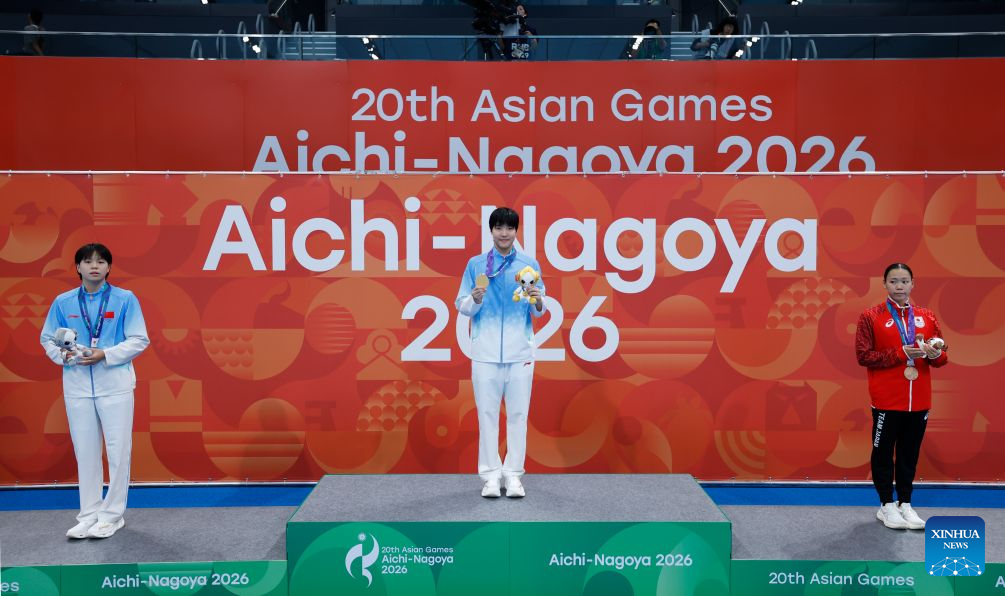
Chinese swimming sensation Yu Zidi, just 13, was the story of the pool. She won three golds, all in Games-record times, in the 200m butterfly and the 200m and 400m individual medley double. Named women’s MVP on Sunday, she now looks a serious medal threat for Los Angeles 2028, when she will be 15. “I don’t think I am what people describe as a prodigy,” she said.
Japan had its own hero in Shin Ohashi, 17, who smashed the men’s 200m breaststroke world record in 2:04.83 in front of the home crowd, taking more than half a second off the previous mark held by China’s Qin Haiyang. On the track, Thai sprinter Puripol Boonson, 20, completed the 100m-200m double and was named men’s MVP.
China topped the medals table with 169 golds, well ahead of hosts Japan on 83. The Games also made history with 11-year-old Yuki Kurihara, who won an eSports title and is believed to be the youngest Asian Games champion ever. Padel, MMA and virtual taekwondo made their debuts, India beat Pakistan in the men’s cricket final, and North Korean weightlifter Ri Song Gum set three world marks in a single day.
Mix-ups, empty seats and an ‘F’ grade
In a bid to save money, this edition had no traditional athletes’ village. Participants were housed in wooden temporary units, on a cruise ship and in hotels. Some teams complained the units were too cramped and the beds too short, and there were not enough beds for everyone. One Thai official told AFP it was “like musical chairs”.
“The athletes cannot perform if they don’t sleep good, the athletes cannot perform if they don’t have good transportation,” Al-Musallam said. Buses failed to turn up, two teams were sent to the wrong venue, delaying a volleyball match, and organisers played North Korea’s national anthem for the South Korean hockey team.
Crowds were patchy. The opening ceremony played to thousands of empty seats, and only 998 spectators watched the women’s football semi-final in a 50,000-seat stadium. Rain hit several days of athletics, though 30,000 did see South Korea beat Japan 1-0 for the men’s football gold.
“If I were to give them a grade, it would be an F,” said Ryu Seung-min, president of the Korean Sport and Olympic Committee. Japanese Olympic Committee president Seiko Hashimoto admitted “there were many problems”, but said Japan wants to host more international events.
Related
- India Post 211 Against Pakistan in Asian Games Final
- Pakistan Claim Hockey Bronze at Asian Games
- Pakistan Beat China to Win Asian Games Volleyball Bronze
- Bashir Fires Pakistan to Shooting Bronze at Asian Games
When is the Asian Games 2026 closing ceremony?
The closing ceremony takes place on Sunday, October 4, 2026, in Nagoya, Japan, ending a fortnight of competition that opened on September 19. Japan hands over to Doha at the ceremony.
Who was the star of the Asian Games 2026?
China’s 13-year-old swimmer Yu Zidi won three gold medals in Games-record times and was named women’s MVP, while Japan’s Shin Ohashi set a 200m breaststroke world record and Thailand’s Puripol Boonson won the sprint double.
Why were the Asian Games 2026 criticised?
Organisers faced complaints over cramped temporary accommodation, transport failures, an anthem mix-up, patchy crowds and rain-hit athletics, with South Korea’s Olympic chief grading the Games an “F”.