Two Supertankers Hit Mines in Strait of Hormuz
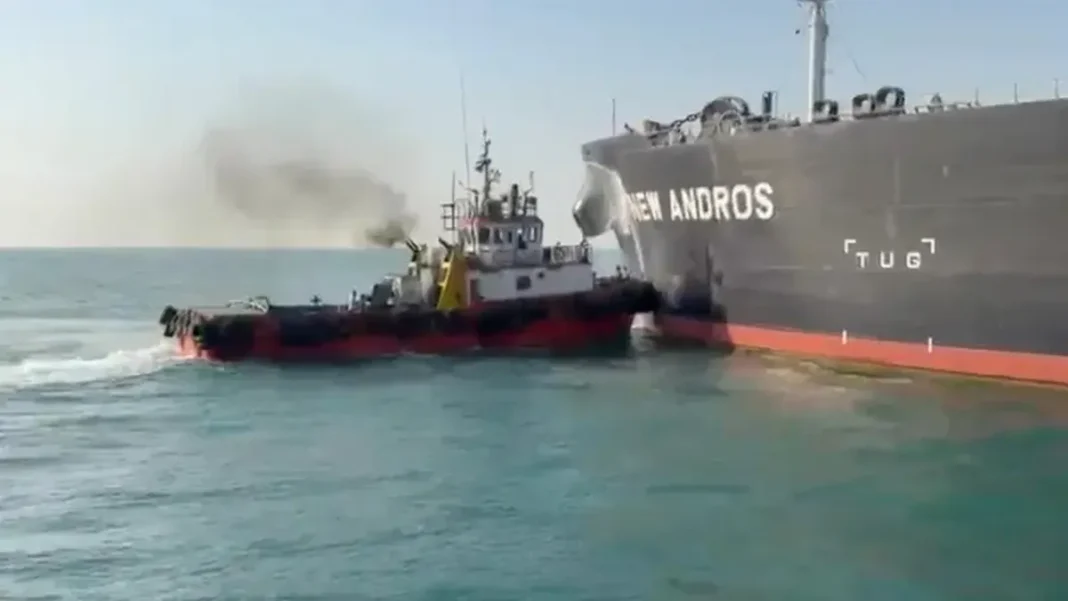
Two supertankers hit mines in the Strait of Hormuz on Thursday, November 19, and caught fire, Iran’s Revolutionary Guards Navy said. The vessels were carrying more than four million barrels of crude oil.
The Guards said the two vessels were travelling on an unauthorised route in the southern part of the strait when they hit the mines, exploded and were abandoned by their crews.
The Islamic Revolution Guards Corps (IRGC) Navy said the tankers were burning close to the southern coast of the strait. It claimed the vessels had been escorted by US fighter jets and watched by surveillance drones while they tried to pass covertly through a prohibited route.
A second claim of three tankers
Iran’s army issued a separate statement on Thursday saying three tankers had hit naval mines east of the Strait of Hormuz since the morning. The army said the tankers had switched off their navigation systems and ignored warnings from Iranian authorities before entering a restricted zone.
It was not clear whether the army’s count covered the same two supertankers or a third vessel hit in a different part of the strait. Neither statement named the ships or gave their flags or ports of origin.
The IRGC Navy warned that it would take decisive action against any tanker operating under the command of, or in cooperation with, the US military if it tried to use unauthorised routes through the strait.
The strait carries a fifth of the world’s oil
About one-fifth of the world’s seaborne oil passes through the Strait of Hormuz, which links the Gulf to the Arabian Sea. Every mine strike or fire in the waterway pushes up insurance costs and freight rates, and raises the price of crude. Tehran closed the strait on July 12 and has confined safe passage to designated northern corridors, while southern routes near Omani waters are declared unauthorised and mined.
Brent crude futures were trading at $92 a barrel on Thursday, up five cents on the day, while US West Texas Intermediate stood at $83. The small rise reflected a market that has already priced in months of disruption.
The United Nations has warned that the attacks threaten international peace and security and the global economy. A UN official told the Security Council that at least 25 seafarers have been killed in and around the strait since February. The International Maritime Organization tracked 136 security incidents in Hormuz and the wider Middle East between March 1 and November 11, with 35 in October and 10 in November. Shipping traffic has fallen about 65 percent below pre-war levels.
Supertankers hit mines in Hormuz before
Thursday’s incident follows a similar one less than a week earlier. On Saturday, November 14, three oil tankers hit mines in the Strait of Hormuz and caught fire. Two struck mines in the south of the waterway on an unauthorised route, and a third hit a mine east of the strait in a prohibited zone.
The pattern is now familiar. Iran says the tankers switch off their tracking systems and cross without permission, which Tehran has required since the war began. Independent verification is rarely available, because the statements give no names, no positions and no casualty figures.
The repeated incidents have kept oil prices high as Hormuz tanker attacks disrupt shipping. Pakistan has felt the impact directly. A Pakistan-bound LNG tanker, Al Mayeda, was hit near Hormuz earlier in the crisis, and the country has been lining up winter gas cargoes for December and January.
For Pakistan, each new incident in the strait carries a double cost. Fuel imports become dearer and less certain, and the risk premium on shipping pushes up the price of every cargo that still gets through.
Frequently asked questions
How much oil were the tankers carrying?
The IRGC Navy said the two supertankers together carried more than four million barrels of crude oil.
What does Iran say the tankers did wrong?
Iran says the two supertankers were using an unauthorised southern route and were escorted by US fighter jets. Its army separately said three tankers east of the strait had switched off their navigation systems before hitting mines.
Why does the Strait of Hormuz matter?
About one-fifth of the world’s seaborne oil passes through the strait, which links the Gulf to the Arabian Sea. Attacks on shipping there push up oil prices, insurance costs and freight rates around the world.
Has this happened before?
Yes. On November 14, three tankers hit mines in the strait and caught fire. The UN says at least 25 seafarers have been killed in and around the strait since February.
Why does the Strait of Hormuz matter for oil?
About one-fifth of the world’s seaborne oil passes through the strait. Every mine strike or fire there pushes up insurance costs and freight rates, and raises the price of crude oil.