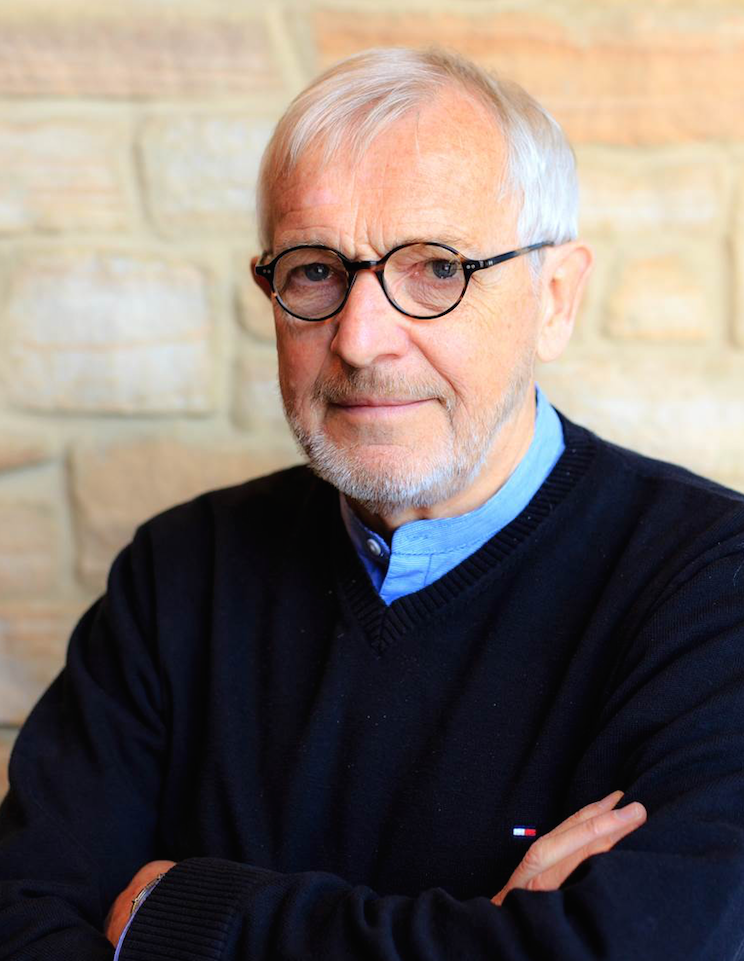
Nobel Physics Prize 2026 Awarded to Francis Halzen for Cosmic Neutrino Discovery
Nobel Physics Prize 2026 Awarded to Francis Halzen for Cosmic Neutrino Discovery
The Nobel Physics Prize 2026 has been awarded to Francis Halzen, the Belgian physicist whose decades-long effort to catch ghostly particles from deep space created an entirely new kind of astronomy.
The Royal Swedish Academy of Sciences announced the award in Stockholm on Tuesday. Halzen won for his “decisive contributions to the IceCube Neutrino Observatory and the discovery of high-energy neutrinos of astrophysical origin”, the academy said.
What the Nobel Physics Prize 2026 recognises
Halzen first proposed his idea in 1988: use the clear ice of Antarctica as a giant particle detector. Neutrinos are subatomic particles with almost no mass and no electric charge. They pass through stars, planets and entire galaxies unchanged, which makes them nearly impossible to catch but uniquely valuable as messengers from distant cosmic sources.
When a neutrino collides with an atomic nucleus in the ice, it produces a faint flash of blue light. Halzen’s plan was to bury thousands of light sensors two kilometres deep in the ice and use those flashes to trace each particle back to its origin.
Few believed it would work. Halzen himself admitted as much after the announcement. “When we started this project, everybody realised this was maybe a good idea but very few thought it would work, including myself,” he told the Nobel news conference by phone from Italy, calling the win a “great surprise” and a “pleasure”.
A team of hundreds behind one vision
The idea grew into the IceCube Neutrino Observatory at the South Pole, an international collaboration of more than 450 people from 58 institutions in 14 countries, led by the University of Wisconsin-Madison where Halzen is a professor.
Nobel committee chair Mark Pearce praised Halzen’s persistence. “Francis Halzen has led an international team of researchers and engineers who have provided us with a fantastic instrument,” Pearce said. “His tenacity and scientific vision has paved the way for a new kind of astronomy.”
Pearce described neutrinos as “ghost-like messengers from the cosmos”, carrying information about distant sources that no other method can provide. Richard Fitzgerald, editor-in-chief of Physics Today, noted the rarity of a solo prize: “It’s been a while since the Nobel Prize has gone to a single individual and that points to the uniqueness of his vision. It took a team of hundreds of people to build it, but it all started with one person.”
The 2026 Nobel season
The physics prize is the second Nobel announced this year, following Monday’s medicine prize. The chemistry prize follows on Wednesday. This year’s physics prize carries 12 million Swedish kronor, about $1.2 million. Last year’s prize went to John Clarke, Michel Devoret and John Martinis for work on quantum tunneling.
Halzen, 82, was born in Belgium. The medals will be presented by Sweden’s King Carl XVI Gustaf in Stockholm on December 10.
What did Francis Halzen win the Nobel Prize for?
For his decisive contributions to the IceCube Neutrino Observatory and the discovery of high-energy neutrinos coming from deep space, which opened a new window on the universe.
What are neutrinos?
Nearly massless, chargeless subatomic particles that pass through almost all matter unchanged. Because they travel in straight lines from violent cosmic events, they reveal sources that light and other signals cannot.
How does the IceCube observatory work?
Thousands of light sensors buried two kilometres under Antarctic ice detect faint blue flashes produced when neutrinos collide with atomic nuclei, letting scientists trace each particle back to its cosmic source.