What do you write when you believe it may be the last thing you ever write?
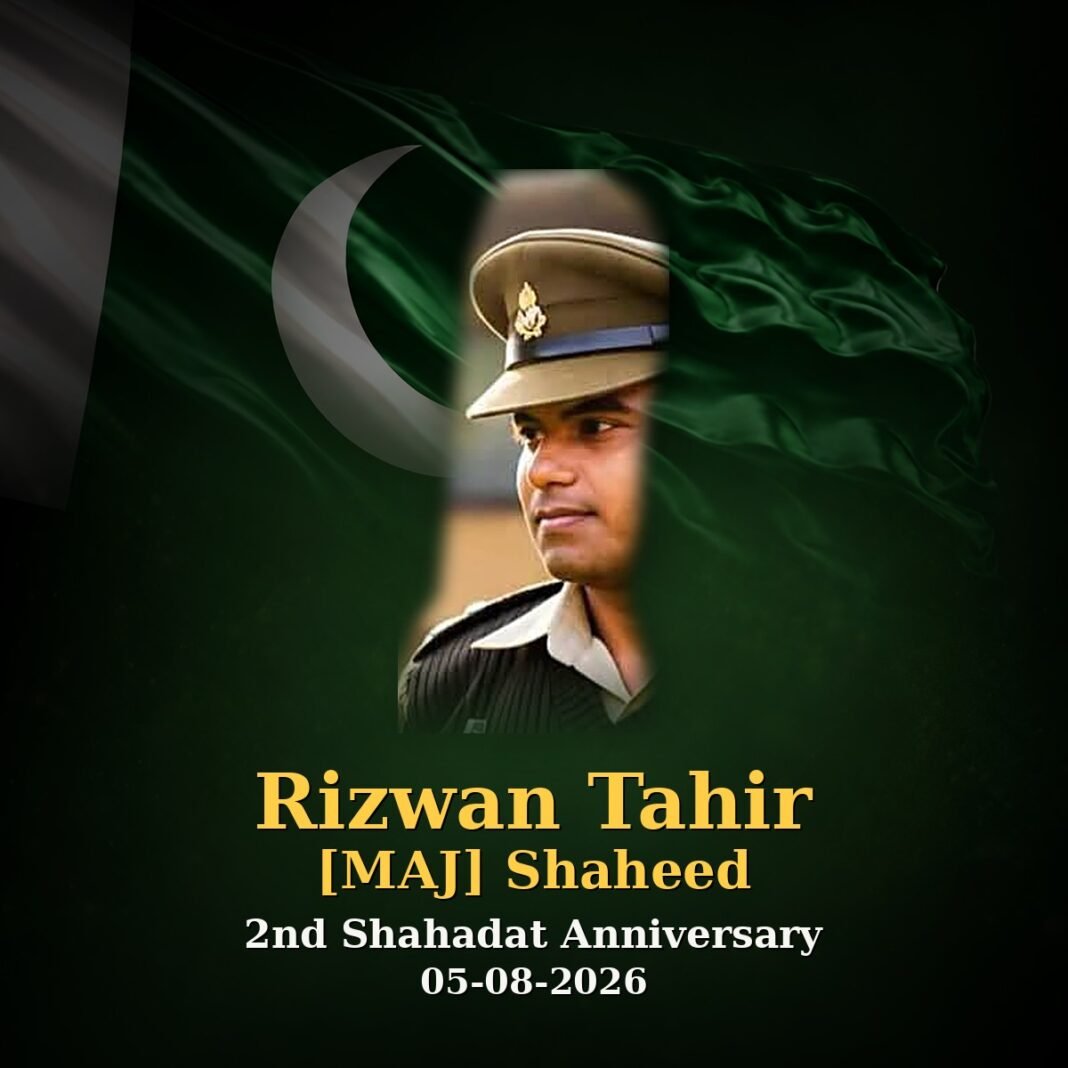
Major Rizwan Tahir Shaheed sat down, picked up his pen, and answered that question the way a soldier does: calmly, deliberately, without flinching. Before he embraced martyrdom on 5 August 2025, the young officer of the Pakistan Army wrote his waseeyat — his final note — and set down the thoughts of a man who had looked at the price of his calling and accepted it in full.
He was an officer of the 29 Technical Graduate Course and the 75 Combined Entry of Engineers, serving with the 176 Engineers and the 117 Wing. The Engineers are the arm that builds, clears, and opens the way — the men who go in first so that others can follow. It is fitting that an engineer should have left behind a document so carefully constructed: a final order of the heart, addressed to those he loved and the institution he served.
The Note He Left Behind
Soldiers have written farewell letters for centuries, and the ones that endure are never the longest or the most eloquent. They endure because they are honest. They are written by men who have stared at the possibility of death and chosen, anyway, to speak to the living.
That is what Major Rizwan did. He wrote before his final duty — not in panic, not in despair, but with the composure of an officer at peace with the highest demand of his profession: the willingness to give his life for his country. In the Pakistan Army, a waseeyat is treated with reverence, because such a document carries the weight of a man’s last conscious thoughts.
Today his note is read by his course-mates, by young cadets, and by ordinary Pakistanis who find in it a measure of what service truly costs. It has become his voice beyond the grave. Whenever it is read, Major Rizwan speaks again — and those who read it understand him a little better.
The Engineer’s Calling
There is a quiet symbolism in the fact that Major Rizwan belonged to the Engineers. The Engineers are the Army’s builders and clearers — the men who go in first, who open the route, who make the ground safe for everyone who follows. A final note is, in its own way, the same kind of work: going first into the hardest territory of all, and leaving a cleared path for those left behind to follow.
His course-mates of the 29 Technical Graduate Course and the 75 Combined Entry carry the note with them. Young cadets read it. Ordinary Pakistanis share it. Each reading is a small act of remembrance — and together, they ensure that the voice in that note is never silenced.
The Original Tribute
The tribute first shared in his honour records his service and his final act of writing in a few plain lines:
Final Note (Waseeyat) of Major Rizwan Tahir Shaheed, he wrote it before his martyrdom.
— Maj Rizwan Tahir Shaheed, 29TGC/75CED ex 176 Engrs/117W, 05 Aug 25
Why a Soldier’s Last Words Endure
Every nation that has sent its sons to war has learned the same lesson: the words of the fallen are among the most precious things they leave behind. Medals tarnish. Uniforms are folded away. But a written note keeps the man’s own voice alive — and that is why the 5th of August has become a day of remembrance for Major Rizwan Tahir Shaheed, when his final note is shared again and his sacrifice is remembered anew.
What these notes reveal, again and again, is not fear but clarity — clarity about duty, about family, about the country that asked for everything and received it. Major Rizwan’s waseeyat belongs to that long tradition, and it honours not only him but every officer who ever picked up a pen before picking up his rifle.
Remembrance is not only about grief. It is about obligation — the obligation of the living to be worthy of the dead. When Pakistanis read the final note of a martyred major, they are reminded, gently but firmly, that the peace they enjoy was purchased by men who wrote farewell letters and then went back to duty.
We salute Major Rizwan Tahir Shaheed. His words outlive him. His sacrifice secures the nation. And as long as his final note is read — on the 5th of August and every day between — his voice will not be silenced, and his memory will not fade.