The mountain fired no shot. It did not need to.
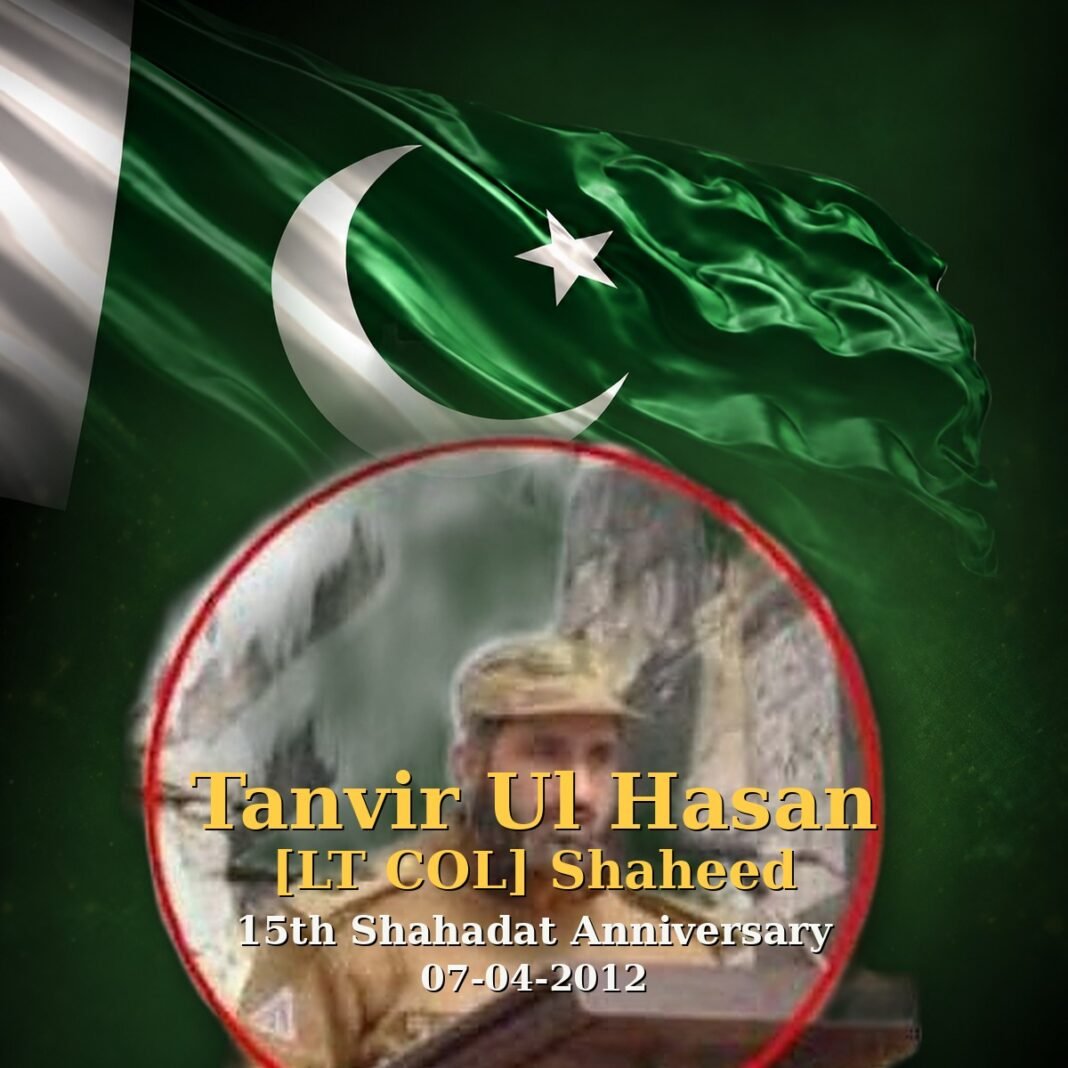
On 7 April 2012, a massive avalanche struck the Gyari Sector of the Siachen Glacier, burying a battalion headquarters under tons of snow. Among the officers lost was Lieutenant Colonel Tanvir Ul Hasan Shaheed of the Pakistan Army — the Commanding Officer of the 6 Northern Light Infantry, an officer of the 88 Long Course from the 24 Baloch Regiment. The troops were on the move when the mountain came down. In minutes, the heart of the battalion was gone.
They called Siachen the world’s highest battlefield. That morning, it claimed its victims without a single bullet being fired.
Swallowed by the Snow
Lt Col Tanvir Ul Hasan was not alone under the snow. Major Zaka Ul Haq Shaheed — 105 Long Course, the Second-in-Command of 6 NLI — and Captain Dr Haleem Ullah Jaan Tareen Shaheed — 29th MBBS, Army Medical Corps, the unit’s Regimental Medical Officer — were lost with him. A commanding officer, his second-in-command, and the unit’s doctor. Along with them, 136 other precious souls.
Think about that for a moment. Not a patrol. Not a post. An entire headquarters — the command, the staff, the doctor who patched men up — erased in a single morning by the mountain they had come to defend.
What followed was one of the most extraordinary rescue operations in Pakistan’s military history. For days and weeks, soldiers and engineers dug through the snow at altitudes where breathing itself is a struggle — refusing to leave their brothers under the ice. Many bodies were recovered and returned to their families with full military honours. Some could never be found. They rest in the ice of Siachen to this day, their resting places known only to the mountains.
The Original Tribute
The tribute shared on the fourteenth anniversary of the Gyari avalanche reads:
Today is 14th shahadat anniversary of Lt Col Tanvir Ul Hasan Shaheed, 88L/C ex 24BR/CO 6NLI; Major Zaka Ul Haq Shaheed, 105L/C ex 2IC 6NLI; Capt Dr Haleem Ullah Jaan Tareen Shaheed, 29th MBBS AMC/RMO 6NLI; along with 136 precious souls.
On 7 April 2012, when they were on the move at Siachen (Giyari Sector) & an avalanche hit them, and all were buried in it. After many days of Rescue Operation, many bodies were recovered but some of them are still missing, they couldn’t recovered.
Fourteen Years Later
Every year on 7 April, the anniversary is observed — the fourteenth in 2026. It is remembered not only as a tragedy but as a testament: these men were standing guard at one of the most hostile postings on earth when nature itself struck. They had not gone to the mountains for glory. They had gone because Pakistan’s flag had to fly there, and someone had to hold it.
There is a cruel irony in the Gyari story that the nation has never quite made peace with. These were soldiers trained to face an enemy across the ice. The enemy they met instead was the mountain — silent, sudden, and utterly indifferent to courage. No bravery could have stopped the avalanche. No training could have outrun it.
And yet the weeks that followed showed what bravery could do. In thin air and killing cold, their comrades dug. That is the second half of the Gyari story, and it matters as much as the first: the living refused to abandon the fallen, no matter what the mountain demanded of them.
Nations are shaped as much by the tragedies they refuse to forget as by the victories they celebrate. Gyari taught Pakistan something about the price of holding Siachen — a price measured not only in firefights but in avalanches, in frostbite, in the slow attrition of the world’s highest battlefield.
We salute Lt Col Tanvir Ul Hasan Shaheed, Major Zaka Ul Haq Shaheed, Captain Dr Haleem Ullah Jaan Tareen Shaheed, and all the brave souls of Gyari. They went to the mountains to defend Pakistan — and the mountains kept them. Their sacrifice is eternal.