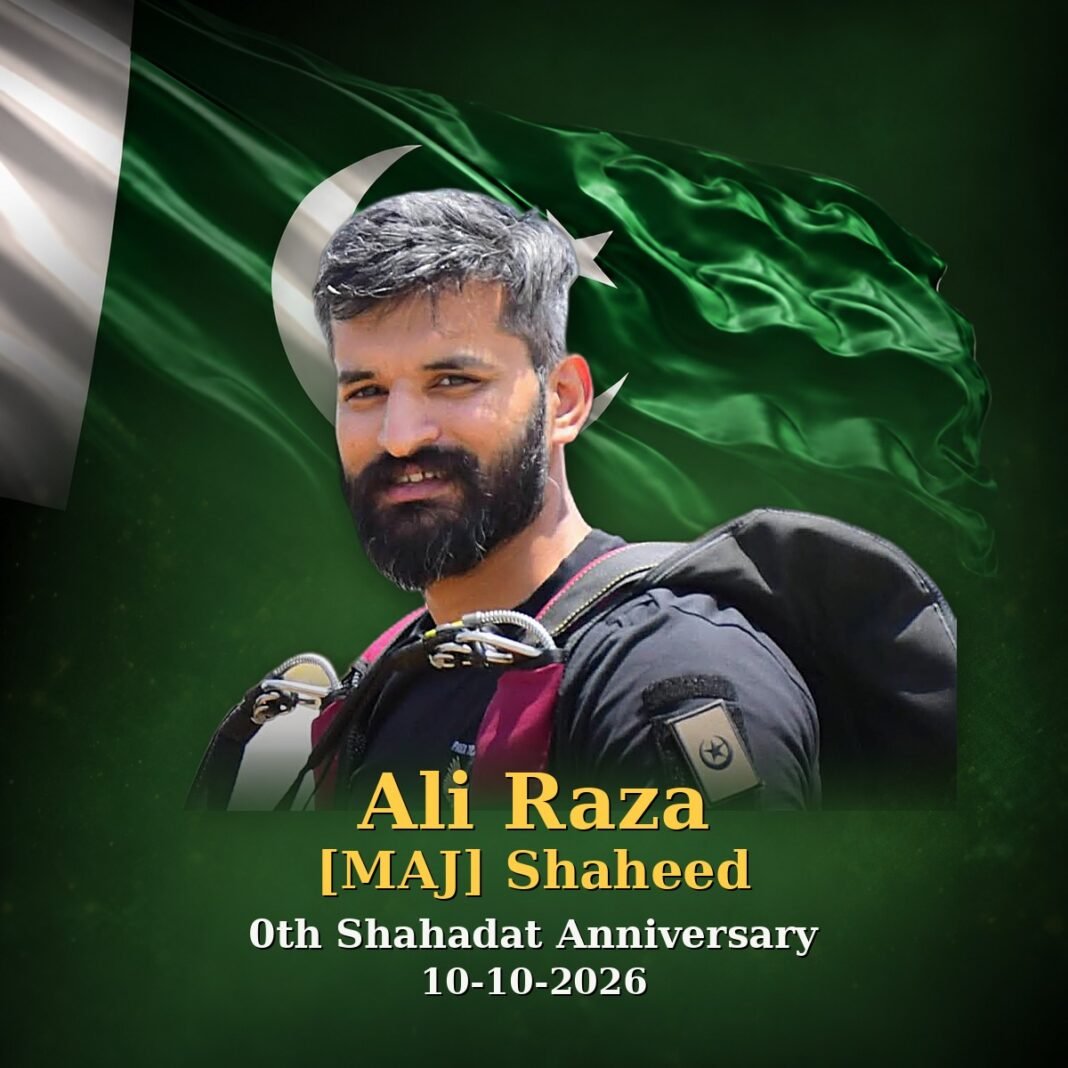
The maroon beret is earned, not given. Major Ali Raza Shaheed earned his — and wore it to the very end.
The men of the Special Services Group are a breed apart. They volunteer for the hardest training the Pakistan Army offers, and they go where others cannot. Major Ali Raza Shaheed of 1 Commando Battalion, SSG, was one of these men. On 10 October 2026, he gave his life in the line of duty.
His shahadat is only days old as these words are written. There has been no time for anniversaries. Only the immediate grief of a unit that has lost one of its own — and a nation that has lost one of its bravest.
The Sharp End of the Spear
To serve in 1 Commando Battalion of the SSG is to belong to one of the most demanding units in the Pakistan Armed Forces. The SSG does not take volunteers lightly. Its selection breaks most of those who attempt it. Those who survive emerge as soldiers capable of operating where the risk is greatest and the margin for error is smallest.
Major Ali Raza passed that selection. He earned the maroon beret. He took his place in 1 Commando Battalion — the sharp end of the Army’s sharp end — and he served with the quiet professionalism that defines it.
The details of a commando’s last mission are often the Army’s to keep. What the nation is told — and what matters — is that he fell in the line of duty, doing the work he had volunteered for, in the unit he had earned his place in. The rest belongs to the quiet records of the SSG and the memory of the men who served beside him.
The Original Tribute
The tribute shared in the first days after his shahadat reads:
Major Ali Raza Shaheed — 1 Commando SSG. They have been gone from us for a while now; who knows how he must be. The lion’s arrival makes the battlefield tremble.
What the Nation Owes
Pakistan’s freedom is guarded by men like Major Ali Raza — who ask for nothing and give everything. His sacrifice joins the long and honoured roll of the shuhada, and the nation bows its head in gratitude.
There is something the country owes to sacrifices this fresh: the discipline of continued remembrance. The first days bring tributes and headlines. The years that follow require something harder — the annual observance, every 10th of October, long after the news has moved on. The SSG will keep his memory. The nation must do the same.
Every military in the world has its elite, and every elite has its ethos. But few are held in the regard in which the SSG is held in Pakistan. The maroon beret is recognised across the country as the mark of a soldier who volunteered for the hardest path and walked it to the end. When one of those soldiers falls, the grief is national — precisely because the standard he represented was national.
Remembrance, in the end, is a promise the living make to the dead: that the sacrifice will be spoken of, that the name will be taught, that the date will be kept. The 10th of October is now such a date. It will return every year — and with it, the story of a commando of the 1st Battalion who gave his life in the line of duty, told and retold until it belongs not just to his family and his unit, but to the country.
May he rest in eternal peace, and may his family find strength in the pride of a whole nation. The maroon beret has lost one of its own — and gained one more name in its roll of honour, to be spoken with pride for as long as the SSG endures.