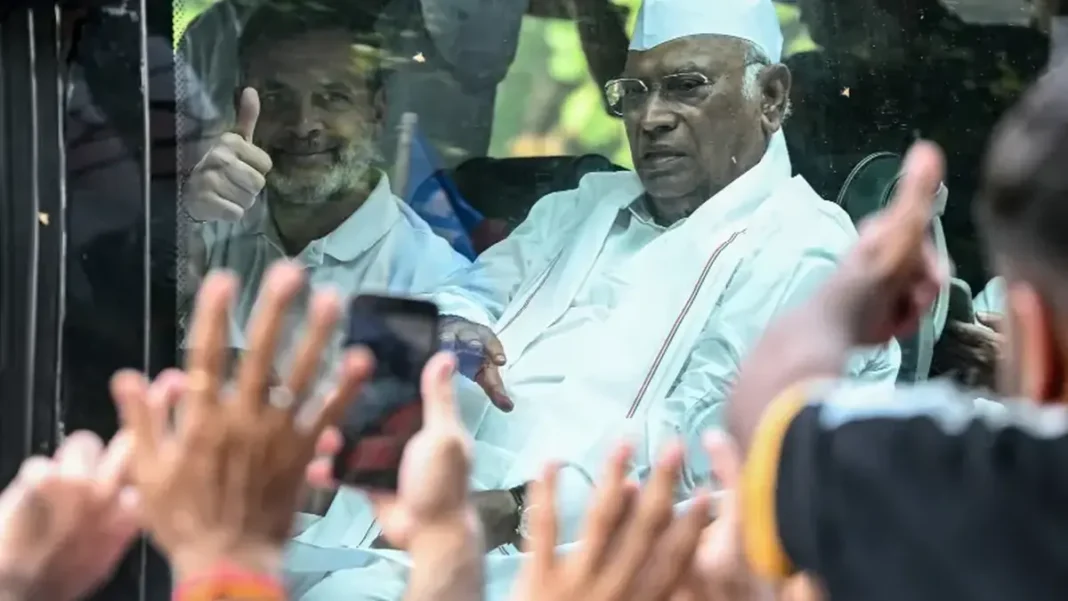
Thousands of people joined a Delhi protest march on Monday to demand the resignation of India’s chief election commissioner over alleged misconduct during a nationwide revision of voter rolls. The march moved through the heavily guarded capital towards the Supreme Court, with protesters chanting slogans and carrying placards.
The revision has removed more than 133 million names from electoral lists, according to media reports cited by the protesters. Critics say the deletions have fallen disproportionately on minorities, particularly Muslims. Election authorities say the exercise was meant to remove duplicate, deceased and fraudulent entries, and the Election Commission of India has denied wrongdoing.
Delhi protest march: what the demonstrators want
Opposition parties and supporters of the youth-led Cockroach Janta Party have taken to the streets in recent days. They want two things: a halt to the revision exercise, and the resignation of Chief Election Commissioner Gyanesh Kumar. The movement’s leaders have pledged to continue the protests until their demands are met. The demand is not new: protesters were already calling for the poll chief to resign earlier in this campaign.
Critics argue that a revision on this scale could benefit Prime Minister Narendra Modi’s ruling Bharatiya Janata Party at the next election. Opposition leader Rahul Gandhi told a news conference on Monday that people were being stopped from reaching Delhi and that the capital had been turned into a fortress, with police everywhere. He accused Modi of shielding the election commissioner from accountability.
Rights advocates say democratic freedoms have narrowed during Modi’s more than a decade in power, pointing to pressure on journalists, civil society groups and political opponents. The government rejects those allegations. For many marchers on Monday, though, the argument was simpler: the right to vote itself was at stake, and a list revision that removes names on this scale decides who keeps that right.
A capital under heavy guard for a third day
Authorities deployed thousands of security personnel across central Delhi for a third straight day, extending the police deployment first put in place ahead of the opposition protest. Hundreds of yellow metal barricades were set up on roads leading to the centre, and six major metro stations stayed shut.
The march followed a chaotic weekend. Thousands of protesters, including organisers, were detained, according to local media reports. Most of those detained have since been released, including three senior leaders of the Cockroach Janta Party, whose release by a Delhi court our newsroom reported earlier. Opposition figures accused the authorities of using mass detentions to suppress dissent.
Communist Party of India (Marxist) parliamentarian John Brittas alleged that police manhandled and assaulted him during Sunday’s demonstrations, and he described the incident as an assault on democratic freedoms. Police did not respond to questions about detentions or their conduct at a news conference on Sunday.
Journalists covering the protests also reported problems. Several said they were detained despite showing their press cards, and Reporters Without Borders said at least 16 journalists were detained during the weekend protests, calling the police action unacceptable. The weekend detentions were part of a wider crackdown on the Delhi Cockroach protest movement that our newsroom has tracked since the campaign began.
Why this dispute matters beyond Delhi
The protest has become a major political challenge for Modi because it has drawn opposition parties, student groups and activists into a single campaign. The Election Commission oversees voting in the world’s most populous country, so trust in its voter lists carries weight far beyond one march.
The dispute also has a regional echo. Election management and voter list disputes are live political issues across South Asia, including in Pakistan, where parties routinely contest the accuracy of electoral rolls before polling day. A revision that removes more than 133 million names, whatever its stated purpose, was always likely to become a test of public trust in the referee. On Monday, that test played out on the streets of the capital, and the movement behind it says it is not finished. (Source: Dawn, reporting AFP)
Frequently asked questions
Why did thousands join the Delhi protest march on Monday?
Protesters demanded the resignation of Chief Election Commissioner Gyanesh Kumar and a halt to a voter roll revision that has removed more than 133 million names from electoral lists, according to media reports.
What do election authorities say about the voter roll revision?
The Election Commission of India has denied wrongdoing. Authorities say the revision was intended to remove duplicate, deceased and fraudulent entries from the lists.
How did the authorities respond to the march?
Thousands of security personnel were deployed across central Delhi for a third straight day, with hundreds of barricades on central roads and six major metro stations closed. Most protesters detained over the weekend have been released.