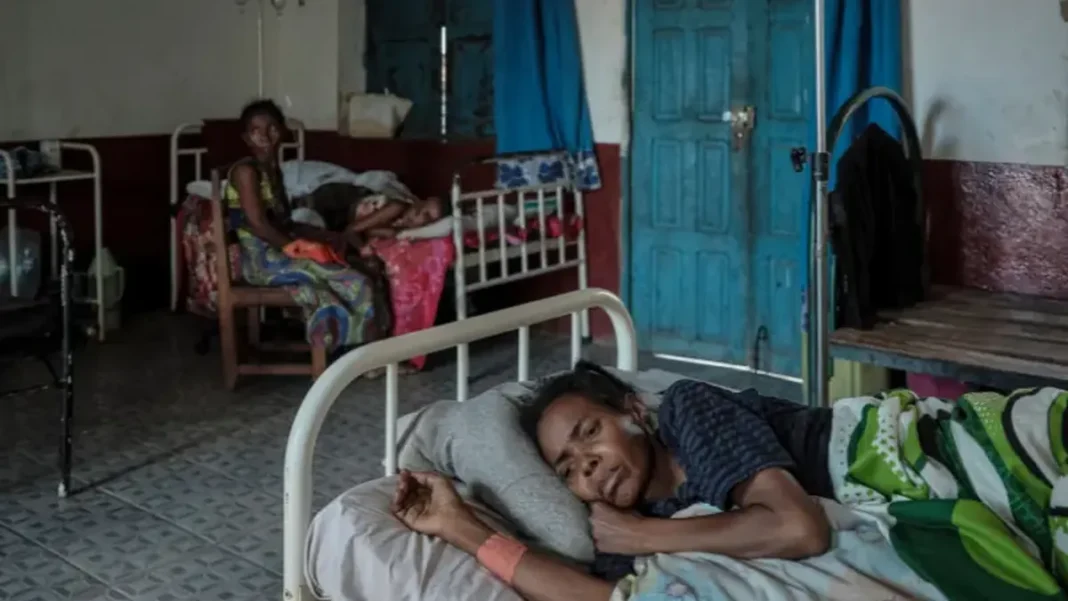
The UN global poverty index has risen for the first time since it was created in 2010. The United Nations Development Programme (UNDP) reported the increase on Monday, in the 2026 edition of its annual report. The index now counts 1.2 billion people living in acute poverty.
That total is 51.5 million higher than a year earlier. The report was prepared by the UNDP with the Oxford Poverty and Human Development Initiative, a research centre at the University of Oxford.
UNDP Administrator Alexander De Croo said the increase should be a “wake-up call for the world”. He pointed to hardships that reinforce one another, among them hunger, missed schooling and a lack of clean water or electricity.
UN global poverty index: what the numbers show
The index measures poverty in a wider way than income alone. It records whether people lack adequate housing, sanitation, electricity, cooking fuel, food and education. A person can therefore count as poor through several overlapping deprivations, even where cash income data is incomplete.
More than half of those counted in acute poverty are children. That share underlines the long-term cost, because deprivation in schooling and nutrition during childhood is hard to reverse later.
However, the UNDP itself set out two important cautions. First, population growth was a major factor behind the higher total. Second, fresh data was available for only 13 of the 108 developing countries covered by the report. The headline rise therefore rests on a narrower evidence base than in fuller survey years.
A mixed picture behind the headline rise
The report is not one of uniform decline. Over the past 15 years, 33 countries have halved the share of their people living in poverty under the index. Six of those countries are in sub-Saharan Africa. Among the fastest progress, the UNDP named two Asian economies, China and Vietnam.
Even so, most of the world’s poorest people still live in two regions, sub-Saharan Africa and South Asia. The subcontinent is the most densely populated region on Earth, so its numbers weigh heavily in the global total.
In Egypt, Nepal and Tajikistan, both the poverty rate and the actual number of people in poverty fell significantly. In Angola and Zambia, by contrast, the rate fell but the number of poor people still rose, because population growth more than offset the improvement.
What the rise means for Pakistan and South Asia
For Pakistani readers, the regional finding is the direct one. South Asia is named as one of the two regions where most acute poverty is concentrated, and Pakistan sits inside that picture. The index also helps explain a seeming contradiction in the day’s economic news. On the same Monday, in Bangkok, Finance Minister Muhammad Aurangzeb projected Pakistan growth above 4% for this fiscal year. Growth of that kind lifts average output, but the index counts schooling, water, sanitation and electricity, which can lag behind output for years.
Household buffers matter in that gap. In Pakistan, family budgets lean heavily on remittances sent home by overseas Pakistanis, which cooled to $3.6 billion in September, and on wider access to formal finance; Pakistan’s financial inclusion index climbed to 59.5 in 2025. At the same time, cost pressures on employers feed straight into jobs; textile exporters have warned of a steep decline in exports from October to December, in the country’s largest export industry.
The report gives no fresh country reading for Pakistan in the material released on Monday, so no new national figure should be read into it. Its message for the region is broader. Where population grows faster than services and schooling expand, the number of people in acute poverty can rise even in years when the economy grows. (Source: Dawn)
Frequently asked questions
What is the UN global poverty index?
It is the global Multidimensional Poverty Index, published by the UNDP with the Oxford Poverty and Human Development Initiative. It counts acute poverty through overlapping deprivations in health, education and living standards, rather than through income alone.
How many people are in acute poverty now?
The 2026 edition counts 1.2 billion people, an increase of 51.5 million over the previous year. It is the first rise in the total since the index was created in 2010, and more than half of those counted are children.
Why did the global poverty number rise?
The UNDP says population growth was a major factor. It also notes that new data was available for only 13 of the 108 developing countries covered, and that 33 countries have still halved their poverty rates over the past 15 years.