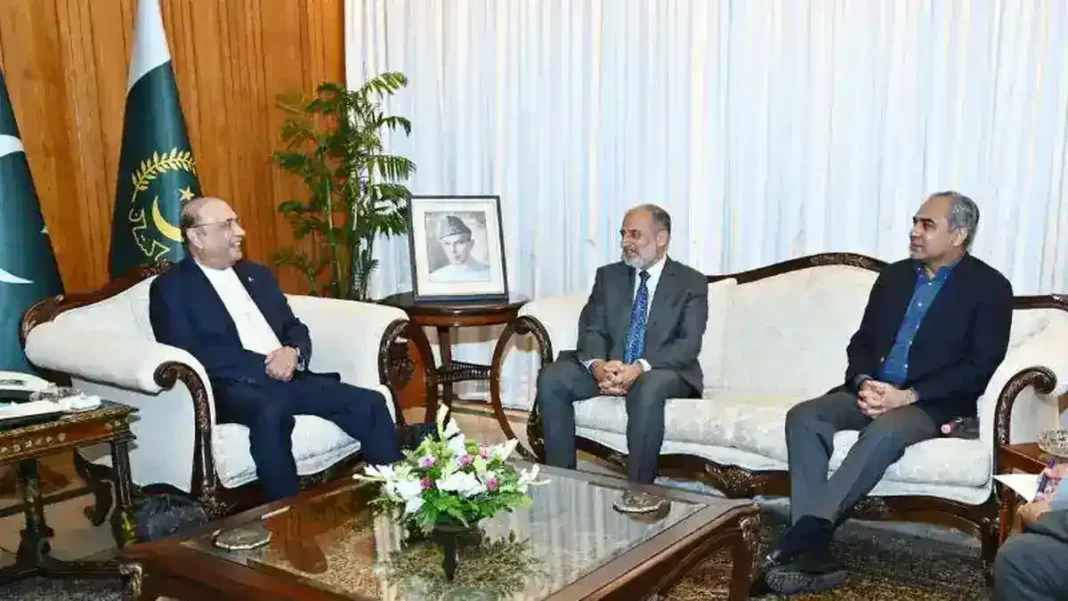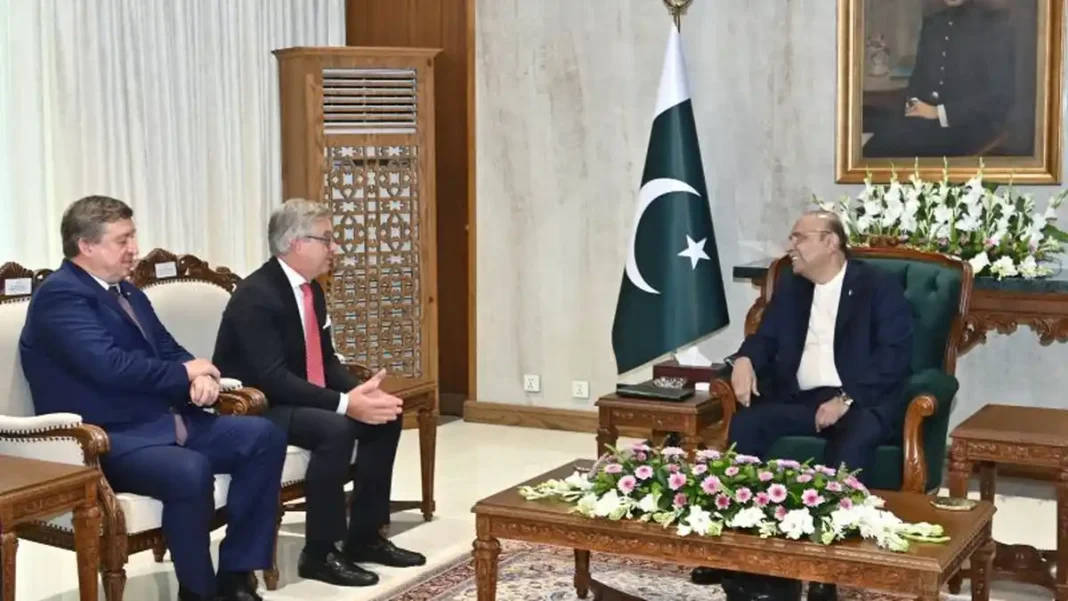
Prime Minister Shehbaz Sharif on Tuesday met European Union Commissioner for Internal Affairs and Migration Magnus Brunner in Islamabad, calling for practical opportunities for safe, orderly and regular migration alongside the crackdown on irregular movement.
The meeting focused on migration and mobility, one of the eight pillars of the Pakistan-EU Strategic Engagement Plan 2019, the Prime Minister’s Office said in a press release (APP). It was Brunner’s first visit to Pakistan.
Shehbaz underlined the importance Pakistan attaches to its partnership with the European Union and reaffirmed the commitment to strengthen cooperation across all pillars of the engagement plan.
Legal pathways at the Shehbaz Brunner migration meeting
The prime minister highlighted Pakistan’s sustained efforts to curb irregular migration and to combat migrant smuggling and human trafficking through legislative reforms, stronger institutions, effective enforcement and international cooperation.
But he stressed that enforcement alone is not enough. Efforts to address irregular migration, he said, should be complemented by real opportunities for safe, orderly and regular migration.
Expanding legal pathways for Pakistani skilled workers and professionals would help meet the labour-market needs of European countries while reducing the vulnerability of prospective migrants to smuggling networks, the prime minister noted.
Commissioner Brunner appreciated the measures taken and the cooperation extended by Pakistan. He expressed confidence that these efforts would contribute positively to the expansion of legal migration pathways and to mutually beneficial labour mobility between Pakistan and the EU.
64 percent fall in illegal migration
Brunner held a separate meeting with Interior Minister Mohsin Naqvi the same day, where the numbers behind Pakistan’s claims were laid out. Illegal migration from Pakistan to Europe has fallen by 64 percent, a figure Brunner described as commendable — a sharp contrast with the mass deportation drives seen elsewhere in the region.
The EU commissioner praised the Federal Investigation Agency for demonstrating professional capabilities despite limited resources, and said the decline in illegal migration would help open pathways for legal migration.
Naqvi said Pakistan had adopted a zero-tolerance policy against illegal migration. After cutting it by 64 percent, he said, the next target was to eliminate it completely. He described illegal migration as a highly serious global challenge that Pakistan and the EU needed to confront together.
The two sides held delegation-level talks and agreed to deepen cooperation on border security, legal immigration, institutional cooperation and border management. They also agreed to work together on the European Union’s Eastern Corridor Initiative to eliminate illegal migration, and discussed expanding cooperation to strengthen the operational capacity of the Pakistan Coast Guards.
The FIA’s enforcement role has been visible in recent months, from crackdowns on hundi-hawala networks to court proceedings testing the agency’s powers. That enforcement push is the domestic engine behind the 64 percent figure Brunner cited.
Why legal pathways matter
For Pakistan, the stakes go beyond border control. Millions of Pakistanis work abroad, and their remittances are a lifeline for the economy. Workers who travel through legal channels earn more, send more home, and avoid the debt traps and dangers of smuggling routes.
Europe, meanwhile, faces persistent labour shortages in sectors from construction to healthcare. A formal arrangement that matches Pakistani skilled workers with European labour-market needs would serve both sides — which is exactly the argument Shehbaz made to Brunner.
The meeting also fits a wider diplomatic rhythm. Pakistan has been pressing its case with European capitals for expanded trade and mobility access, and the Strategic Engagement Plan gives both sides a standing framework to convert visits like Brunner’s into working agreements rather than photo opportunities.
Whether the 64 percent drop translates into actual new visa quotas and worker programmes will be the real test. For now, both sides have agreed to keep talking — and to keep the enforcement pressure on.
Frequently asked questions
Who is Magnus Brunner?
Magnus Brunner is the European Union Commissioner for Internal Affairs and Migration. His October 13, 2026 visit to Islamabad was his first trip to Pakistan.
What did Shehbaz Sharif discuss with Brunner?
Migration and mobility cooperation under the Pakistan-EU Strategic Engagement Plan 2019 — curbing irregular migration and human trafficking while expanding safe, legal pathways for Pakistani workers.
How much has illegal migration to Europe fallen?
By 64 percent, according to figures discussed in Brunner’s meeting with Interior Minister Mohsin Naqvi. Pakistan’s stated next target is to eliminate it completely.
What is the Eastern Corridor Initiative?
It is the European Union’s initiative to eliminate illegal migration, which Pakistan and the EU agreed to work on together during the Brunner visit.